Nationalist movements promoting a specific ethnic or cultural group’s political dominance pose a growing threat to global cooperation, minority rights, and liberal democracy. As underlined by the destabilizing policies taken by Russia under Putin, China under Xi Jinping, and the US under Trump, the rise of dominant nationalism can undermine democratic institutions, fuel ethnic discrimination, and harm global political and economic integration. Thereby, dominant nationalism critically weakens some of the most important foundations of international security.
Addressing these risks, I am involved in a new major research project in which I study the causes and consequences of dominant nationalist movements, such as white supremacists in the US and Hindu nationalists in India. With SNSF funding, I lead a team of 12 research assistants in a global data collection effort that tracks dominant nationalist movements in 180 countries since 1945. This dataset identifies dominant nationalist organizations which aim to preserve a specific ethnic or cultural group’s dominance in the central government–or that seek to attain such dominance. Besides identifying such movements, this database also measures their exclusionary ideologies and captures their changing political influence. It supports a broad agenda of forthcoming articles.
Using this data, I examine the sources of dominant nationalism, studying the global diffusion of dominant nationalist ideologies since 1816 and the determinants of how nationalists “construct” the nation (“Deep roots or shallow waters? History, ethnic demography, and the nation’s identity boundaries”). Next, I study the consequences of dominant nationalism for the risks of ethnic civil war (“Dominant nationalism and civil war”), interstate war (title TBC), and democratic backsliding (“Nationalism, populism, and democracy in multi-ethnic states”). Another article examines nationalism’s broader geopolitical implications (“The Return of Nationalist Geopolitics: Liberal Backsliding and Conflict”). Two final articles explore the prospects for moderating or co-opting dominant nationalists (“Backlash or moderation? Ethnic accommodation and the salience of dominant nationalism”, “Containing majoritarian nationalism”).
These studies make three core contributions. First, in contrast to recent scholarship that highlights the role of minority nationalism in generating violent conflict, the project shows that such conflict is better understood as an escalatory process that involves both minority and dominant nationalists, who often represent numerical majorities. Second, it highlights the role of mass ideology, beyond elite-level strategy, in determining the risks of violent conflict. Finally, the project addresses the controversial debate on how free individual nationalists are to “invent” nations and, vice-versa, how constrained they are by ethno-demographic structure and persistent historical legacies.
Ongoing work

Ethnic accommodation and the backlash from dominant groups
Juon, Andreas (Online First). Journal of Conflict Resolution.

 | Description | PDF | Supplement | DOI
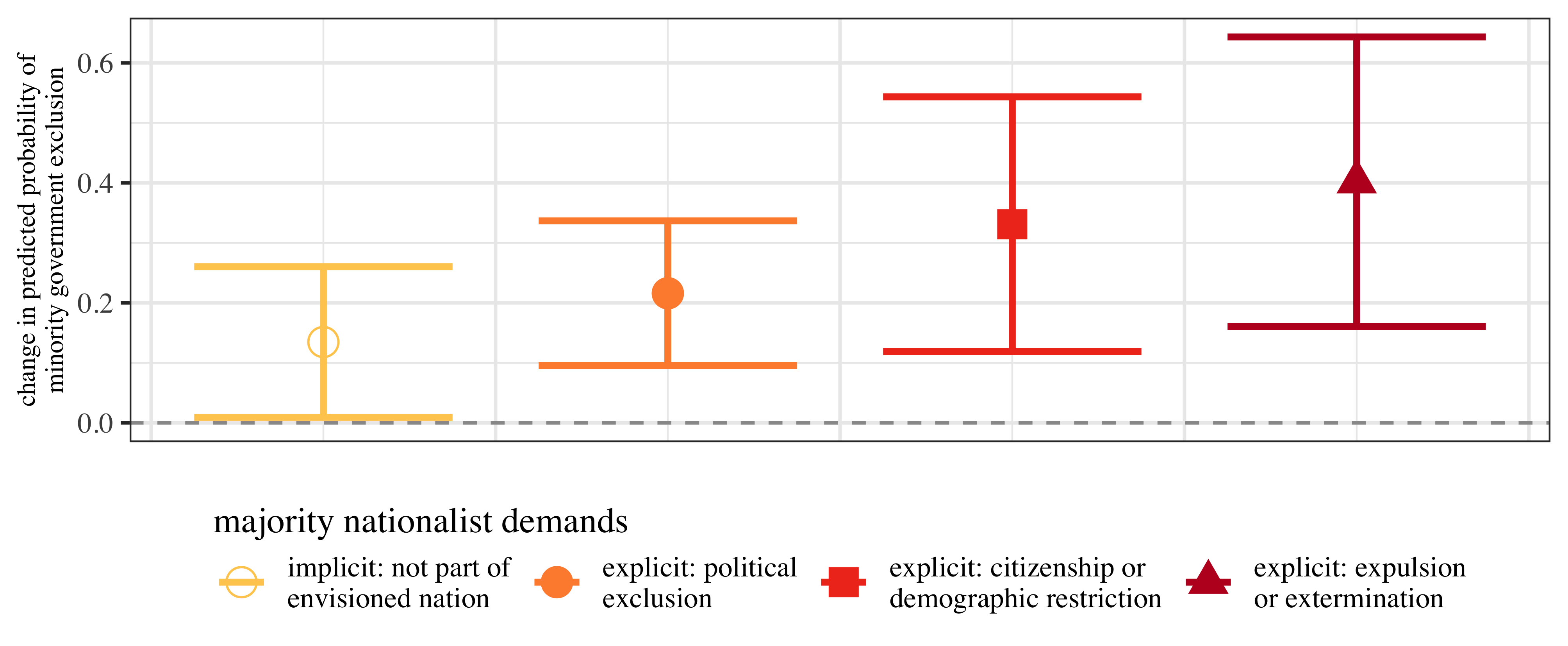
Dominant nationalism and civil war
Juon, Andreas & Cederman, Lars-Erik. R&R in Journal of Conflict Resolution.
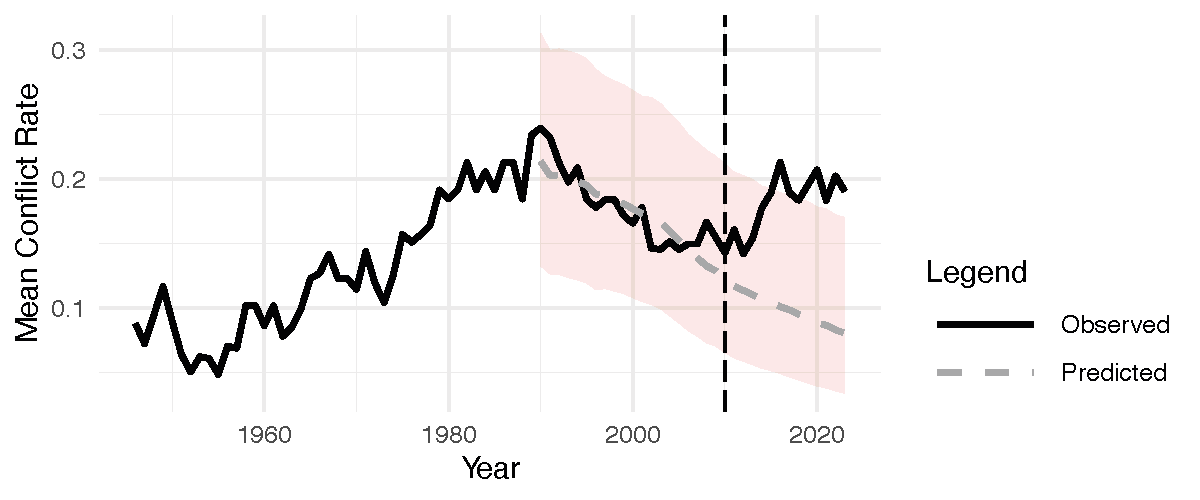
The Return of Nationalist Geopolitics: Liberal Backsliding and Conflict
Cederman, Lars-Erik, Galano Toro, Paola, Girardin, Luc, Juon, Andreas & Wucherpfennig, Julian. Conditionally accepted in International Security.
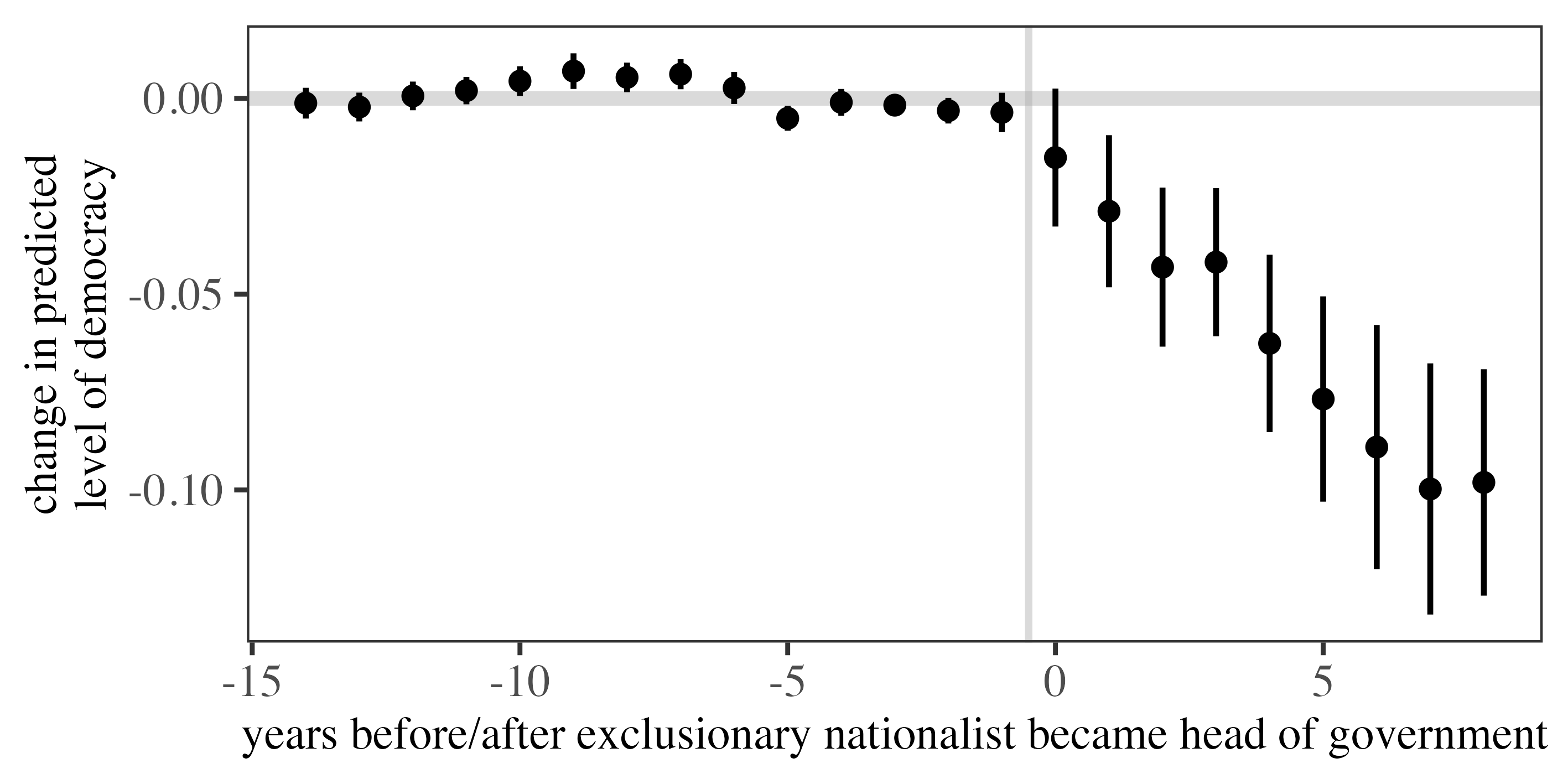
Nationalism, populism, and democracy in multi-ethnic states
Juon, Andreas & Bochsler, Daniel. Under review.
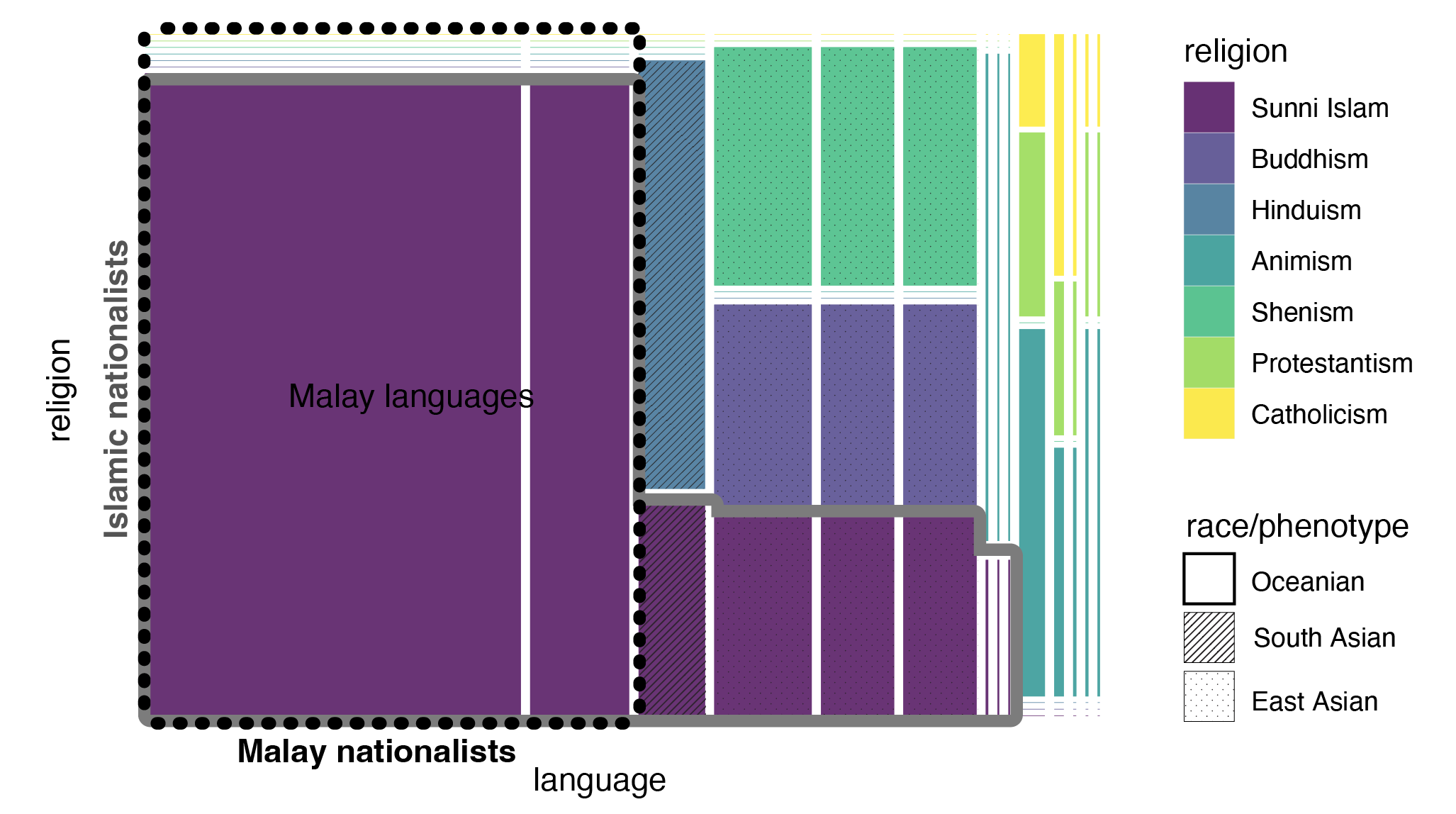
Deep roots or shallow waters? History, ethnic demography, and the nation’s identity boundaries
Juon, Andreas. Advanced draft.
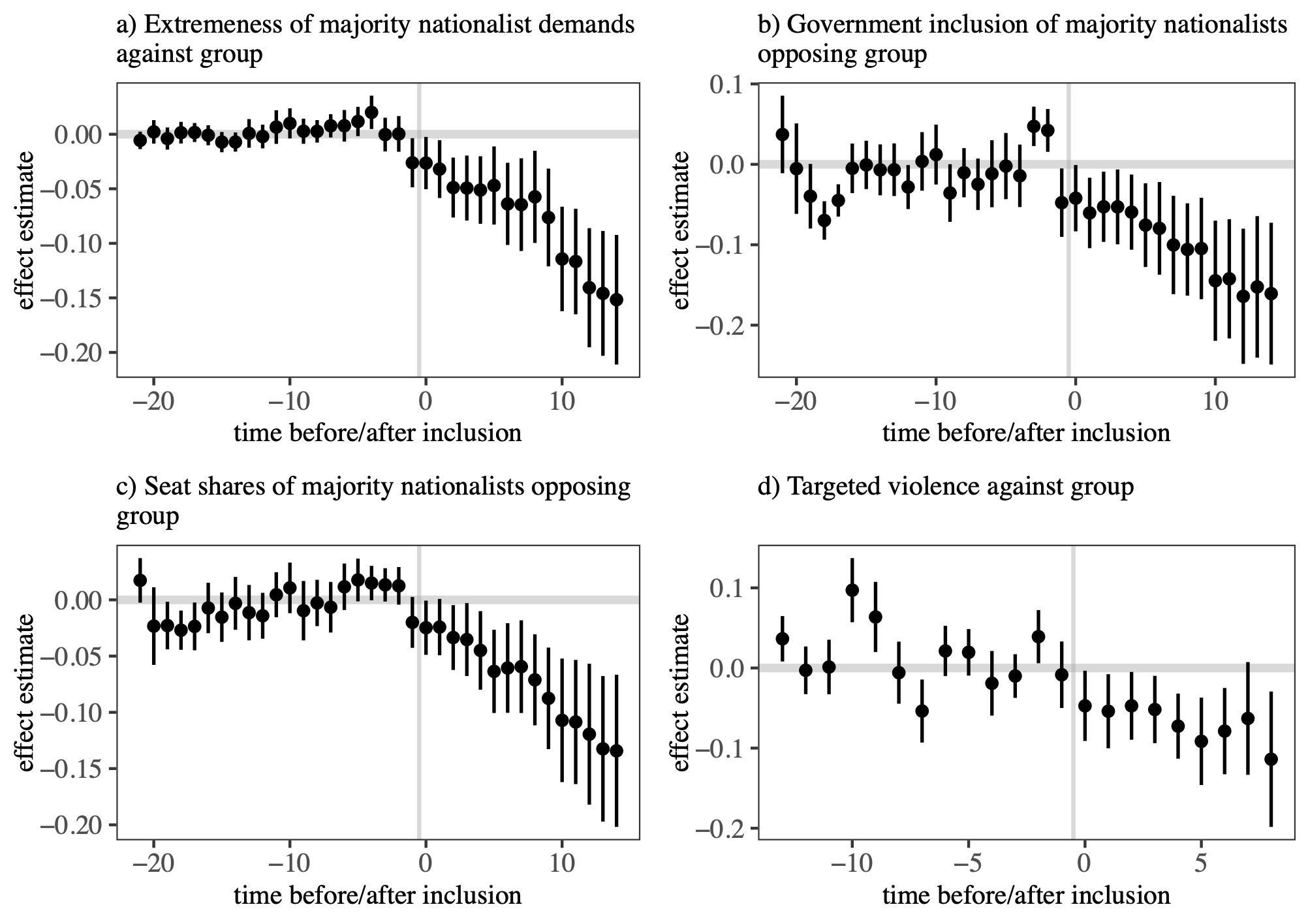
Backlash or moderation? Ethnic accommodation and the salience of dominant nationalism
Abdelrahman, Aya, Cederman, Lars-Erik & Juon, Andreas. Advanced draft.
Containing majoritarian nationalism
Abdelrahman, Aya & Juon, Andreas. First draft under preparation.
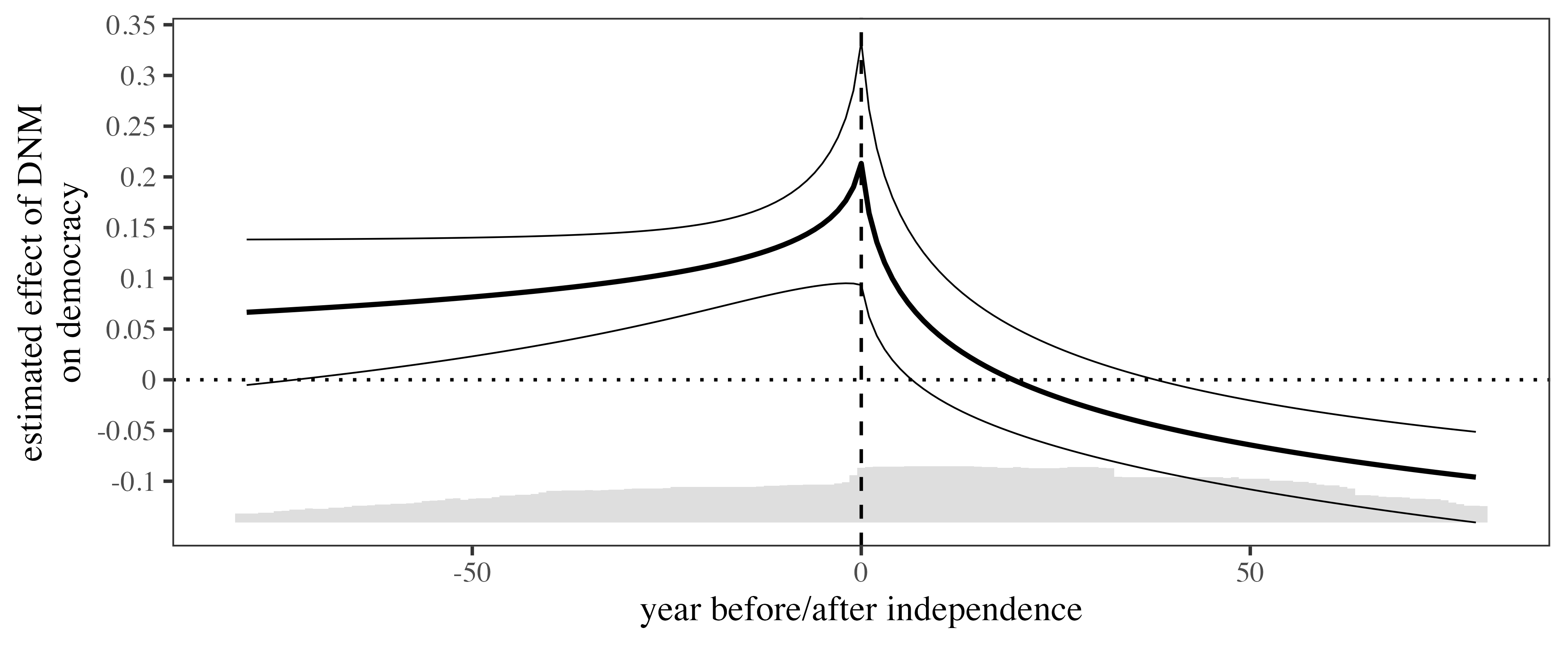
The long shadow of nationalist independence movements
Bochsler, Daniel & Juon, Andreas, First draft under preparation.
Related data
Dominant Nationalist Movements Dataset (DNM)
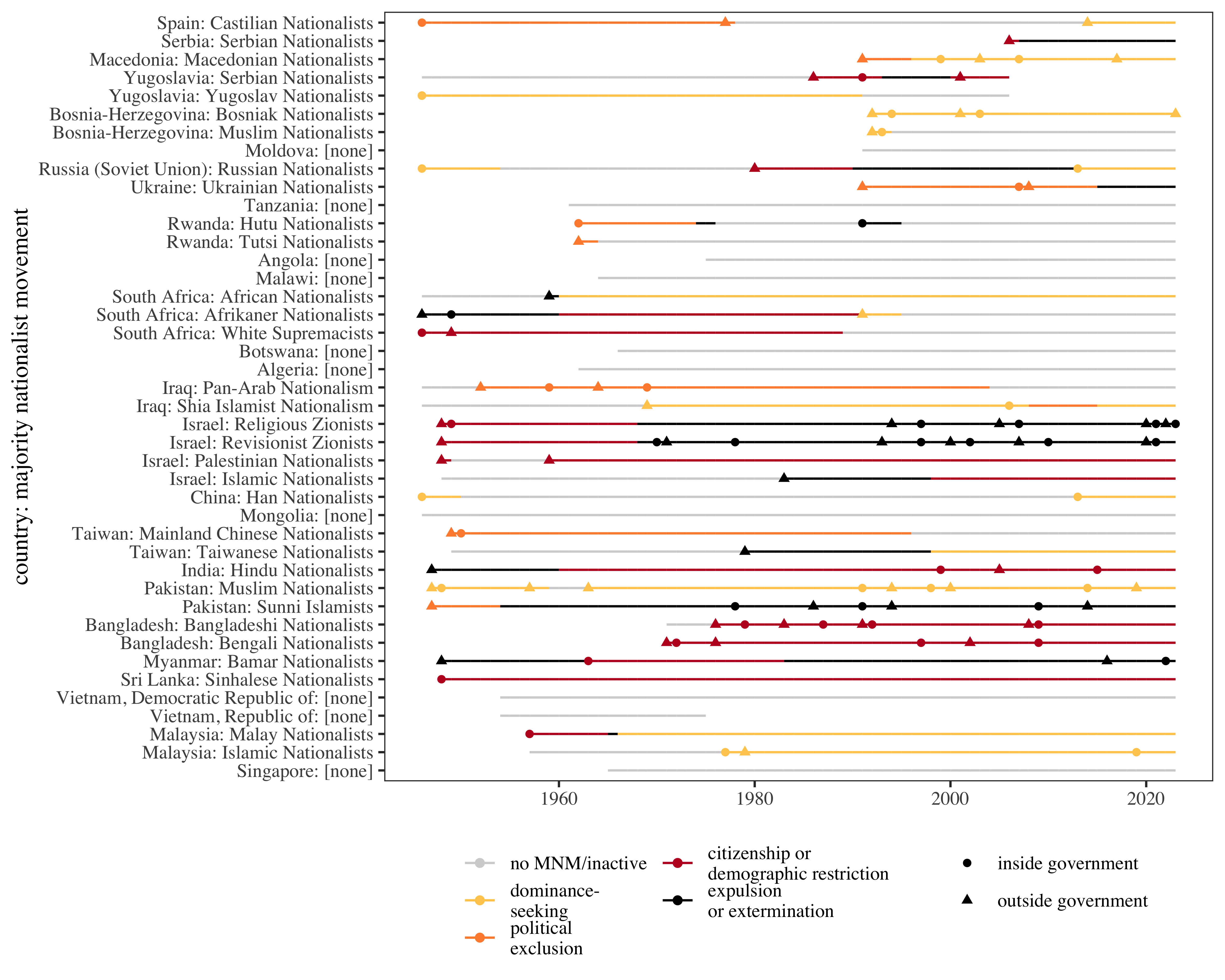
As part of my project on dominant nationalism, I am currently in the process of collecting global data on dominant nationalist movements between 1946 (or independence) and 2023. For this purpose, I am leading a team of research assistants, together with Aya Abdelrahman. The Dominant Nationalist Movements (DNM) Dataset will include annual information on dominant nationalist movements’ identity basis, their demands (dominance/monopoly rule/exclusion of specific minorities/demographic engineering/assimilation/citizenship rights restrictions/expulsion/extermination/cultural/anti-autonomy/economic), their ideological justification, their territorial claims, their associated political parties, and their relationship to the government. The preliminary codebook can be accessed here.
 Andreas Juon