Regime transitions are profoundly unstable times and often entail intense, sometimes violent, political conflict, as exemplified by the violent disintegration of Yugoslavia and the sudden dissolution of the Soviet Union. Does territorial autonomy reduce these risks, by reassuring diverse ethnic groups of their security in unstable times? Or is territorial autonomy a basis for ethno-nationalist mobilization, which group leaders might opportunistically exploit while the new regime is still unconsolidated? A recent surge of conflicts in autonomous regions in democratizing or newly independent states underlines the importance of these questions.
In this article, we argue that the uncertainty associated with regime transitions moderates how territorial autonomy affects ethnic mobilization and conflict. First, the lack of reliable information on the new regime’s capabilities and intentions increases the risk of strategic miscalculations between autonomous groups and the government. Second, the unpredictable consequences of transitions for future ethnic relations reduce the grievance-alleviating effect of territorial autonomy. And, third, the prospect that territorial autonomy might itself be withdrawn during transitions incentivizes group leaders to mobilize while the new regime is still unconsolidated. In consequence, during regime transitions, we expect autonomy to be more likely to fuel destabilizing bargaining and thereby raise the risks of ethnic mobilization and conflict. In contrast, during periods of regime stability, these escalatory dynamics are muted by the grievance-alleviating consequences of territorial autonomy.
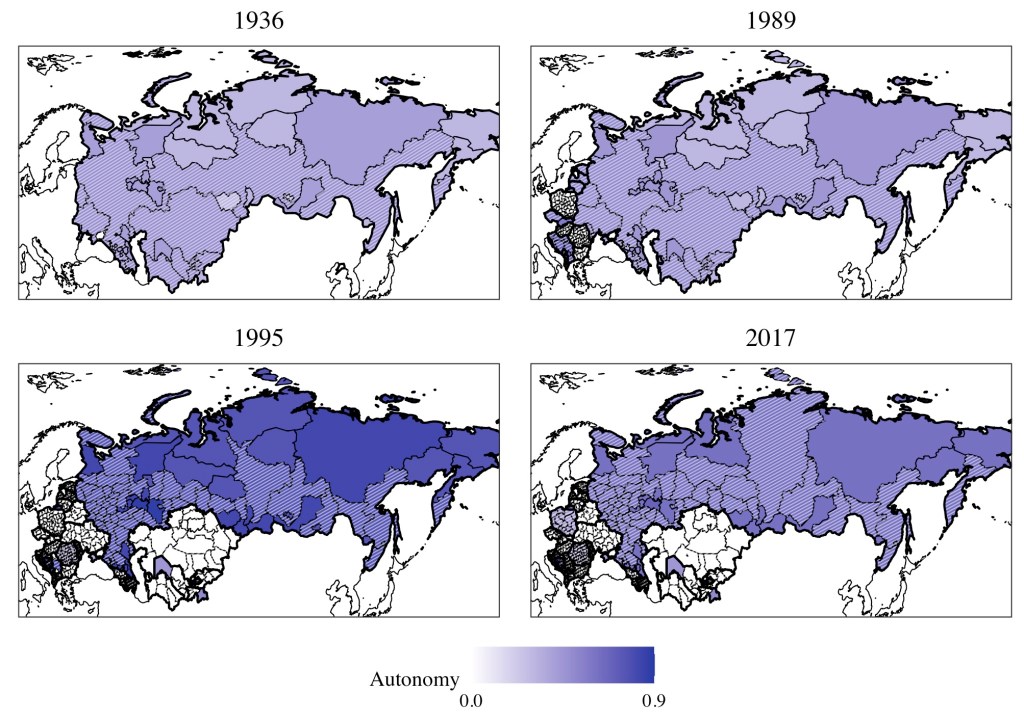
We test our expectations in two quantitative, cross-national analyses. First, we investigate how autonomy affects ethnic mobilization and conflict in a comprehensive, global sample of regime transitions since the Second World War. Thereby, we avoid an exclusive focus on prominent transitions associated with conflict. Second, we revisit the already prominently discussed case of ethnic mobilization during the transition from Communism. In contrast to previous work, we shift focus from the socialist federations’ initial breakup to the consequences of transmitted autonomy in their successor states. Complementing our global analysis, this enables us to alleviate concerns whereby autonomy might be offered to ward off regime transitions or whereby transitions might themselves be induced by ethnic mobilization in the first place. In this second set of analyses, we use new fine-grained data on territorial autonomy. This enables us to study its impact in a stepwise manner.
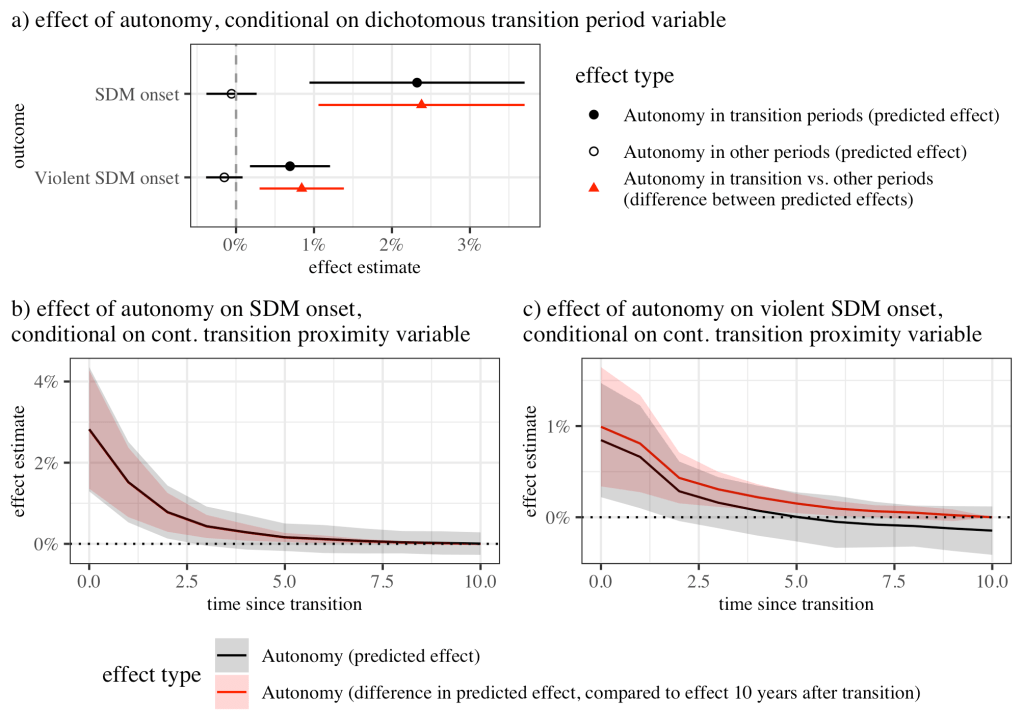
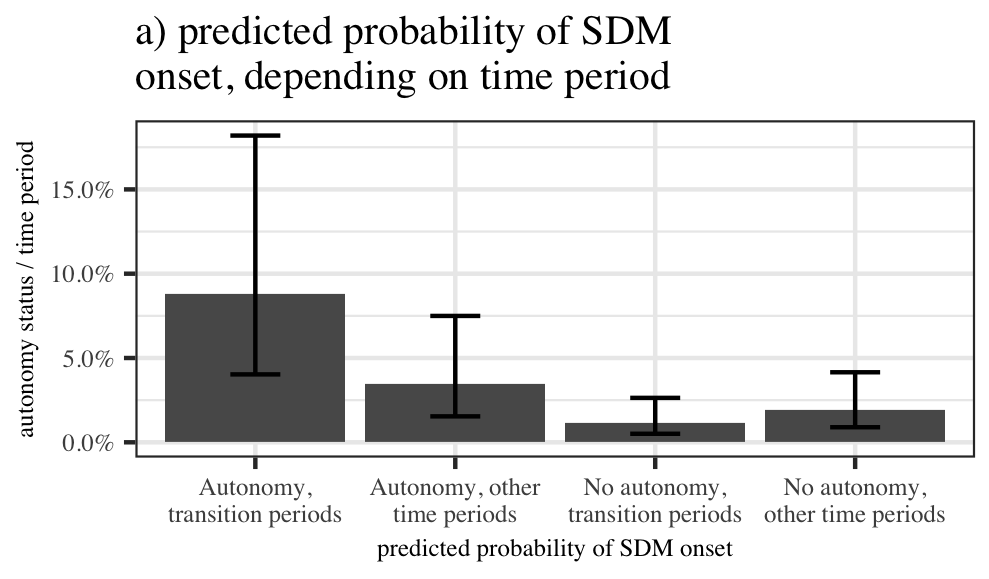
Our results indicate that autonomous territories during regime transitions may be the “wrong place, at the wrong time” for inter-ethnic stability and peace. Whereas territorial autonomy inhibits escalatory bargaining between ethnic groups and the government during periods of regime stability, our results highlight that autonomy may have destabilizing consequences during regime transitions. The uncertainty entailed by transitions makes miscalculations between governments and autonomous groups more likely, increases fears that the new regime will violate group rights, and creates incentives for groups to demand further concessions while the new regime is still unconsolidated.
Our analyses indicate that these risks are mitigated where autonomous groups are themselves part of the new regime. This echoes research that highlights the importance of combining autonomy with central government inclusion, particularly in difficult contexts. Together, these results suggest that, during regime transitions, autonomous groups should be incorporated into the central government, in order to avoid miscalculations, reduce uncertainty, and support institutionalized bargaining.
For detailed findings and methodology, please check out the article here.
The wrong place at the wrong time? Territorial autonomy and conflict during regime transitions*
Juon, Andreas & Bochsler, Daniel (2023). Comparative Political Studies (online first).
Description | PDF (Open Access) | Supplement | DOI
 Andreas Juon