
By addressing ethnic minorities’ demands for self-determination, regional autonomy promises to avert civil war and secure democracy in multi-ethnic states. However, some self-determination movements themselves propagate exclusionary measures and abuse autonomy to discriminate against other ethnic groups within their claimed regions. In turn, this may generate severe conflict and democratic deficiencies at the subnational level.
Examples from around the world demonstrate the destabilizing consequences of such subnational majoritarianism. In Indonesia, Acehnese separatists systematically killed Javanese and displaced native Gayo from Aceh. In Nigeria’s Plateau state, indigenous leaders subjected the Jasawa Hausa to forced assimilation, generating clashes that claimed hundreds of lives in 2001 and 2010 alone. In Bosnia, Serb nationalists committed genocide, prevented displaced Bosniaks and Croats from returning, and restricted regional democratic competition. Even in Canada, Québec nationalists clashed with First Nations communities over the independence question and with Anglophones over attempts to restrict the use of English.
As both scholars and practitioners promote regional autonomy as a peace-building tool, these undesirable side-effects merit increased attention. Subnational majoritarianism by self-determination movements not only violates the rights of “minorities within minorities” but can undermine the very goals which regional autonomy aims to achieve in the first place. Regional ethnic clashes caused by subnational majoritarianism may escalate into civil war, as in Pakistan, South Sudan, and, most recently, in Ethiopia, as my research on communal clashes in Ethiopia and federal states around the world shows (Juon 2025; Juon & Rohrbach 2023). Moreover, subnational authoritarian enclaves are often harbingers of nation-wide autocratization processes as well.
Despite these high stakes, subnational majoritarianism has not received systematic attention in cross-national research, which overwhelmingly studies self-determination conflicts and regional autonomy from a national-level perspective. Conversely, research on subnational democratic deficiencies and communal violence has only started to consider their frequent roots in subnational majoritarianism.
This new project, funded by an SNSF Ambizione grant, remedies these gaps. It is oriented around two research questions: First, why do self-determination movements adopt discriminatory stances against ethnic outgroups in the first place? In turn, what are the consequences thereof for regional democracy and ethnic conflict? By addressing these questions using statistical methods and geographic information systems, I examine whether the above examples are generalizable and expand the vibrant research field on subnational politics. In the process, I provide urgent, policy relevant evidence on possibilities to mitigate subnational majoritarianism with power-sharing, statewide constitutional rights, and independent courts.
To make these contributions, I propose a systematic, cross-national approach. At its core is a new dataset (1946-2023) that identifies the potentially discriminatory measures that self-determination movements around the world propagate vis-à-vis ethnic outgroups. Using this new data source, I quantitatively examine (1) the causes of subnational majoritarianism by self-determination movements and (2) institutional safeguards to mitigate it following the provision of regional autonomy. Next, I sequentially examine the consequences of subnational majoritarianism for (3) regional democracy, (4) subnational ethnic conflict, and (5) self-determination movements’ chances of obtaining concessions from the national government. This results in five empirical articles I expect to be publishable in high-ranking journals.
Publications
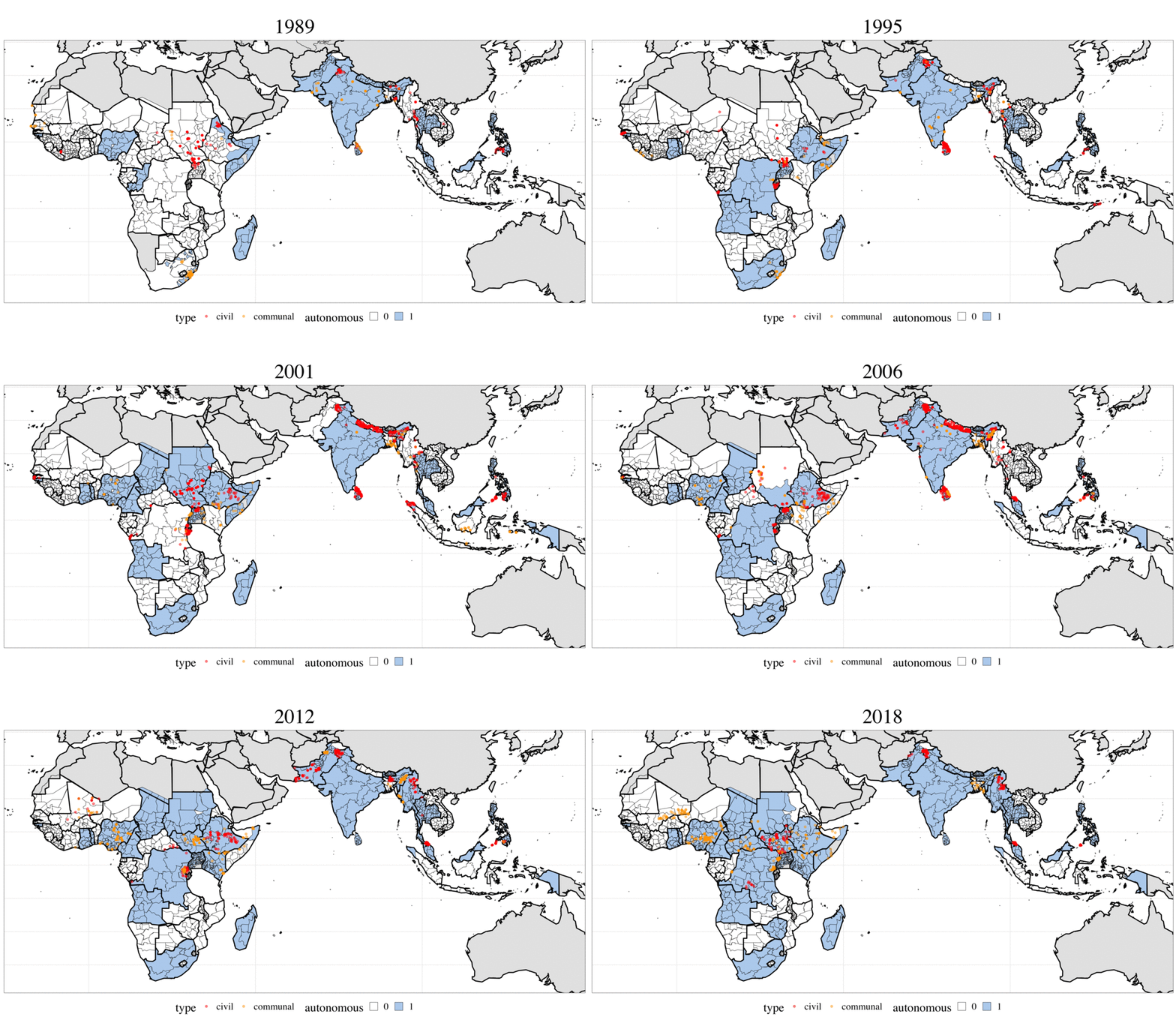
Territorial autonomy and the trade-off between civil and communal violence
Juon, Andreas (2025). American Political Science Review 119 (1): 91-107. | Description | PDF | Supplement | DOI
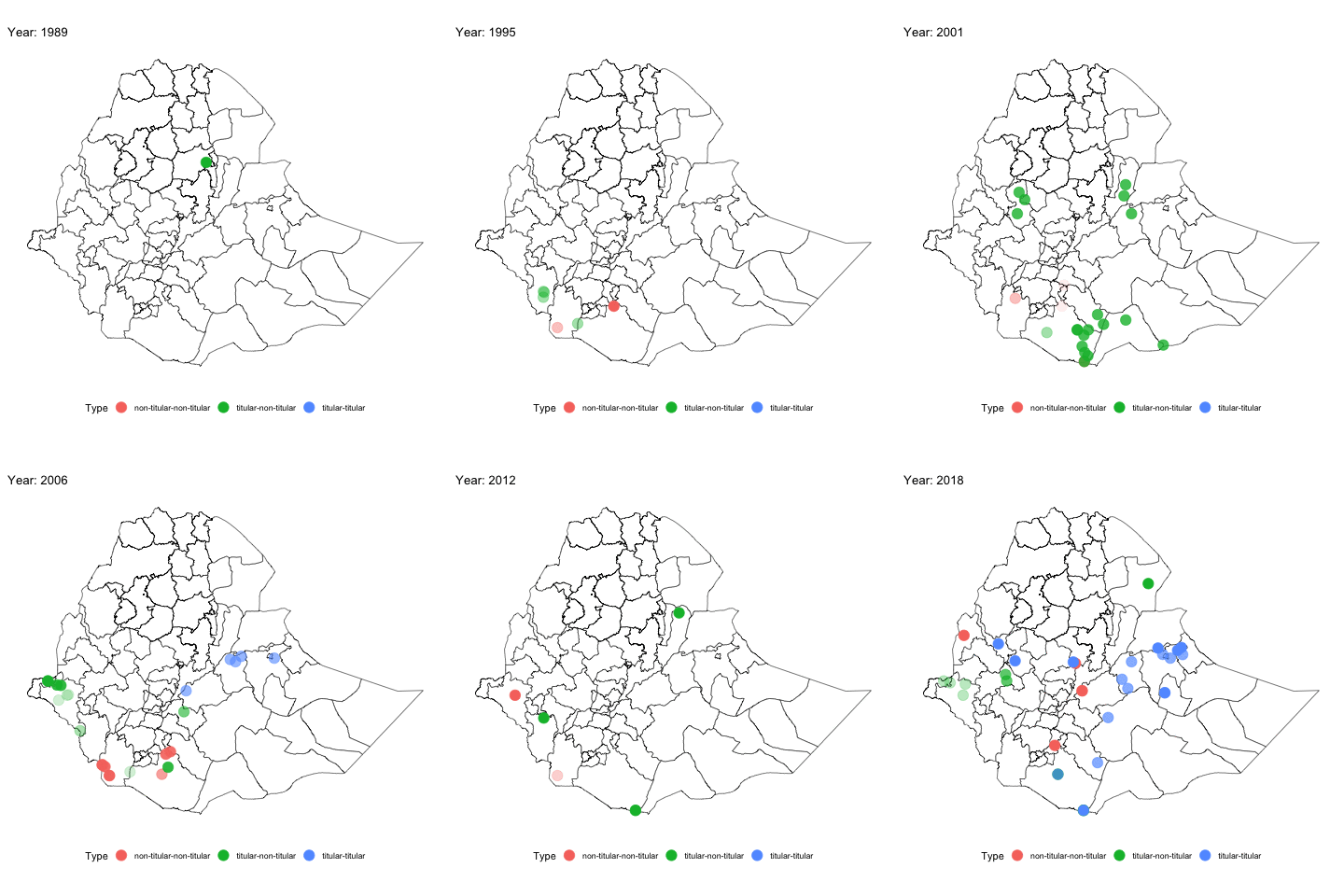
Say my name: The effects of ethnofederalism on communal violence
Juon, Andreas & Rohrbach, Livia (2023). Journal of Peace Research 60 (3): 428-443. | Description | PDF (Open Access) | Supplement | DOI
Ongoing work
Detailed work on this project’s articles is scheduled to start in early 2026.
Related data
Pilot data for this project will be collected in the second half of 2025, with full-scale data collection efforts scheduled to start in early 2026.
 Andreas Juon