Unfulfilled aspirations: Autonomy, regional boundaries, and self-determination conflicts
New spatial data and systematic analysis show that aligning administrative boundaries with ethnic settlement patterns can sustainably reduce separatist conflict in multiethnic states.
Unfulfilled aspirations: Autonomy, regional boundaries, and self-determination conflicts
Under which conditions does regional autonomy defuse separatist conflicts and when does it conversely backfire and fuel separatist mobilization? In my new article in the Journal of Conflict Resolution, I show that the answer depends critically on how closely administrative boundaries align with ethnic settlement patterns, and that only when a minority governs a single, unified region does autonomy consistently dampen separatist mobilization.
Regional autonomy, whether through federalism, decentralization, or special autonomous arrangements, is widely advocated as a tool to manage ethnic self-determination conflicts. From India's linguistic states to post-conflict arrangements in Bosnia, Aceh, and South Sudan, policymakers have turned to autonomy to accommodate diverse groups and prevent states from falling apart along ethno-regional lines. Yet, autonomy's track record is mixed. While autonomy has helped mitigate secessionist conflict in some states, prominent cases like Catalonia, Scotland, and Iraqi Kurdistan continue to witness strong separatist mobilization despite enjoying substantial self-rule. This raises an important question: under what conditions does autonomy actually reduce self-determination conflicts?
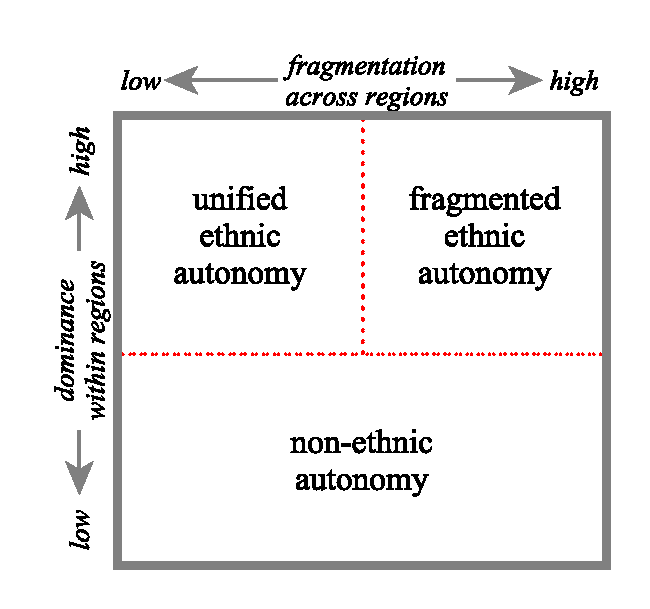
In this article, I argue that the effectiveness with which autonomy reduces separatist mobilization along ethnic lines depends critically on how regional boundaries align with ethnic settlement patterns. I distinguish between three ideal types of regional autonomy:
- Unified ethnic autonomy provides a group with a single, demographically homogeneous region (as Québec for French Canadians or the Republika Srpska for Bosnian Serbs).
- Fragmented ethnic autonomy splits a group across multiple homogeneous regions, as with German- and French-speaking communities across Swiss cantons or the Croat minority in Bosnia.
- Non-ethnic autonomy places a group as a demographic minority within its administrative region(s), a configuration sometimes deliberately engineered to limit minority influence, as in historical US state boundary design or in Nepal's post-2015 federal structure.
I argue that unified ethnic autonomy should most effectively reduce separatist conflict. By providing groups with control over a single region that corresponds to their settlement area, it addresses their demands for self-rule, improves their political representation, and satisfies the ethno-national principle that political and cultural boundaries should align. In contrast, fragmented autonomy, while still granting groups control over their regions, fails to provide full national recognition and can generate political fragmentation and outbidding dynamics among competing organizations claiming to represent the same group. Finally, non-ethnic autonomy often fails to address groups' aspirations altogether and can even generate new grievances by exposing them to discrimination and exclusion from subnational power. As a result, this type of autonomy may increase, rather than decrease, separatist contestations.
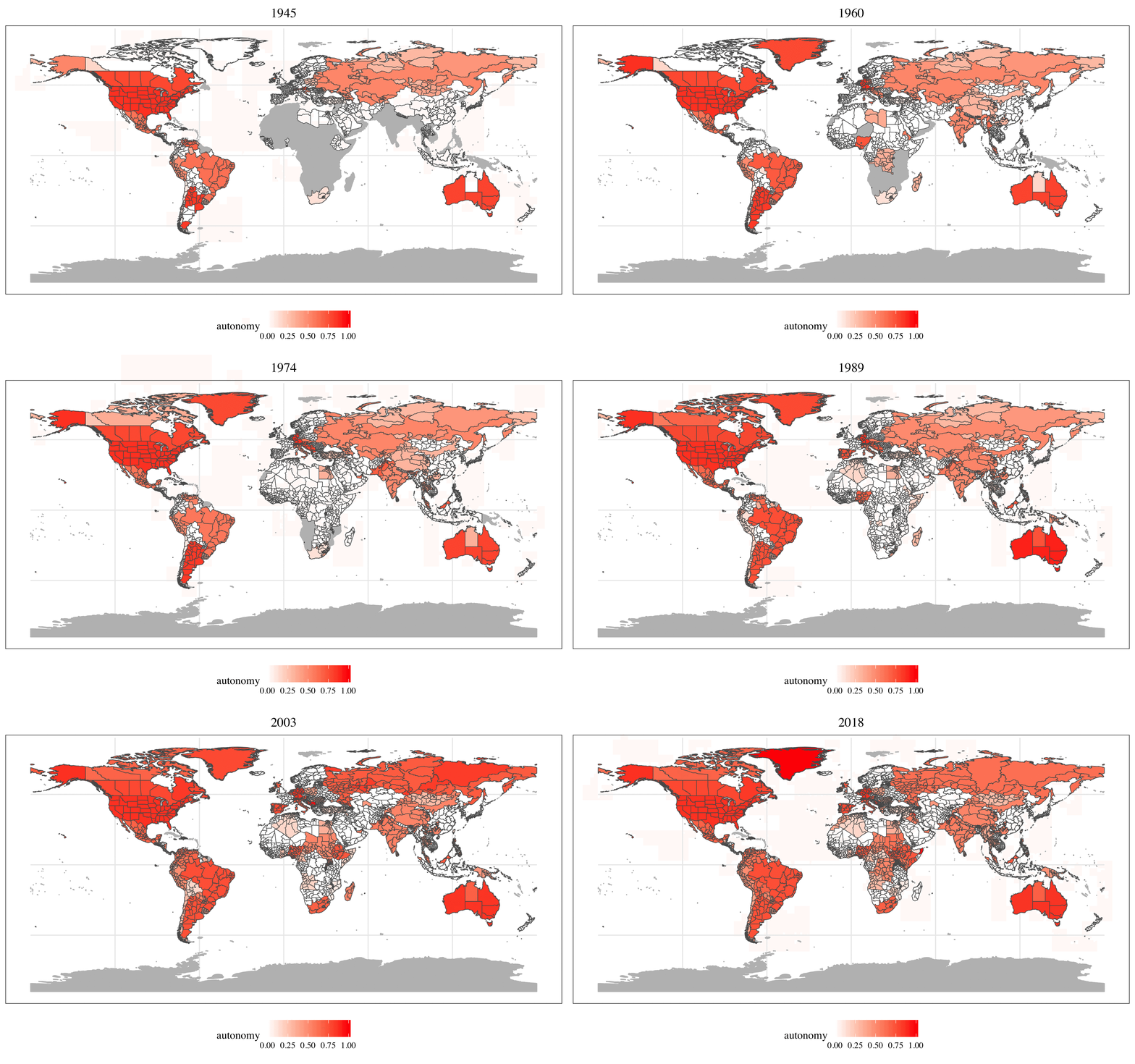
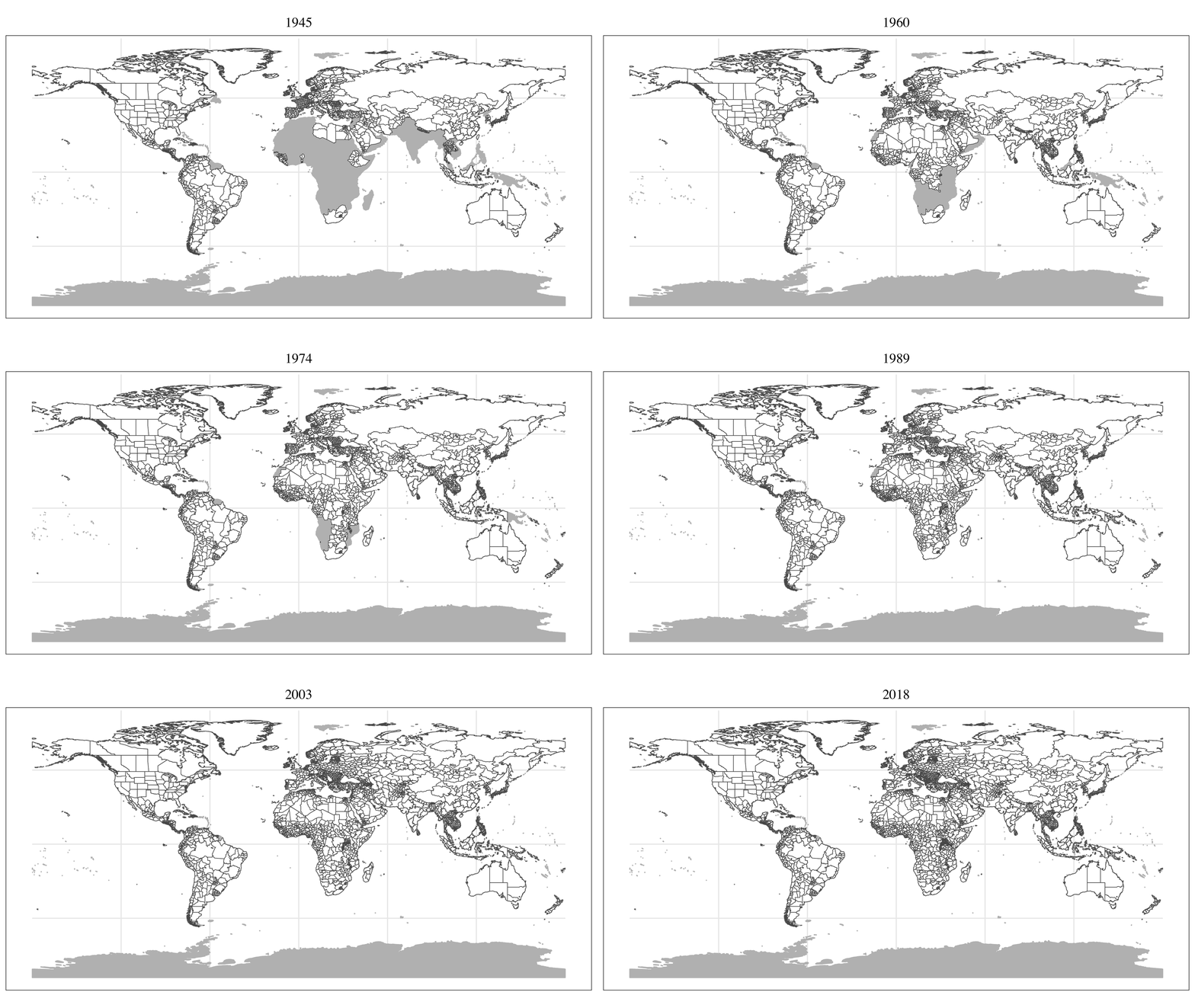
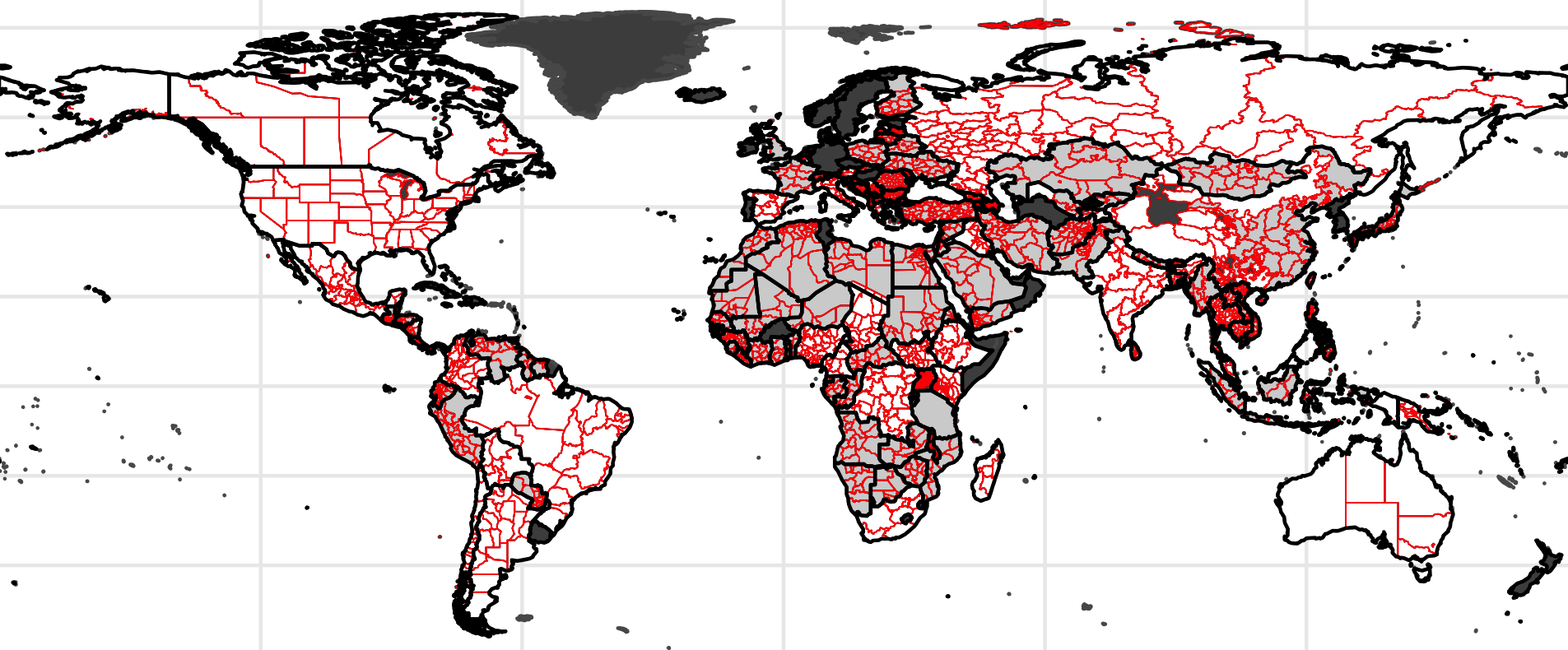
To test these arguments, I introduce new time-varying spatial data covering administrative boundaries in 180 countries between 1945 and 2018, comprising over 8,000 geo-coded polygons (see Significant Administrative Units (SAU) database, linked below). Combining this with existing data on ethnic settlement patterns, I construct group-level measures of intra-regional demographic shares and cross-regional fragmentation. I complement the resulting measures with existing information on the existence of self-determination movements to examine how different types of autonomy affect separatist mobilization. Overall, my analysis covers 588 ethnic groups in 132 multiethnic states over more than seven decades, making it one of the most comprehensive quantitative assessments of the relationship between autonomy and separatism to date.
Addressing the challenge that autonomy is often strategically granted to groups likely to mobilize, I employ difference-in-differences methods that focus exclusively on within-group changes over time, rather than comparing different groups whose conflict trajectories and separatist ambitions may have differed from the outset. Intuitively, this approach removes time-invariant sources of confounding (persistent historical grievances, colonial legacies, or enduring ethno-nationalist identities) and isolates the effect of shifts in each group's autonomy status and boundary alignment on its separatist mobilization.
My findings strongly support the argument that boundary design matters. Unified ethnic autonomy reduces the annual probability of separatist mobilization by about 10 percentage points. This demobilizing effect increases over time and is most pronounced in democracies and where autonomy is combined with national-level power-sharing and federalism. In stark contrast, fragmented autonomy has no consistent impact on separatist mobilization; if anything, mobilization appears to increase slightly as fragmentation persists over time. Most strikingly, non-ethnic autonomy is associated with increased separatist mobilization, particularly over longer time horizons and for clear regional minorities. These patterns hold across numerous robustness checks, including alternative measures, sample compositions, and estimation approaches.
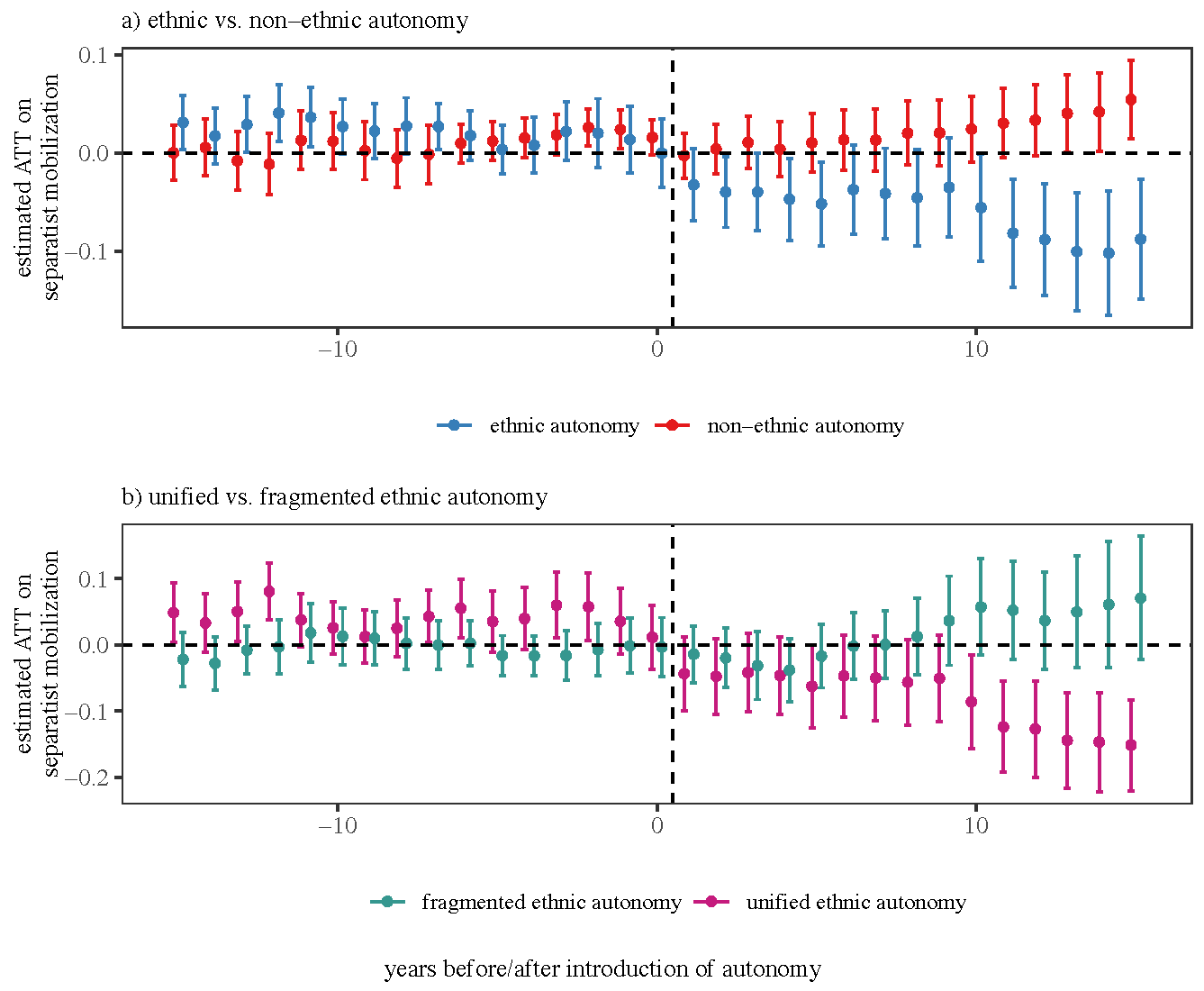
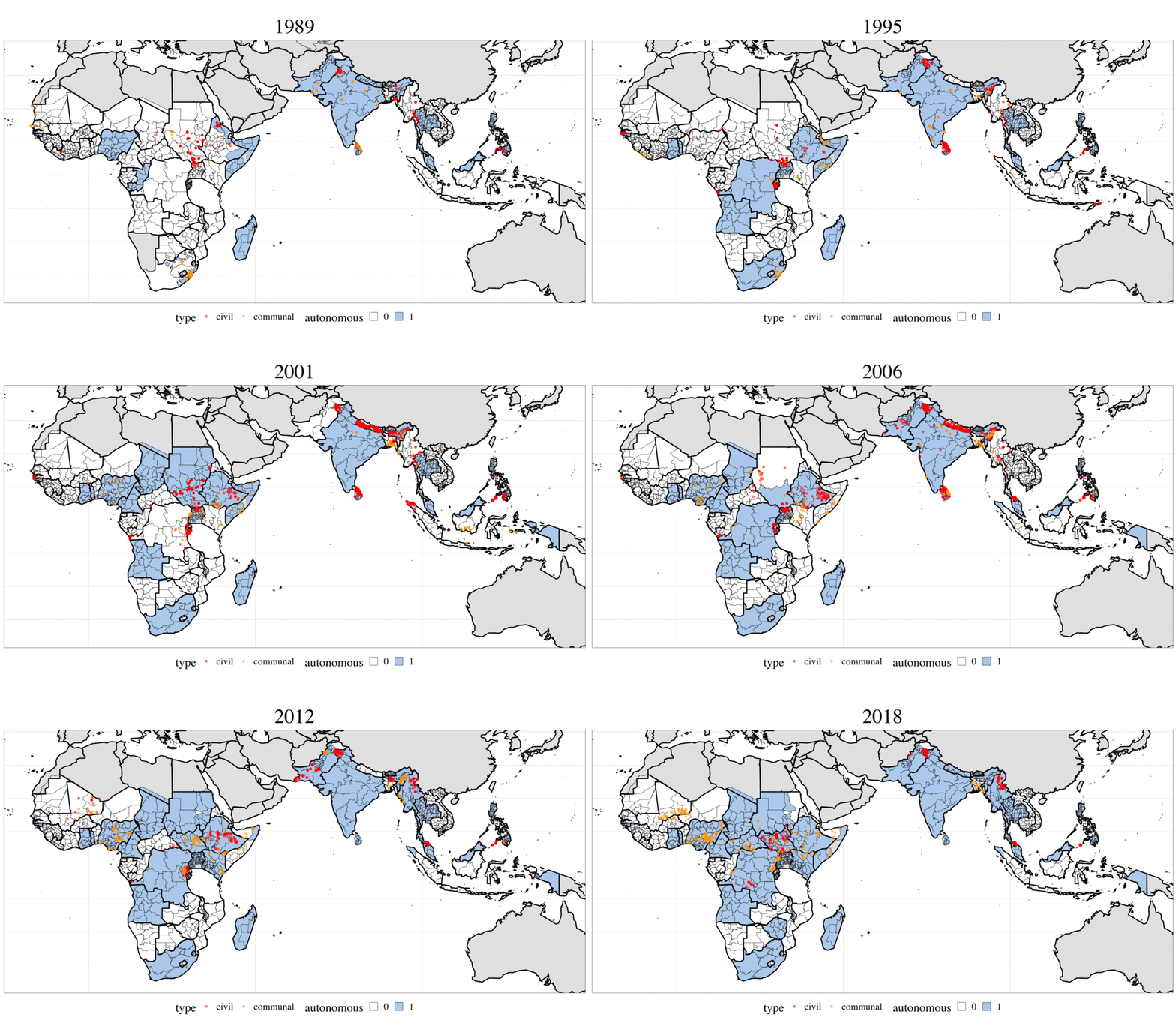
To probe the mechanisms underlying these patterns, I conduct analyses examining additional outcomes corresponding to intermediate steps that I hypothesized as linking autonomy and separatist mobilization. I show that ethnic autonomy increases groups' likelihood of controlling subnational government, consistent with the grievance-reduction pathway I theorize. Moreover, I find that fragmented autonomy is associated with a proliferation of organizations representing the same group and broader, more radical demands, which is consistent with my argument that this type of autonomy engenders political fragmentation and outbidding. I also trace my argument's step-wise implications in a qualitative manner in three influential cases: Mizoram in India, where decades of separatist conflict ended only after the Mizos received their own unified state in 1986; Aceh in Indonesia, where special autonomy as a single province in 2005 ended one of Southeast Asia's longest insurgencies; and the Tiv in Nigeria, whose mobilization largely subsided after they gained control of Benue state in 1976.
These findings carry important implications for institutional design in divided societies. They challenge widespread skepticism toward ethnic federalism and ethnically aligned boundaries (often rooted in the breakup of Yugoslavia and the USSR). Instead, my results point to the potential of unified autonomy to defuse separatist conflicts when carefully implemented. Conversely, my results counsel caution regarding proposals to deliberately create ethnically heterogeneous regions or split groups across multiple units as conflict-prevention strategies. Such arrangements, rather than dampening separatist pressures, may fail to address groups' aspirations or even backfire by generating new grievances.
At the same time, these results are subject to important caveats. While dampening separatist mobilization, unified ethnic autonomy can generate its own tensions, particularly for minorities within autonomous regions who may face discrimination or exclusion (see my APSR article on this trade-off, linked below). In line with this warning, my case studies illustrate that while unified autonomy defused national-level separatism in Mizoram, Aceh, and Tivland/Benue, it also sparked or intensified subnational conflicts with regional minorities. These patterns point to the need to carefully consider internal diversity when drawing boundaries and to complement autonomy with minority-protection measures. Moreover, unified autonomy is not always feasible where settlement patterns are highly intermixed, and it may face symbolic or strategic opposition from majority nationalists who fear it strengthens secessionist capabilities.
For detailed findings and methodology, see the article linked in the header above.