Regional autonomy and subnational majoritarianism
New spatial data and analysis of how different types of regional autonomy shape civil conflict, pitting ethno-regional groups against the state, and communal conflict, pitting such groups against each other.
Regional autonomy, whether in the form of federalism, decentralization, or special autonomous arrangements, is one of the most widely practiced institutional responses to ethnic self-determination conflicts. But its effects depend heavily on the societal and historical context: the same institutional features that can defuse secessionist conflict in one setting may fuel new forms of violence in another. Moreover, observations from numerous cases, including India, Nigeria, and Ethiopia, show the risk that autonomy can redirect rather than eliminate ethnic violence, shifting it from national-level rebellions against the state to communal conflicts between groups within autonomous regions. In addition to the merits of autonomy as a peacebuilding tool, such subnational conflict, whether in autonomous regions or instigated by self-determination movements inside their claimed regions more broadly, forms a central focus of this project.
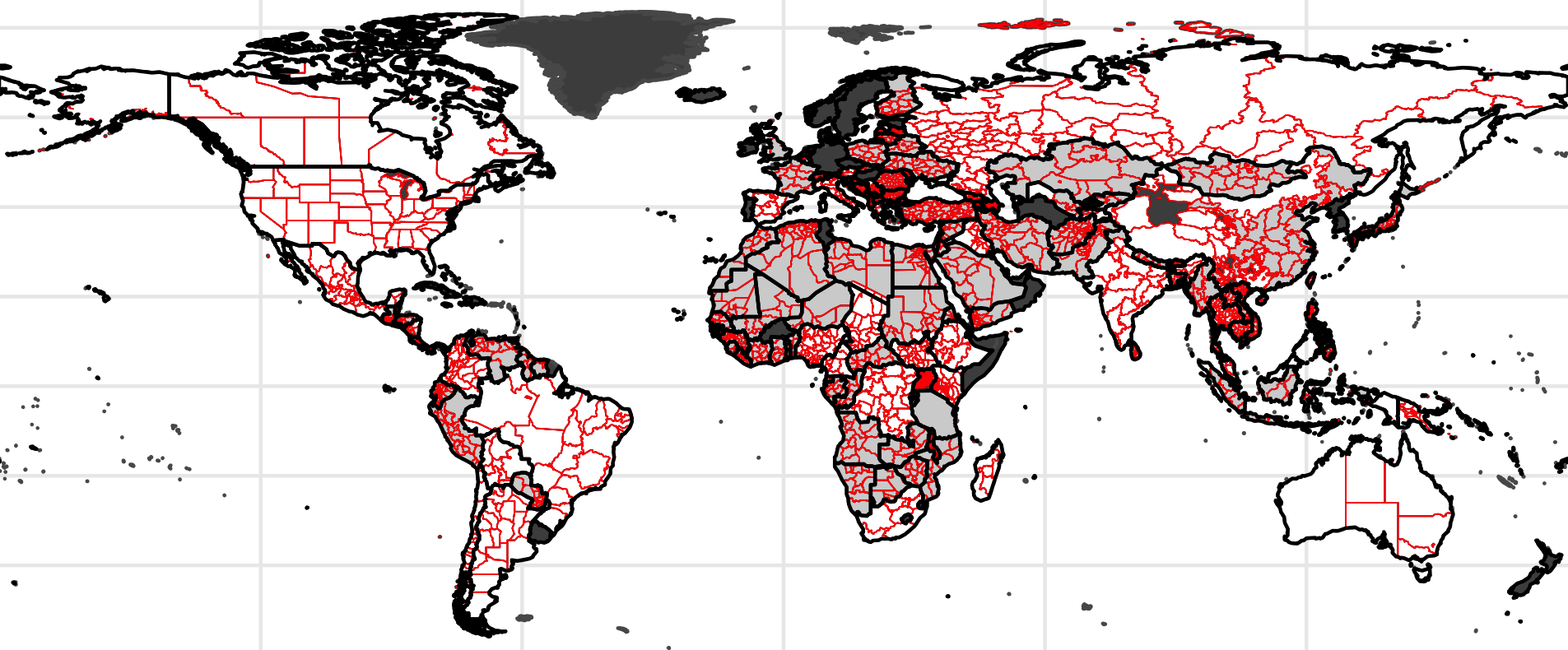
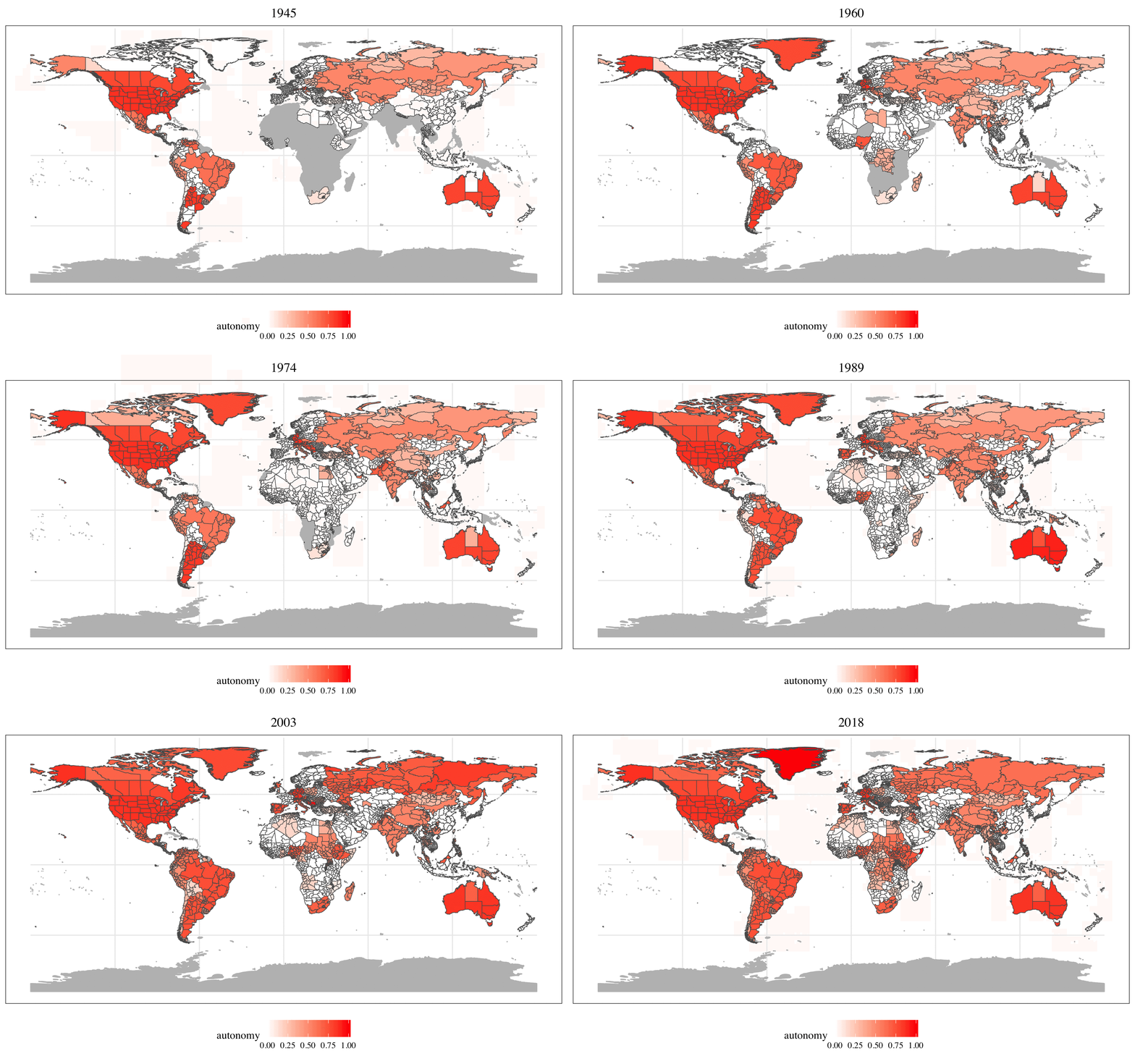
This project examines these dynamics systematically, combining new global datasets, spatial methods, and quantitative analysis. It has two tightly connected agendas: (1) understanding the conditions under which regional autonomy succeeds or fails as a peacebuilding instrument, and (2) expanding the analysis from national-level conflict to the subnational arena. Central to both is new global data infrastructure, including the Constitutional Power-Sharing Dataset (CPSD) and the Significant Administrative Units (SAU) database, which together provide time-varying spatial information on constitutional autonomy arrangements and administrative boundaries in 180 countries since 1946. The second agenda, examining the causes and consequences of subnational majoritarianism by self-determination movements, is being pursued in an ongoing sub-project funded by an SNSF Ambizione grant.
Regional autonomy and national-level conflict
A first subproject examines the consequences of regional autonomy for national-level conflict, including for secessionism and civil wars pitting the national government against regionally-concentrated groups. To set the scene, a joint literature review with Kristin Bakke explains why decades of comparative research have produced strikingly inconclusive results on regional autonomy as a conflict-management tool (Juon & Bakke 2023, Managing Self-Determination). The chapter, published in the Routledge Handbook on Self-Determination and Secession, argues that treating autonomy as a uniform treatment obscures the fact that its effects are deeply conditional. Meaningful progress requires disaggregating its consequences along three dimensions: the origins of autonomy arrangements (which are often adopted in difficult circumstances, creating severe selection problems), the societal contexts into which they are introduced (notably the degree of prior violence and ethnic diversity), and the institutional design of autonomy arrangements themselves. These three dimensions inform the project's empirical contributions.
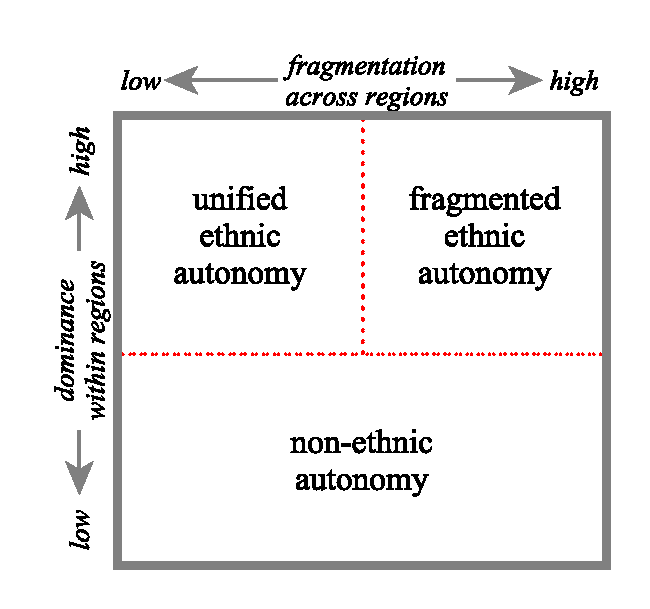
Expanding on this theme, the project's first main empirical contribution on national-level conflict shows that boundary design is one of the decisive institutional features for whether autonomy defuses or fuels separatist conflict (Juon 2026, Unfulfilled Aspirations). I distinguish three ideal types of autonomy, defined by how closely aligned regional boundaries are with ethnic settlement patterns: unified ethnic autonomy provides a group with a single, demographically homogeneous region; fragmented ethnic autonomy splits a group across multiple units; and non-ethnic autonomy places a group as a demographic minority within regions ruled by other groups, sometimes deliberately engineered to limit minority influence. Using the new SAU database, encompassing over 8,000 geo-coded administrative boundary polygons covering 180 countries from 1945 to 2018, I construct group-level measures of boundary alignment for 588 ethnic groups across 132 states over more than seven decades. Difference-in-differences estimation isolates the causal effect of shifts in autonomy type from persistent group-level confounders such as historical grievances and colonial legacies.
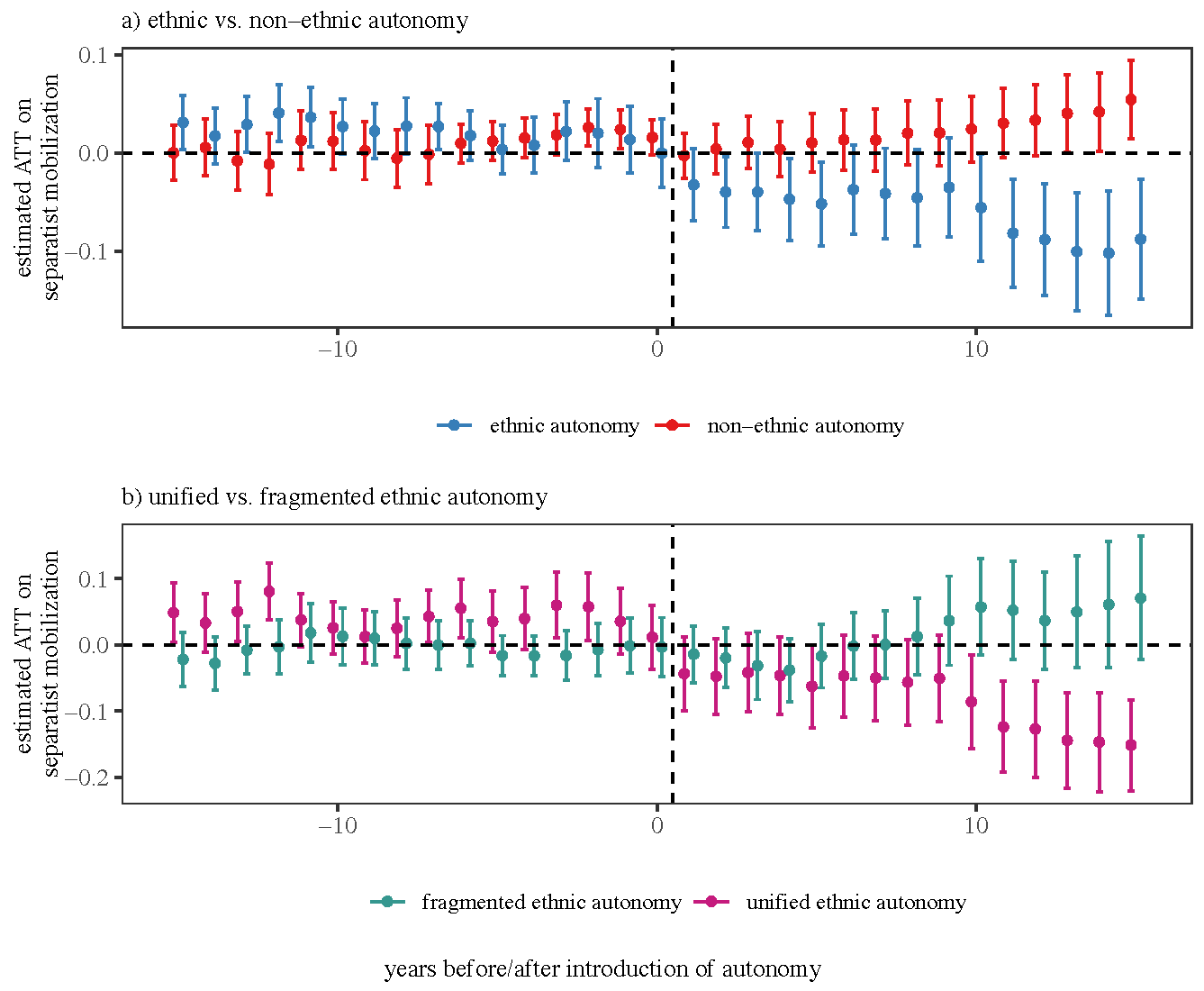
The findings of this article indicate that boundary design matters. Unified ethnic autonomy consistently reduces separatist mobilization by approximately ten percentage points annually, with effects that grow over time and are strongest in democracies and where autonomy is combined with national-level power-sharing. Three influential cases illustrate the pattern: decades of separatist conflict in India's Mizoram ended only after the Mizos received their own unified state in 1986; one of Southeast Asia's longest insurgencies in Aceh concluded when Indonesia granted special autonomy as a single province in 2005; and Tiv mobilization in Nigeria subsided after the group gained control of Benue state in 1976. Fragmented autonomy, by contrast, has no consistent effect and is associated over time with organizational proliferation and more radical demands. Non-ethnic autonomy is associated with increased separatist mobilization, particularly over longer time horizons, by generating new grievances among groups exposed to subnational exclusion.
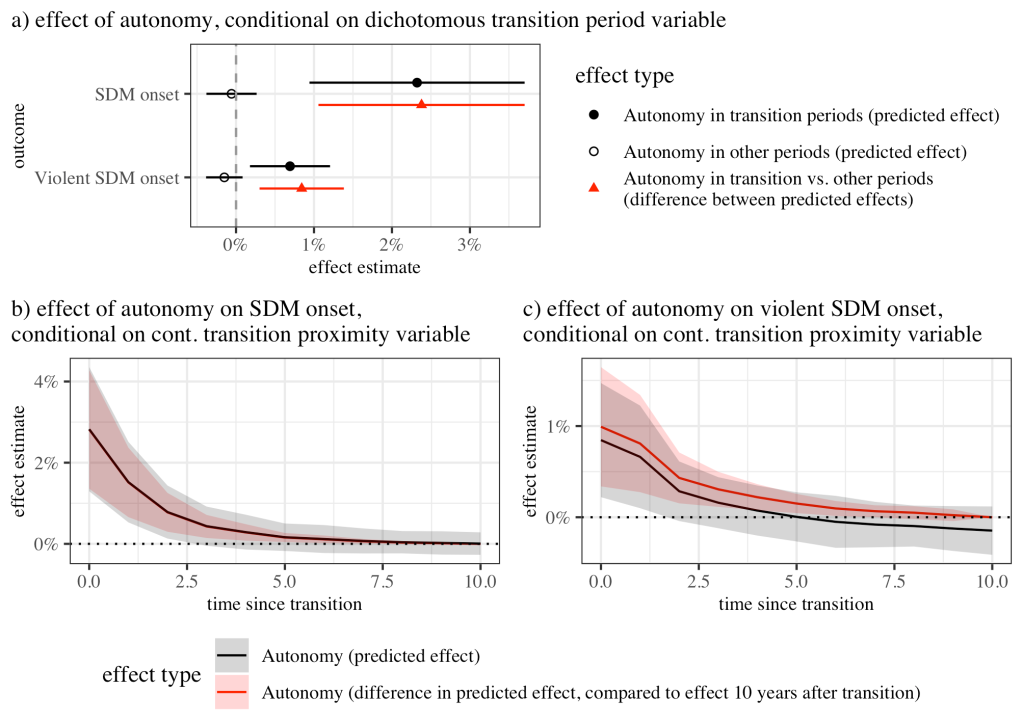
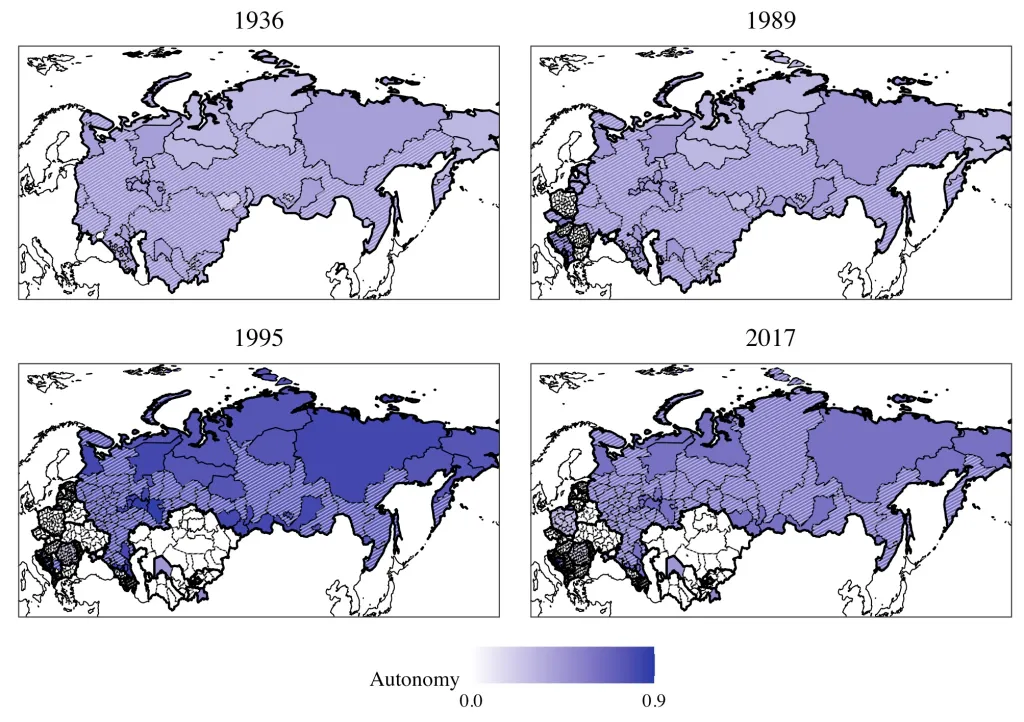
A second empirical contribution shifts focus from the institutional design of autonomy to historical context as a second important factor influencing the impact of autonomy on secessionist conflict. Specifically, it examines how regime transitions moderate these dynamics (Juon & Bochsler 2023, Wrong Place at the Wrong Time). We argue that during stable periods, autonomy alleviates grievances and supports institutionalized bargaining between ethnic groups and the state. But transitions generate a specific set of destabilizing pressures that risk derailing the effect of autonomy: the uncertainty inherent in regime transitions raises the risk of strategic miscalculation; moreover, fears that the new regime will withdraw autonomy create incentives for autonomous groups to mobilize preemptively; finally, the prospect of changed ethnic relations reduces autonomy's grievance-alleviating effects. The violent disintegrations of Yugoslavia and the Soviet Union, in which autonomous regions became flashpoints of ethnic mobilization precisely when the surrounding political order was most unstable, are defining examples. Using new fine-grained data on territorial autonomy in post-communist successor states, alongside a global analysis of regime transitions since 1945, we show that autonomy's stabilizing effects can reverse during such transitions. These risks are substantially mitigated where autonomous groups are incorporated into the new government, which points to the importance of combining autonomy with central government inclusion in contexts of political instability.
Autonomy's subnational trade-off
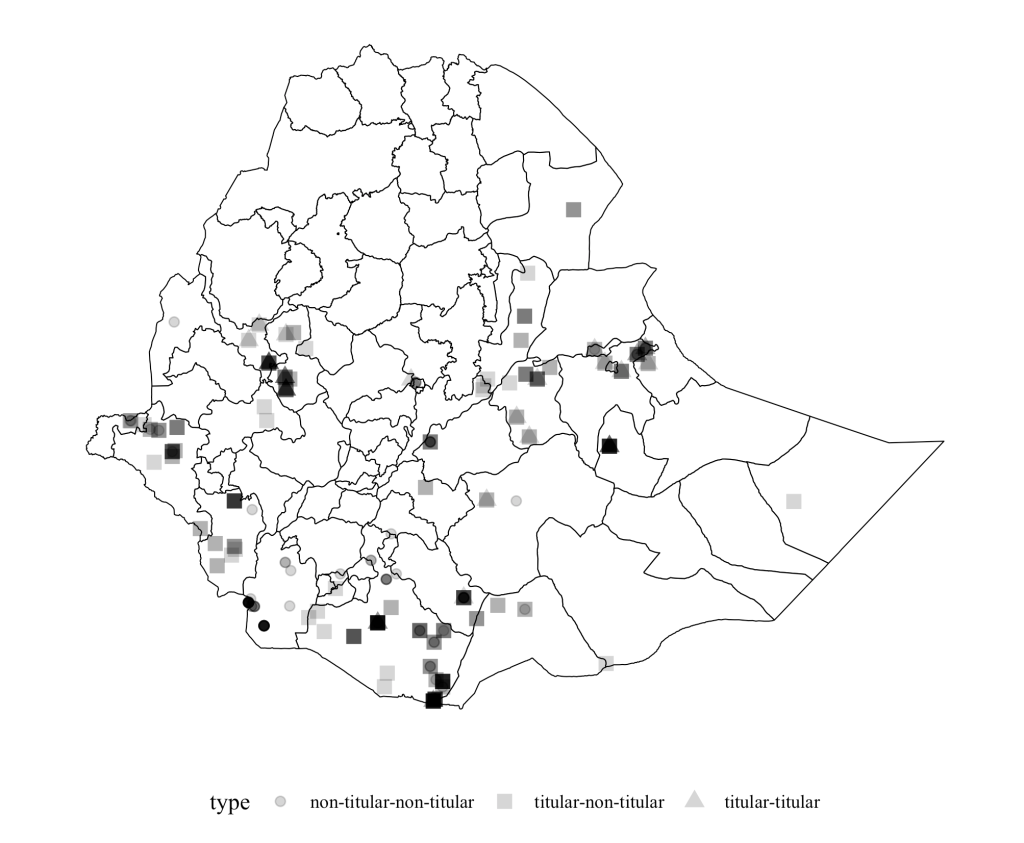
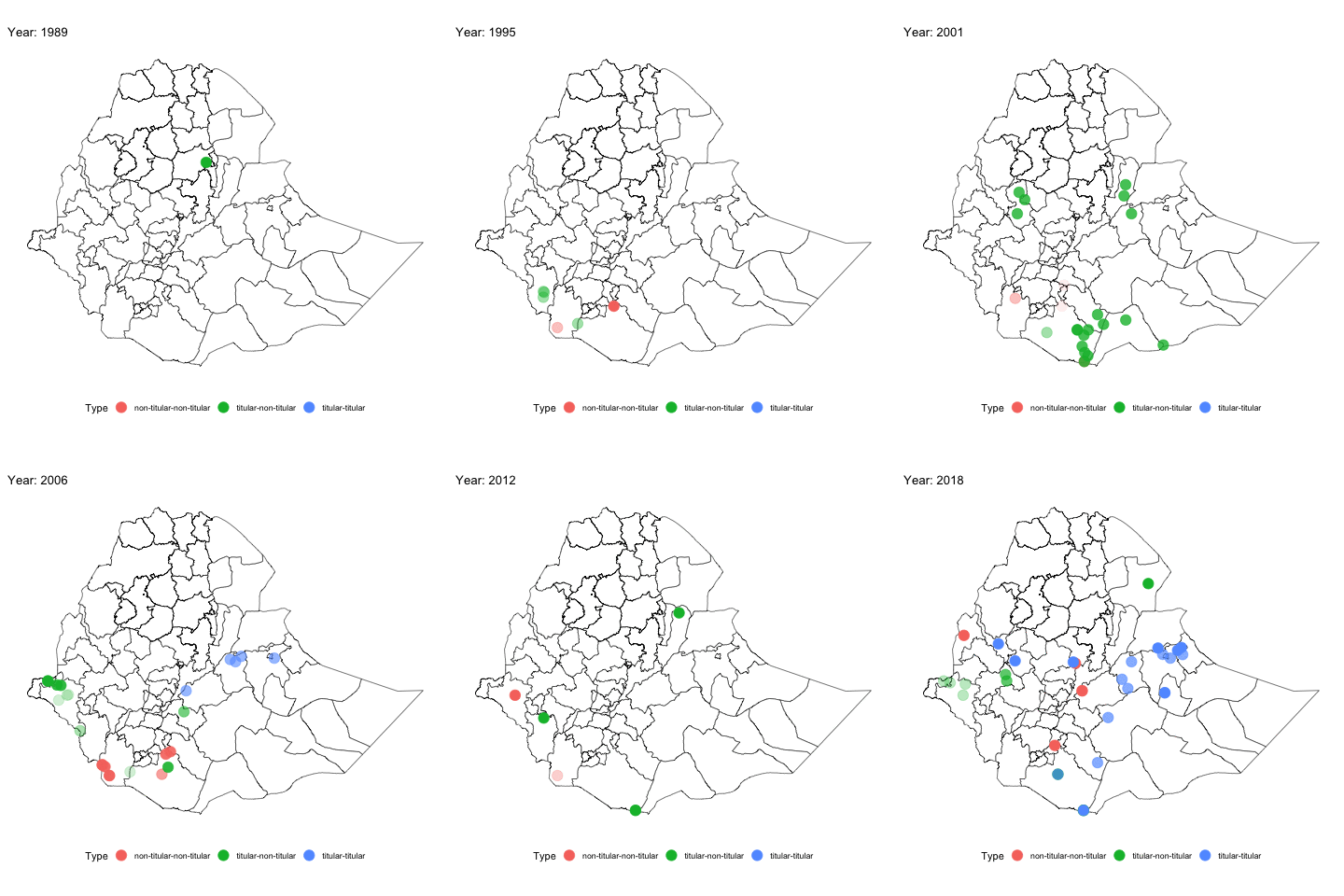
Several publications in this project straddle the divide between national and subnational conflict, examining how autonomy potentially reshapes the type of ethnic violence rather than eliminating it. The Ethiopian case provides the initial evidence. Using geocoded data on 118 ethnic groups and communal violence across Ethiopia's 80 administrative zones between 1994 and 2018, Livia Rohrbach and I show that ethnofederalism has substantially increased the risk of communal violence between titular and non-titular groups in Ethiopia's often heterogeneous zones (Juon & Rohrbach 2023, Say My Name). By designating ethnic 'homelands', ethnofederalism creates powerful incentives for titular group leaders to monopolize local government control and connected economic resources, while generating acute discontent among non-titular groups who find themselves politically and economically marginalized. Communal violence between October 2017 and April 2018 in Ethiopia's Benishangul Gumuz region, where Gumuz and Berta militias, reportedly backed by local authorities, killed dozens and displaced thousands of ethnic Amhara, exemplifies the mechanism. Similar dynamics have repeatedly erupted in Ethiopia's Harar region, where the politically dominant but demographically small Harari have generated persistent confrontations with excluded Oromo communities, and in zones along the Guji-Gedeo border, where mutual land claims between two groups, each the titular group in an adjoining zone, have produced cyclical violence on both sides of the boundary.
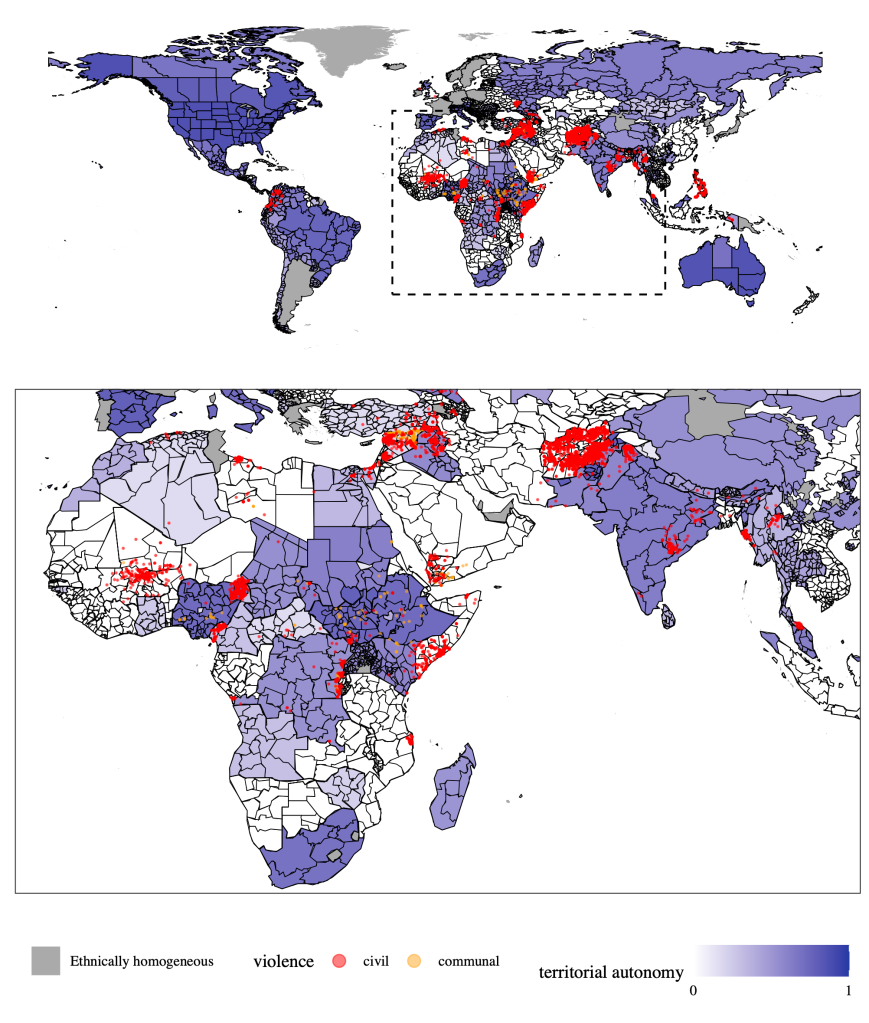
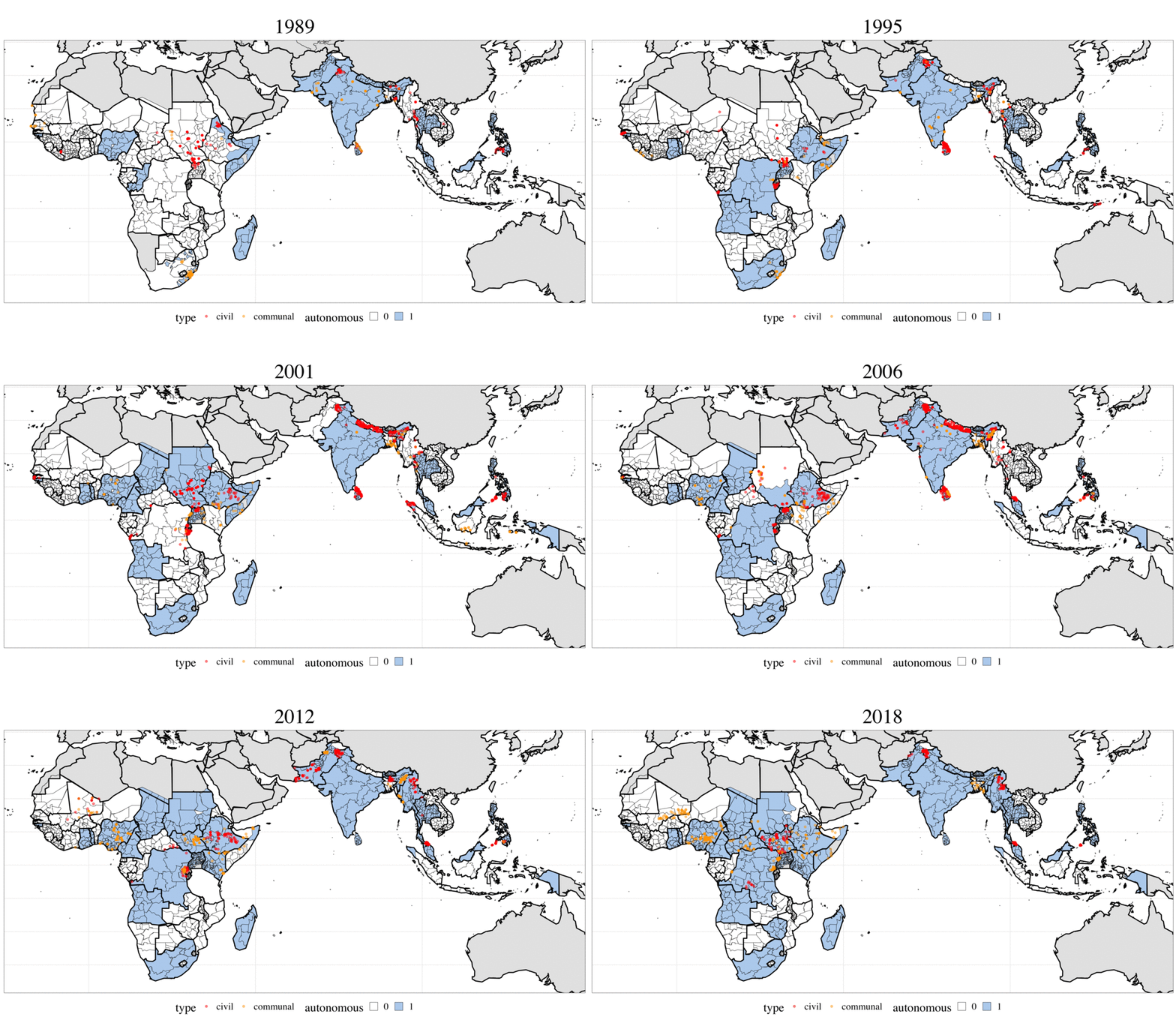
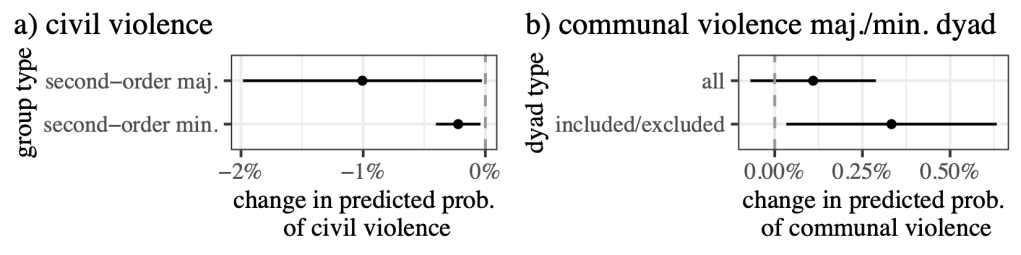
A global follow-up published in American Political Science Review generalizes this trade-off argument and examines ways to mitigate it (Juon 2025, Autonomy Trade-off). In a comprehensive analysis covering all ethnic group pairs in more than 4,000 administrative regions across 139 multi-ethnic countries between 1989 and 2019, I show that territorial autonomy reduces the risk of civil violence, ethnic rebellions against the national government, across the board, reflecting its national-level pacifying and stabilizing consequences already discussed above. But it simultaneously increases communal violence between regionally dominant and non-dominant groups. These communal risks are most pronounced where national government representation is unequal: groups excluded nationally and subordinate regionally face especially combustible grievances, while groups favored at both levels are especially uninhibited in monopolizing power. Instrumental variables analysis indicates that these findings are unlikely due to reverse causality. Case studies trace the intermediate steps in three influential examples: Sindh province in Pakistan, where Sindhi dominance of regional government fueled Mohajir discontent and eventually violent clashes; Jonglei state in South Sudan, where regional majority control intensified communal tensions that contributed to civil war in 2013; and Ondo state in Nigeria, where broad-based subnational power-sharing arrangements helped defuse communal tensions generated by autonomous governance.
The policy implication of these studies is direct: wherever territorial autonomy is adopted as a peacebuilding tool, it must be combined with supporting measures to mitigate the risks of subnational violence in the newly created autonomous regions. Broad-based national power-sharing, and in diverse regions, subnational power-sharing as well, is a particularly promising avenue to contain the communal tensions autonomy generates.
Subnational majoritarianism
These findings, that autonomy sometimes redirects conflict from the national to the subnational level, raise the more general question about the causes and consequences of subnational ethnic conflict more broadly. In a second sub-project, funded by an ongoing SNSF Ambizione grant, I address these questions, widening the lens beyond the consequences of autonomy to the broader phenomenon of subnational majoritarianism perpetrated by self-determination movements. This sub-project asks why some self-determination movements adopt exclusionary ideologies against ethnic outgroups in their claimed territories, and what the consequences are for regional democracy and conflict.
Case-based evidence makes clear that subnational majoritarianism is widespread and costly. For instance, Acehnese separatists systematically killed Javanese settlers and displaced native Gayo from Aceh. Indigenous leaders in Nigeria's Plateau state subjected the Jasawa Hausa to forced assimilation, generating clashes that claimed hundreds of lives in 2001 and 2010 alone. In Bosnia's formerly separatist Republika Srpska, Serb nationalists committed genocide, prevented displaced Bosniaks and Croats from returning, and curtailed regional democratic competition. Yet not all movements behave this way: Scottish and Catalan nationalists are broadly inclusive, and the Eritrean People's Liberation Front's inclusive appeals helped it build a broad cross-cutting coalition that contributed to its eventual independence. Cross-national research has barely addressed why this variation exists and what its consequences are, including for regional democracy and conflict.
Data collection. At the project's core is a new global dataset, the Subnational Majoritarianism (SubMaj) dataset, covering 502 self-determination movements between 1946 and 2026. I lead a team of 6 research assistants to code, for each yearly pairing of a movement and an ethnic outgroup in its claimed territory, whether the movement advocated political exclusion, forced assimilation, expulsion, or systematic killing. SubMaj complements existing data on movements' demands vis-à-vis the national government with new information on their potentially conflict-prone stances toward ethnic outgroups within their own regions.
Why do movements adopt exclusionary ideologies? In a first ongoing article, I argue that subnational majoritarianism is rooted in past experiences of ethnically targeted discrimination by the national government, which lead movement leaders to perceive politics as a zero-sum ethnic game. This translates most readily into exclusionary demands against outgroups with links to the national government, framed as "fifth columns" or security threats, especially during periods of intense national-level conflict. The Croatian HDZ's agitation against Serbs during Yugoslavia's disintegration, justified by Belgrade's discrimination against Croats, and the Acehnese rebels' campaigns to deport Javanese, accused of serving as agents of Jakarta's colonial project in Aceh, both illustrate this dynamic. Native outgroups without government links face a different logic: they may be courted as allies during intense confrontations with the center, but subjected to assimilationist pressure once a movement shifts focus to governing its territory, as happened to the Gayo in Aceh, whom rebels initially recruited but later sought to assimilate as "lesser Acehnese" once Gayo leaders began pressing for their own separate province.
Institutional safeguards. A second ongoing article examines what prevents movements from implementing exclusionary measures once they obtain regional autonomy. Combining autonomy with national-level power-sharing reduces the perceived security threat posed by outgroups associated with the government. Safeguards against the subdivision of a movement's claimed territory reduce incentives to discipline native outgroups. And state-wide fundamental rights, enforced by independent courts, impose direct constraints on discrimination, a strategy compatible with, rather than opposed to, substantive regional self-rule.
Consequences for regional democracy. A third ongoing article examines how subnational majoritarianism erodes democratic quality within autonomous regions. By invoking ethnic threats, movement leaders justify extraordinary measures that override normal democratic processes, restricting opposition, manipulating elections, limiting press freedom, even within their own ingroup. In Nigeria's Plateau state, ruling elites conjured the threat of Hausa collusion with Northern Muslims not only to bar Hausa from voting, but to justify systematic election-rigging that entrenched their own personalistic hold on state power. In Bosnia's Republika Srpska, Serb nationalists invoked the prospect of national government conspiracies to justify restrictions on Bosniak and Croat passive voting rights, curb freedom of assembly, and suppress rival Serb parties. The article tests the generalizability of these patterns in a global quantitative analysis of all decentralized and federal states since 1946.
Consequences for communal conflict. A fourth ongoing article examines how ethnic outgroups respond to subnational majoritarianism: whether they passively accept it, support the movement, join pro-government militias, or mobilize for their own separate administrative units, and when these responses escalate into violence. The Mohajir minority in Pakistan's Sindh province, facing aggressive Sindhi majoritarianism, demanded the separation of Karachi and engaged in violent clashes with Sindhi groups throughout the early 1990s. Gayo and Javanese in Aceh, similarly, opposed the separatist movement and joined pro-government militias that perpetrated violence against its predominantly Acehnese supporters. The article examines these dynamics systematically for all relevant movement-outgroup pairs between 1989 and 2023.
Consequences for obtaining concessions. A fifth ongoing article examines whether subnational majoritarianism undermines movements' own political aims at the national level. Majoritarian movements alienate potential supporters within their territory, provide rhetorical ammunition to majority nationalists who oppose concessions, and reduce international sympathy, illustrated by how atrocities committed by Bosnian Serb separatists became an embarrassment even to Serbia's nationalist leadership in 1993, forcing it to pressure Bosnian Serbs to accept the Vance-Owen peace plan. The article tests this argument for all self-determination movements between 1946 and 2023.
Together, these five articles, and the new SubMaj dataset that underlies them, connect the institutional analysis of autonomy to the ideological dynamics that drive subnational conflict. They will be synthesized in a book manuscript integrating the project's quantitative findings with in-depth case studies.
Please click on the publications' descriptions and dataset links below to learn more about these contributions.