The Return of Nationalist Geopolitics: Liberal Backsliding and Conflict
New data and systematic analysis on how rising ethnic exclusion and nationalist geopolitics, rather than great-power rivalry alone, have reversed post–Cold War declines in violent conflict.
The Return of Nationalist Geopolitics: Liberal Backsliding and Armed Conflict
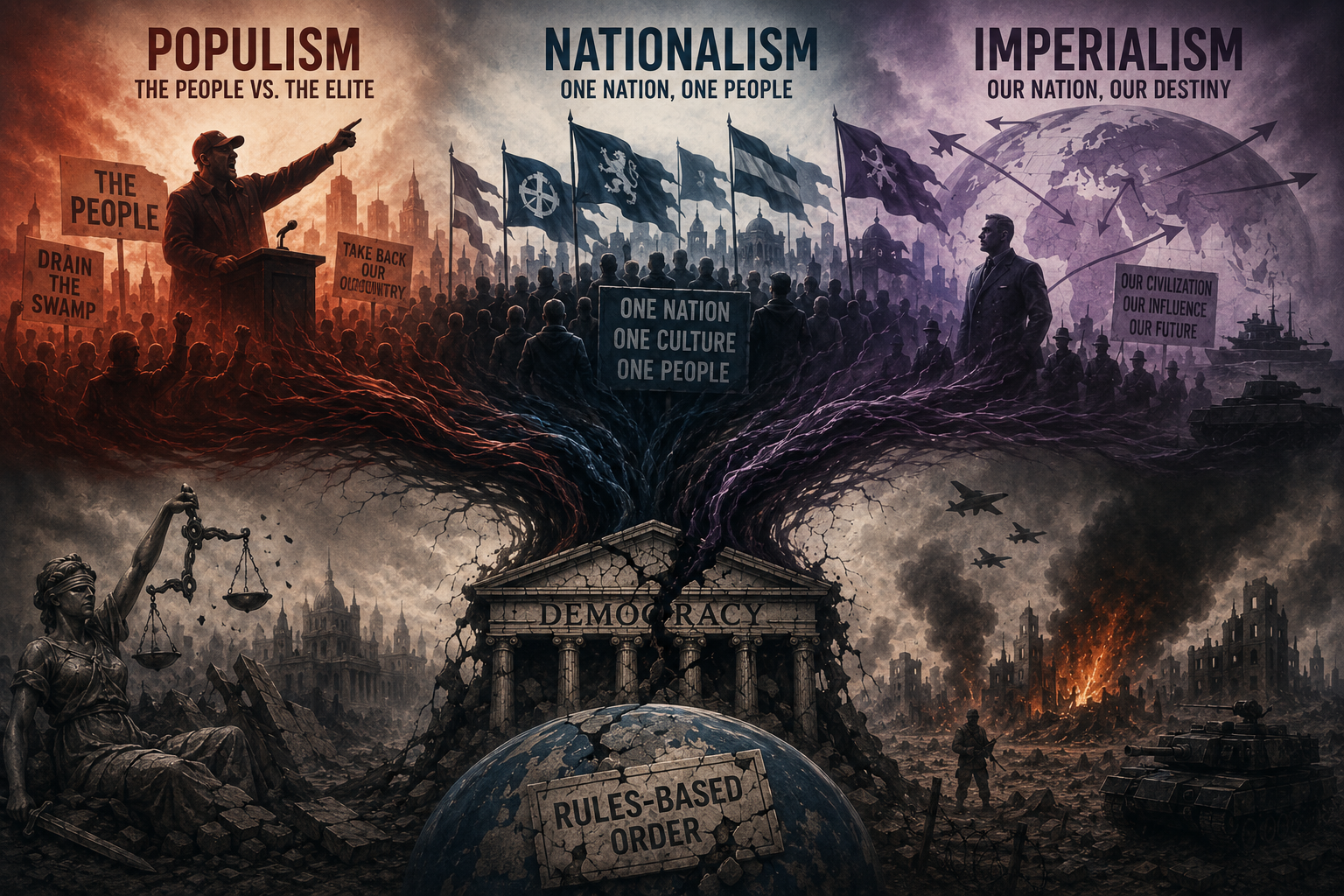
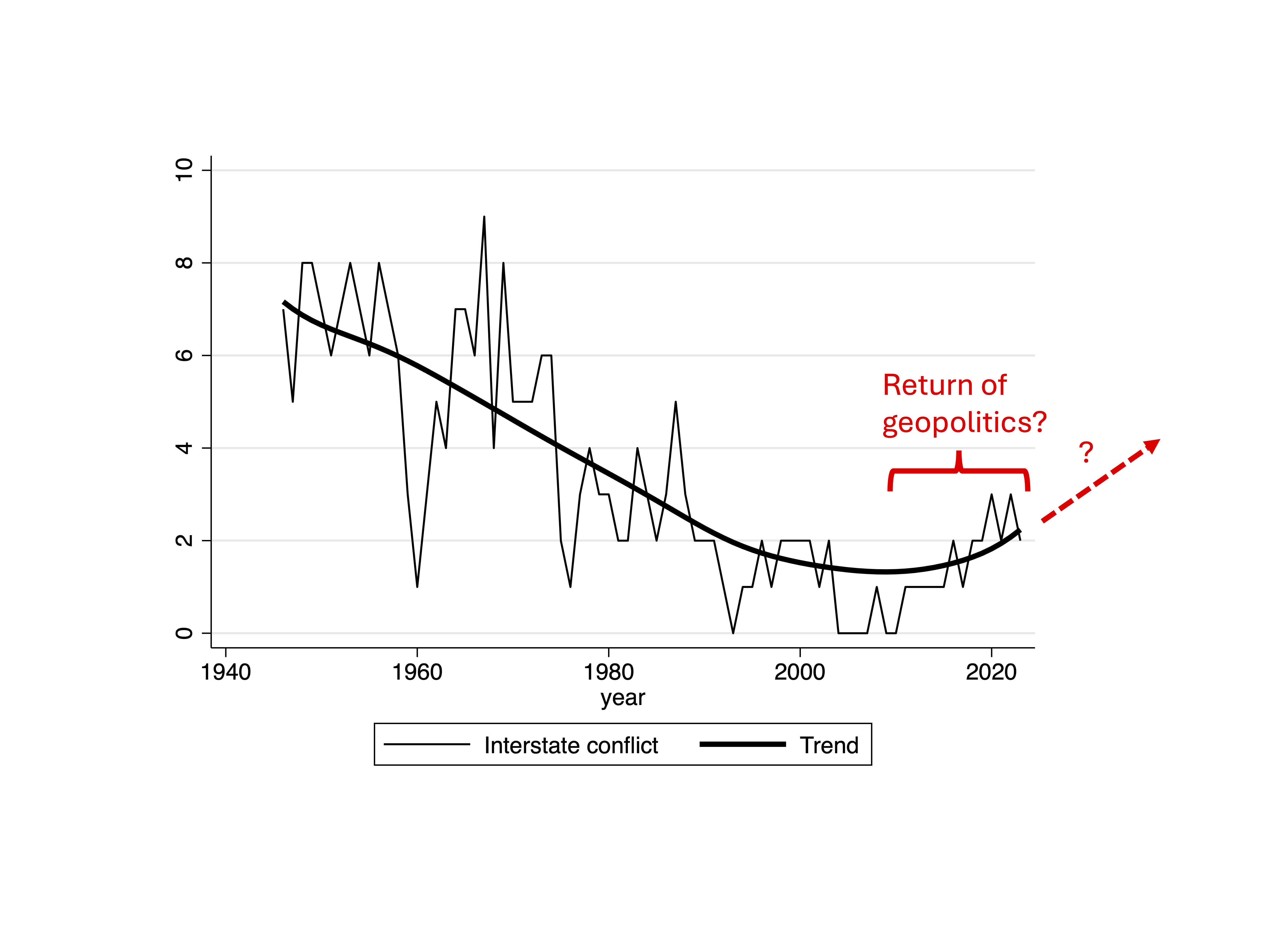
Why has political violence recently risen again after decades of decline which characterized much of the post-Cold War period? In our forthcoming article in International Security, we argue that the answer lies not in a timeless, strategic logic of great-power competition, but in what we call the return of nationalist geopolitics: an ideologically driven wave of ethnic exclusion and irredentism that has been systematically eroding the institutional safeguards that once helped keep the peace.
Since Russia's annexation of Crimea in 2014, and especially since its full-scale invasion of Ukraine in 2022, influential observers from John Mearsheimer to Walter Russell Mead have argued that geopolitics has returned to something like its historical norm: states competing for power in an anarchic world. We argue that this realist reading of contemporary events misses an important driver. Rather than coolly calculating power politics, many of today's central actors (from Vladimir Putin, over Donald Trump, to Narendra Modi) are motivated by violations of the nationality principle, the idea that an ethnic nation should control its own state, and potentially its own sphere of influence. As we show, this resurgence of ethnic nationalism has had concrete political consequences: nationalist leaders around the world have increasingly excluded ethnic minorities from executive power, while invoking the protection of co-ethnics abroad to justify territorial revisionism.
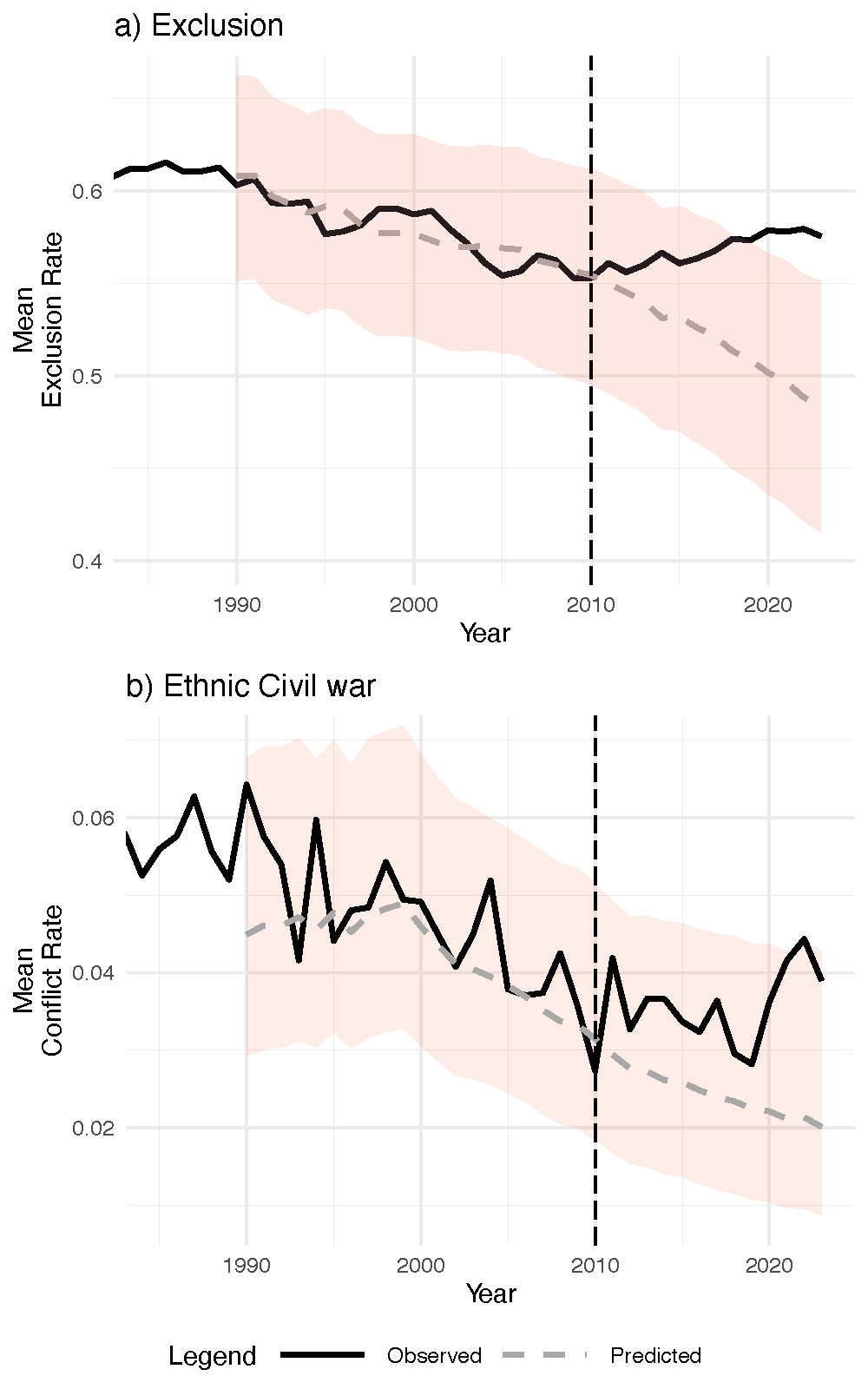
We document these developments systematically using the Ethnic Power Relations (EPR) database, whose recent update I supervised. This database tracks ethnic groups' access to executive power across 1946–2023. The most recent data reveal a striking pattern: after decades of declining exclusion, the share of groups excluded from government has risen markedly since 2010, with 65 previously included groups experiencing political downgrading (see figure 1, top panel). Moreover, the number of state dyads featuring excluded kin groups abroad (a precondition for irredentist conflict) has grown in the same period, mirroring this overall trend of exclusion (see figure 2, top panel). Moreover, both trends closely track a parallel rise in nationalist ideology in governments worldwide, from roughly 10 percent of states around 2000 to about 15 percent in recent years, and as high as 30 percent when weighted by population.
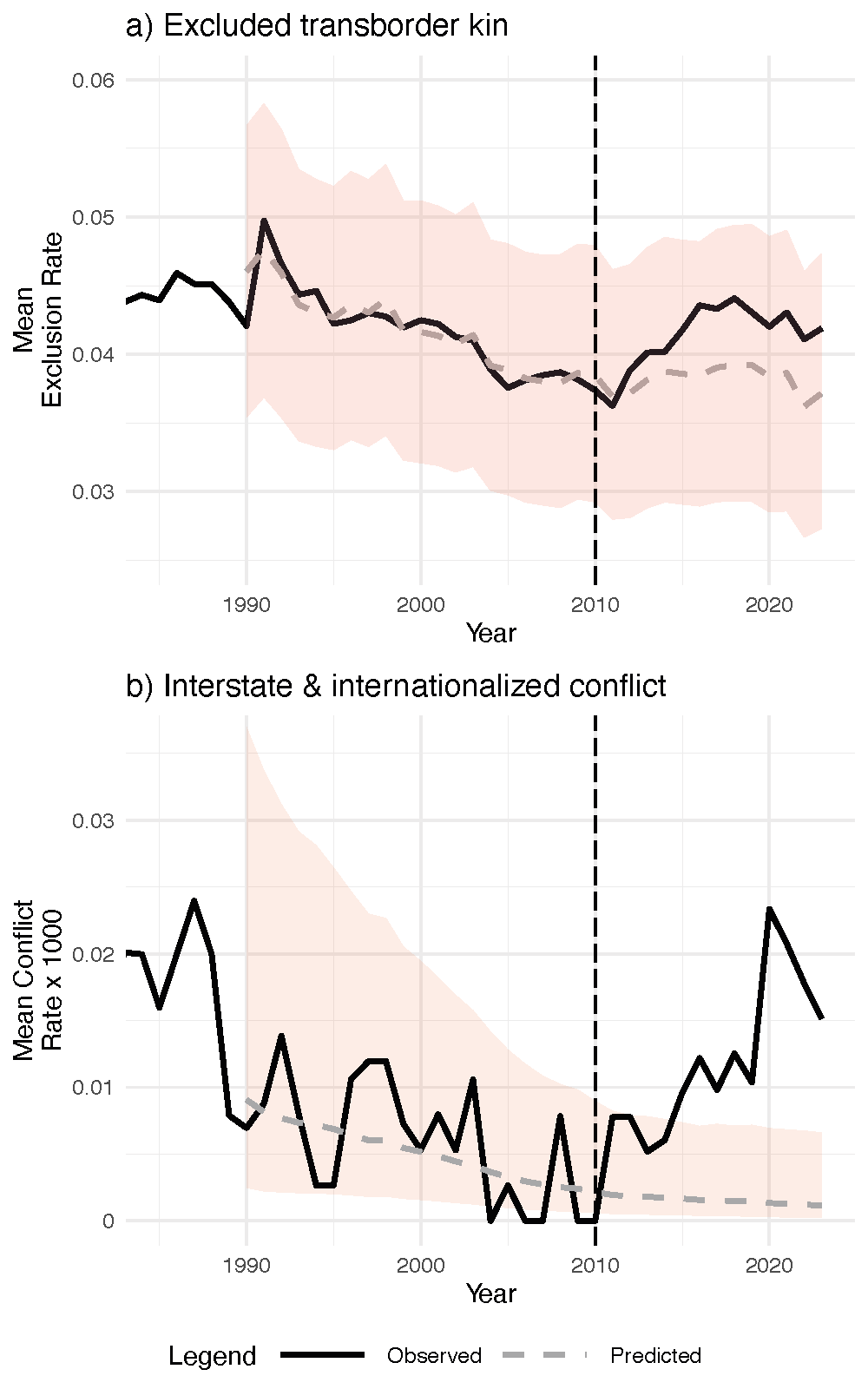
To assess whether these exclusionary shifts have fueled conflict, we apply staggered difference-in-differences estimation to global group-year data (1946–2023). Our results show that groups experiencing political downgrading face an increase of 5 percent in their annual probability of rebellion, a substantial effect given a baseline of 2–6 percent. This effect is strongest in non-democratic contexts, among groups with territorial claims, and under nationalist governments, in line with our theoretical argument. At the interstate level, state dyads with newly excluded kin groups experience roughly a 1 percentage point increase in the probability of interstate or internationalized conflict per dyad. In sum, we find suggestive evidence for a destabilizing chain of events rooted in the growing political influence of nationalism around the world since 2010, resulting in gradually increasing ethnic exclusion, which in turn triggered a surge in civil and interstate conflict around the world.
The Ukraine case is emblematic of these developments. The ouster of the pro-Russian Party of Regions in 2014 excluded ethnic Russians from national executive power, triggering domestic separatist violence in the Donbas and Russia's intervention, framed explicitly by Putin as the protection of co-ethnics living under what he portrayed as alien rule. The 2022 full-scale invasion followed a similar irredentist logic. A structurally similar case is Afghanistan after 2021, where the Taliban's return concentrated power in Pashtun networks and excluded Tajiks, Uzbeks, and Hazaras. This produced immediate armed resistance through the National Resistance Front.
A series of counterfactual projections illustrates the magnitude of the shift. These show that, had the post-Cold War trend toward greater inclusion continued past 2010, civil conflict rates would have remained near 2 percent per group rather than approaching 4 percent as observed in 2023; and interstate conflict risks would be near zero rather than 0.02 percent per state dyad. These numbers translate into approximately 14 additional ethnic civil conflicts and 5 additional interstate conflicts per year.
Our findings have concrete policy implications. We argue that critics of liberalism have been right to identify overreach, but wrong to conclude that liberal institutions are the source of today's instability. The evidence strongly suggests that more conflict is occurring precisely because inclusive liberal practices have been retreating. Defending them is not merely principled; it is essential for reducing violence within and between states.
For detailed findings and methodology, please see the article linked in the header above.