Populism, Nationalism, and Imperialism
New global data and analysis of the causes of populism, nationalism, and imperialism -- on the rise again around the world -- and their consequences for geopolitics, warfare, and democracy.
Liberal democracy is backsliding across the world, minority rights are increasingly being curtailed in many places, and political violence, after decades of post-Cold War decline, is once again on the rise. This project shows that these challenges reflect a common underlying shift in the global distribution of political power, as exclusionary and illiberal actors have gained increasing influence over governments, legislatures, and societies around the world, from Hungary and Turkey, over Russia and China, to India and the United States. Understanding who these actors are, how they operate, and what consequences they generate is therefore among the most pressing questions in contemporary political science, with far-ranging implications for the geopolitical order, international security, and the future of democracy.
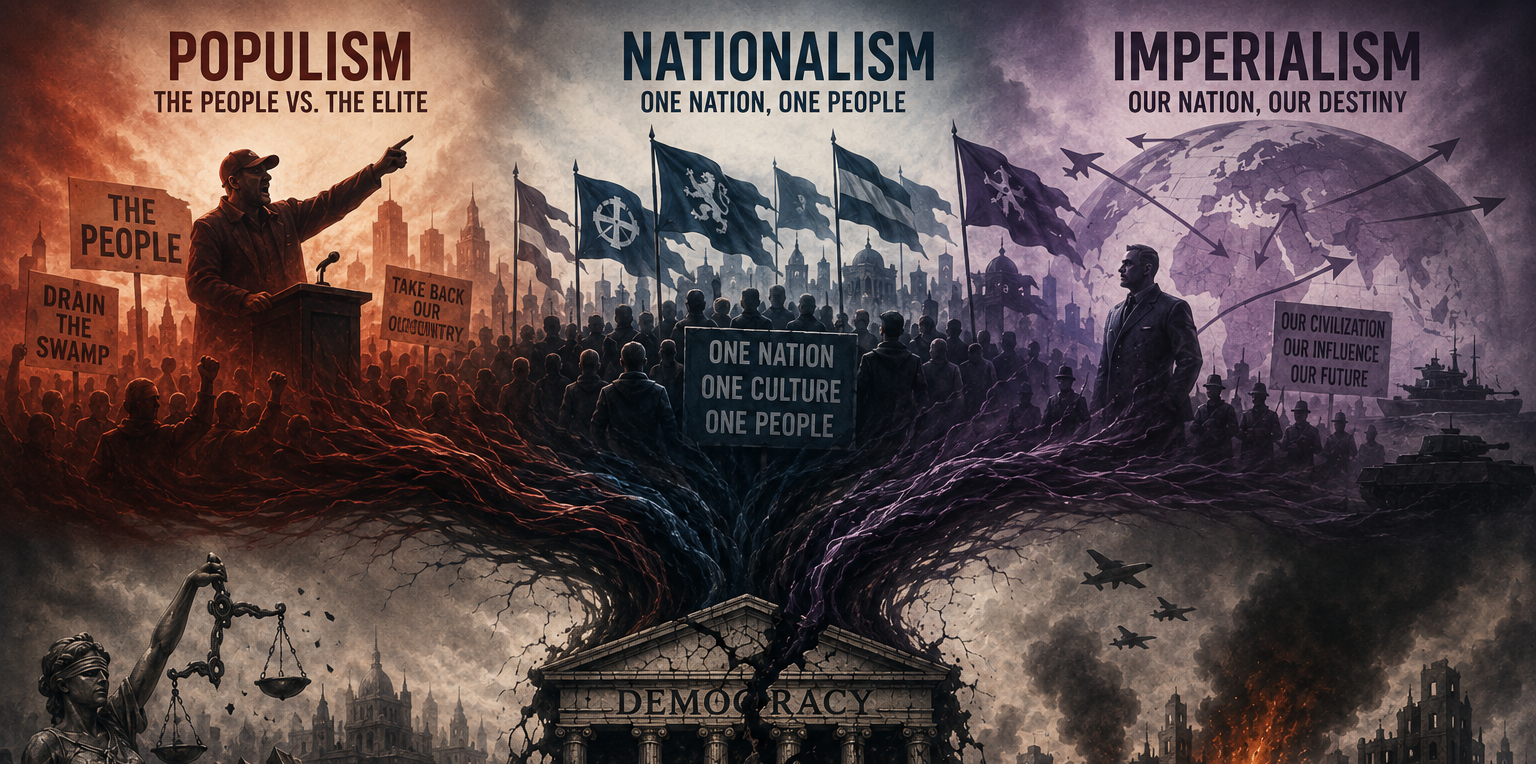
Addressing the challenges generated by rising exclusionary and illiberal ideologies, my research in this project foregrounds three analytically distinct but empirically overlapping types of actors that I argue are central to these destabilizing developments:
- Populists, who mobilize "the people" against "the elite," have attracted enormous scholarly attention, and earlier work has highlighted their contradictory relationship with democracy.
- Dominant nationalists, who assert one ethnic group's right to rule at the expense of others within the state, are similarly corrosive to democracy and often to political stability but have received far less systematic attention; they form the empirical core of many publications of this project, including a new global database.
- Finally, imperialist nationalists, a subtype of dominant nationalists who project hierarchical dominance beyond state borders through territorial expansion or civilizational claims, are increasingly shaping the geopolitical order and threatening international peace.
The three ideologies frequently align and sometimes occur in personal union. For instance, Viktor Orbán can be characterized as both populist and dominant nationalist while Vladimir Putin exemplifies the connection between dominant nationalism and imperialism. However, the overlap between them is imperfect; moreover, for political science research, analytically conflating these ideologies and the actors tied to them can obscure the distinct mechanisms through which these types of actors operate and the distinct challenges they generate for the international order, peace, and democracy.
The high-level description of this project below therefore discusses each of these three actors in turn, sequentially discussing relevant publications I have authored or co-authored. Specifically, this discussion moves from populism and its democratic record, through dominant nationalism and its internal consequences for ethnic relations and civil conflict, to imperialist nationalism's challenge to the geopolitical order and the risk of interstate warfare.
Populism
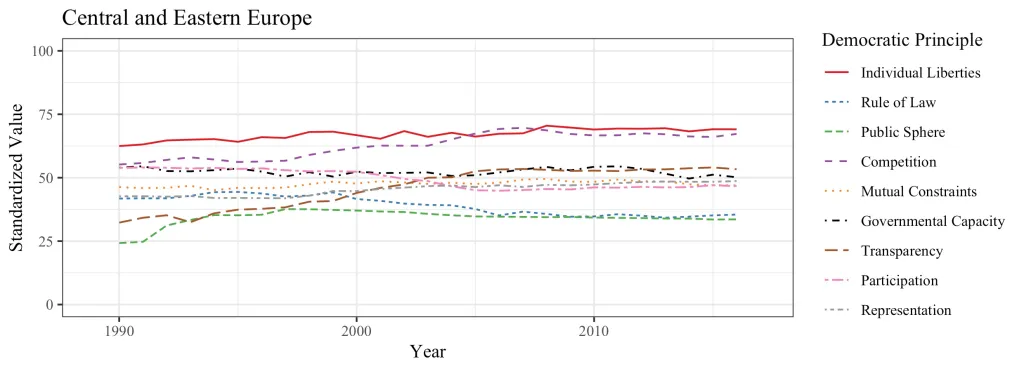
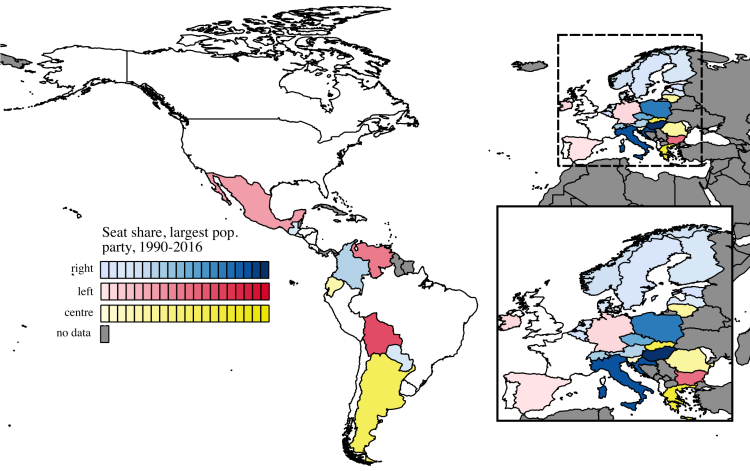
Populism has attracted enormous scholarly attention as a potential driver of democratic backsliding. In two published articles, written together with Daniel Bochsler, I examine this empirical record systematically. The first provides a data-driven assessment of democratic quality across all 19 Central and Eastern European democracies from 1990 to 2016, drawing on the Democracy Barometer to track nine core democratic functions (Bochsler & Juon 2020, Authoritarian Footprints). The findings of this co-authored article indicate that the alarming narratives centered on Hungary under Orbán and Poland under PiS are real -- both cases show genuine deterioration in judicial independence, press freedom, and political competition -- but not necessarily representative of a region-wide crisis. Across the full sample of CEE democracies, backsliding has been accelerating, but at least through (when this article's empirical scope ends), its scope is often substantially overstated. We further find that EU pre-accession conditionality stands out as the most effective democratic lever to support democratization in this specific region, while post-accession enforcement mechanisms remain too weak to deter determined illiberal actors.
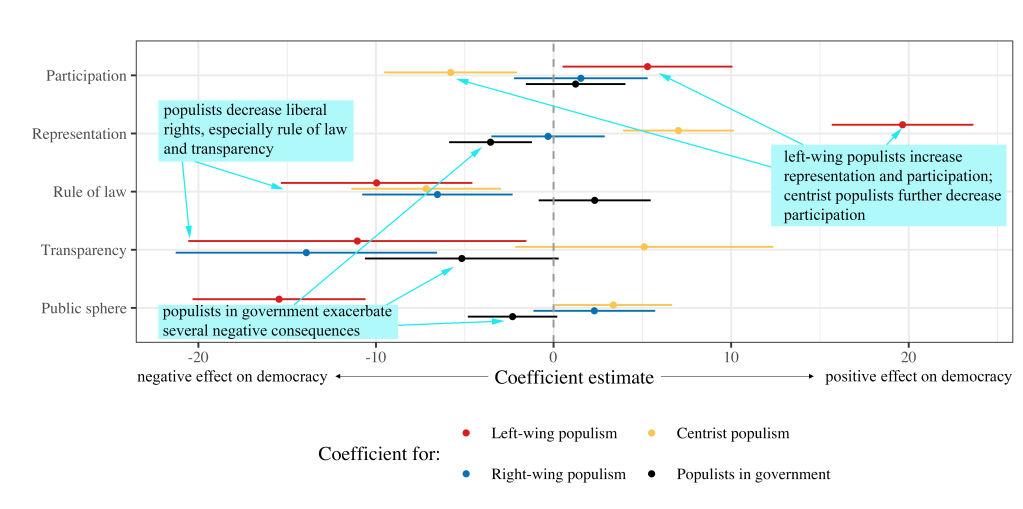
A second article extends this analysis across a broader multi-regional sample covering Europe, North America, and Latin America (Juon & Bochsler 2020, Hurricane or Fresh Breeze). Our main finding is that populism's relationship with democracy is deeply contradictory and highly contingent. The surge of populist parties, from Matteo Salvini's Lega in Italy to Jair Bolsonaro in Brazil and Donald Trump's Republicans in the United States, has indeed impaired the rule of law and transparency in many cases. Yet populists, especially of a left-leaning type, can also improve democratic participation and representation by mobilizing previously demobilized social groups. The populist effect on democracy therefore depends critically on ideological leaning, government access, and the dimension of democracy considered.
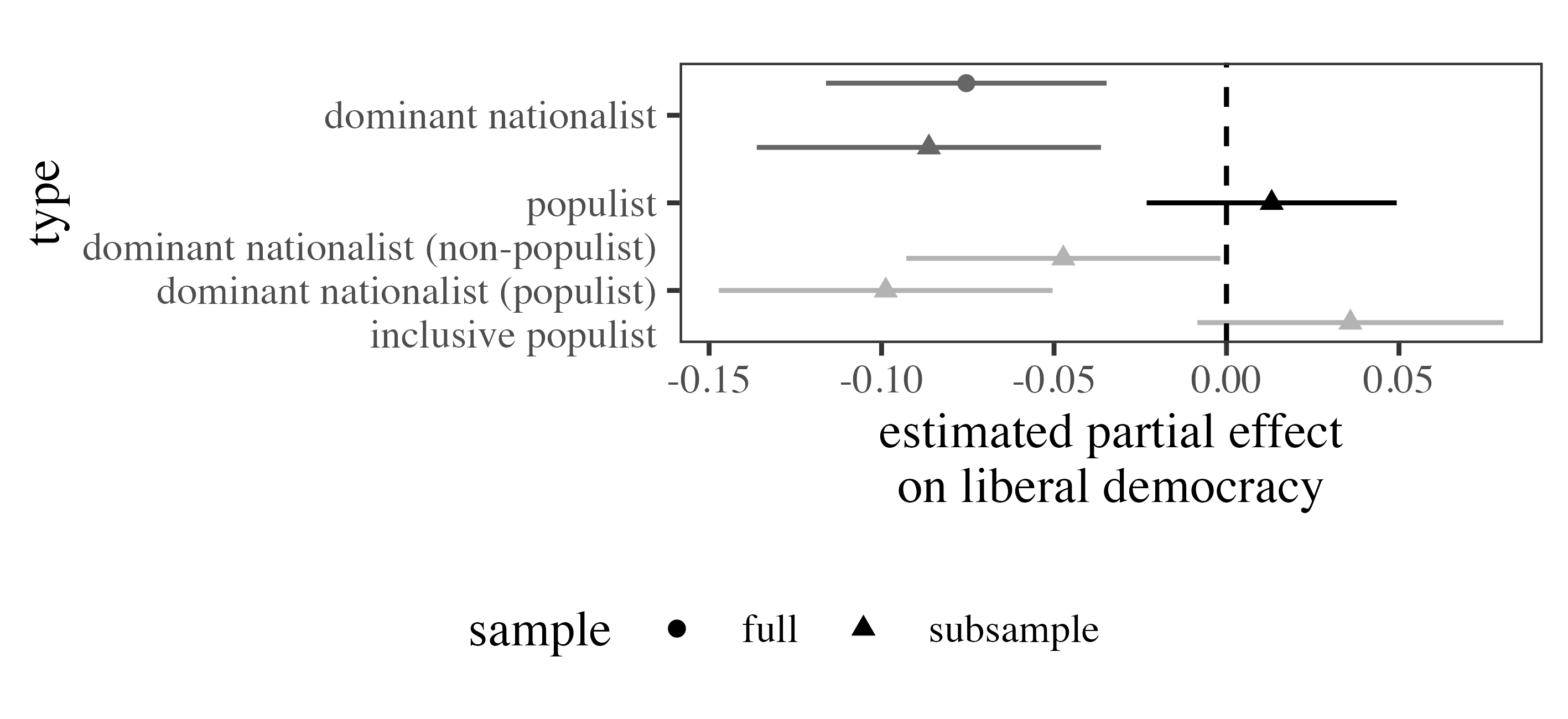
In the context of this broader project, these findings raise a deeper diagnostic question: is populism itself the main driver of the recent wave of democratic backsliding, which further accelerated after 2016, or are there other root causes thereof? Leaders like Recep Tayyip Erdoğan in Turkey and Narendra Modi in India have presided over significant democratic erosion, yet treating these cases exclusively through the lens of populism risks conflating the democratic effect of populism with other ideologies that are frequently associated with it, particularly exclusionary forms of nationalism. A working paper under review confronts this question empirically by systematically disentangling the democratic effects of populism and dominant nationalism (Juon & Bochsler working paper, Nationalism & Democracy). Drawing on new data from the Dominant Nationalist Movements (DNM) dataset alongside V-Party's cross-national populism measures and V-Dem's Liberal Democracy Index, this paper shows that dominant nationalist governments, whether populist or not, reduce liberal democracy by an average of 0.08 points on a 0-1 scale, with effects intensifying over time and peaking around eight years into nationalist rule. Populist leaders without dominant nationalist ties show no consistent negative democratic effect. In other words, this article indicates that it likely is dominant nationalism, not populism per se, which is the primary driver behind the recent wave of democratic erosion.
Dominant Nationalism
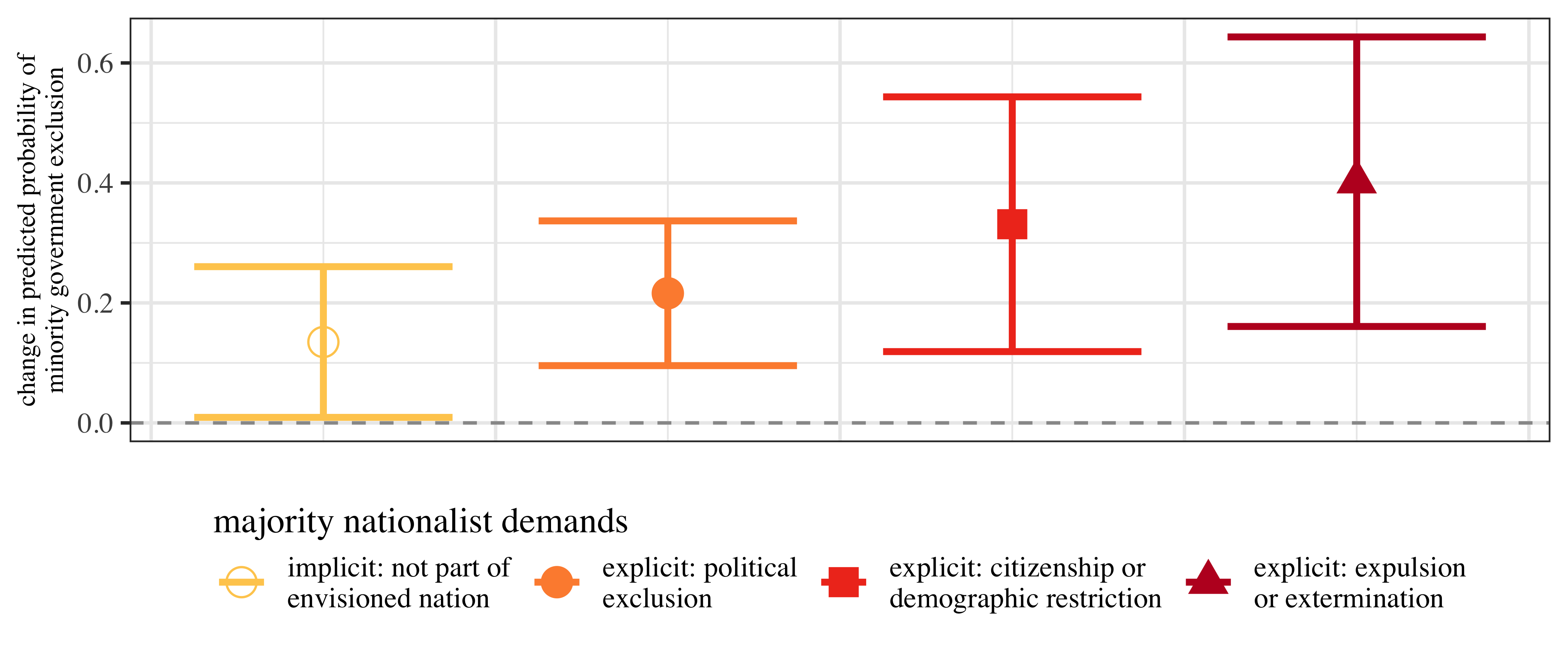
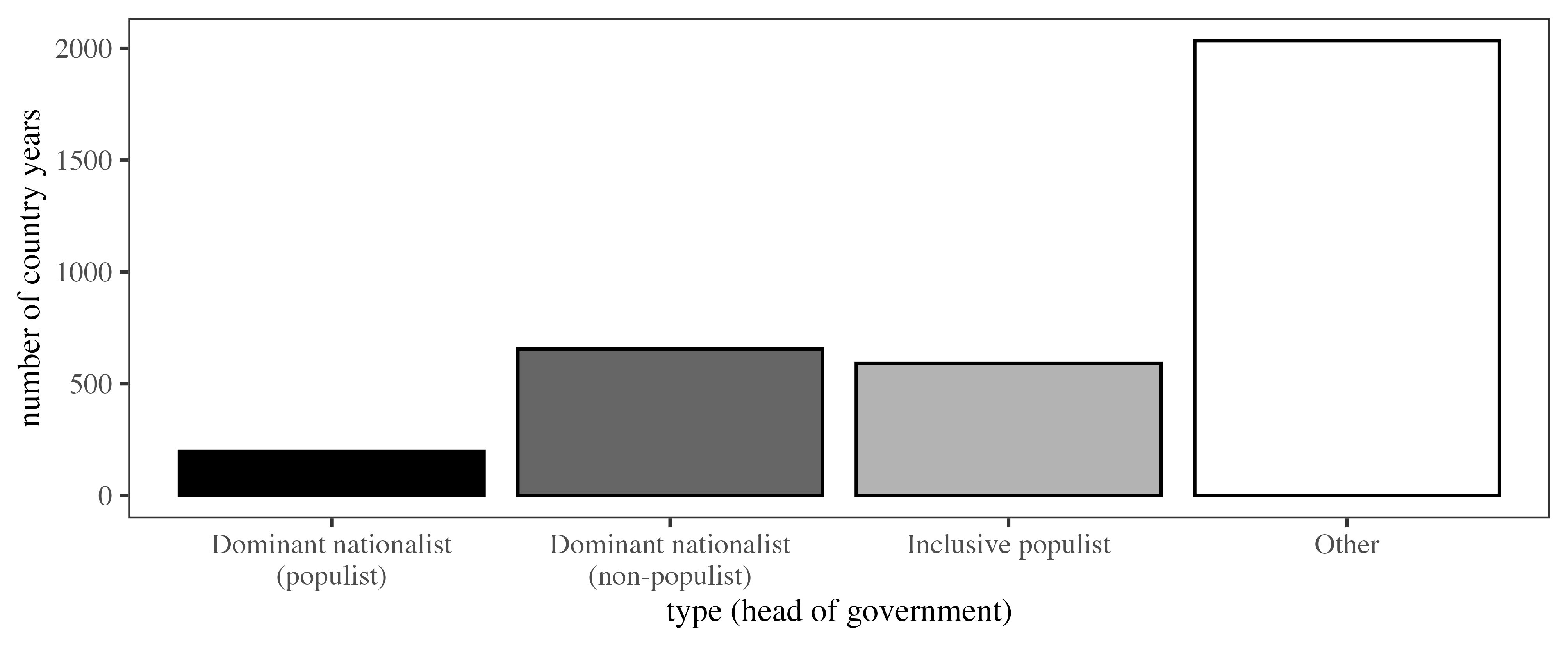
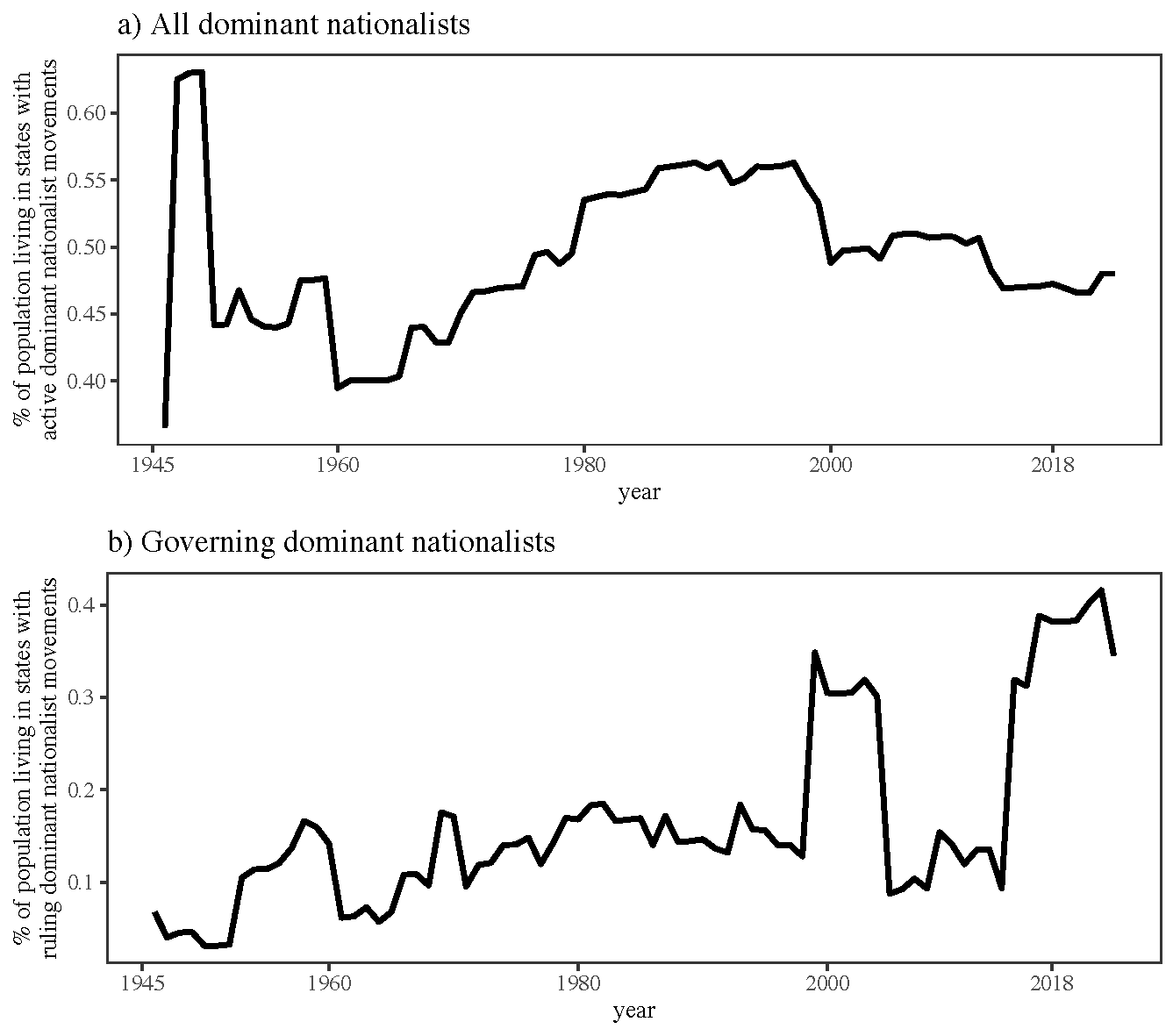
Dominant nationalism, the ideology that a specific ethno-cultural group should maintain or expand political primacy at the expense of minorities within the state, is conceptually distinct from populism and has received far less systematic attention, both in academic research and from policymakers. To study it across time and space, I have lead a major global data collection: the Dominant Nationalist Movements (DNM) dataset, built with SNSF funding and a team of twelve research assistants. The dataset's first version covers 90 multiethnic states in North America, Eurasia, and Africa from 1946 to 2023. It identifies dominant nationalist organizations seeking the political primacy of a specific ethnic group, measures their exclusionary demands against particular outgroups, from calls for government exclusion and citizenship restrictions to agitation for expulsion or violence, distinguishes between movements in opposition and in government, and tracks their parliamentary influence year by year. Though dominant nationalism and populism frequently overlap in practice, they are analytically separable and empirically distinct: large residual categories of dominant nationalists engage in no populist rhetoric, and many populists hold no dominant nationalist convictions.
Civil conflict. In a new article conditionally accepted at the Journal of Conflict Resolution, Lars-Erik Cederman and I show that dominant nationalism systematically increases civil war risk (Juon & Cederman forthcoming, Dominant Nationalism and Civil War). Groups subject to dominant nationalist demands face a 0.6 percent higher annual civil war onset risk, a substantial increase relative to a baseline of 0.7 percent, and comparable in magnitude to the effect of actual governmental exclusion. This risk rises to roughly 2 percentage points when dominant nationalists hold executive power. Three mechanisms explain the link: dominant nationalists push governing elites toward the exclusion of targeted outgroups even when strategic incentives favor concessions; they can directly initiate violence; and among minorities, their agitation provokes preemptive secessionism by raising fears of future oppression before exclusionary policies are even implemented. Several examples illustrate these dynamics: In Sri Lanka, Sinhala nationalist parties repeatedly derailed language and decentralization agreements with the Tamil minority, contributing to decades of civil war; in Serbia, Milošević's nationalist agitation drove Croatian and Bosnian voters toward risky bids for independence; in Rwanda, Hutu Power extremists mobilized systematic violence to entrench ethnic hierarchy. These cases exemplify patterns confirmed across the full global sample: complementary mediation analyses place secessionism as the dominant pathway linking dominant nationalism to civil war (37% of the total effect), followed by political exclusion (15%) and the direct victimization of minorities by dominant nationalists (6%).
Democratic backsliding. Dominant nationalism also poses a fundamental challenge to democratic governance. Countries governed by dominant nationalists face a 3.2 percentage point higher annual autocratization risk, and autocratic dominant nationalist regimes face a 1 percentage point lower annual probability of democratization (Juon & Bochsler working paper, Nationalism & Democracy). India under the BJP, whose government has progressively curtailed minority rights, restricted press freedom, and weaponized citizenship law against Muslims, and Turkey under Erdoğan's AKP illustrate the broader cross-national pattern. Four mechanisms connect dominant nationalism to democratic decline: it clashes with liberal norms and equal citizenship; it deepens ethnic economic inequality by concentrating state resources in the dominant group; it erodes the broad-based solidarity that democratic institutions require; and it constructs threat narratives around ethnic outgroups to justify restrictions on political competition. Mediation analyses back up all four pathways.
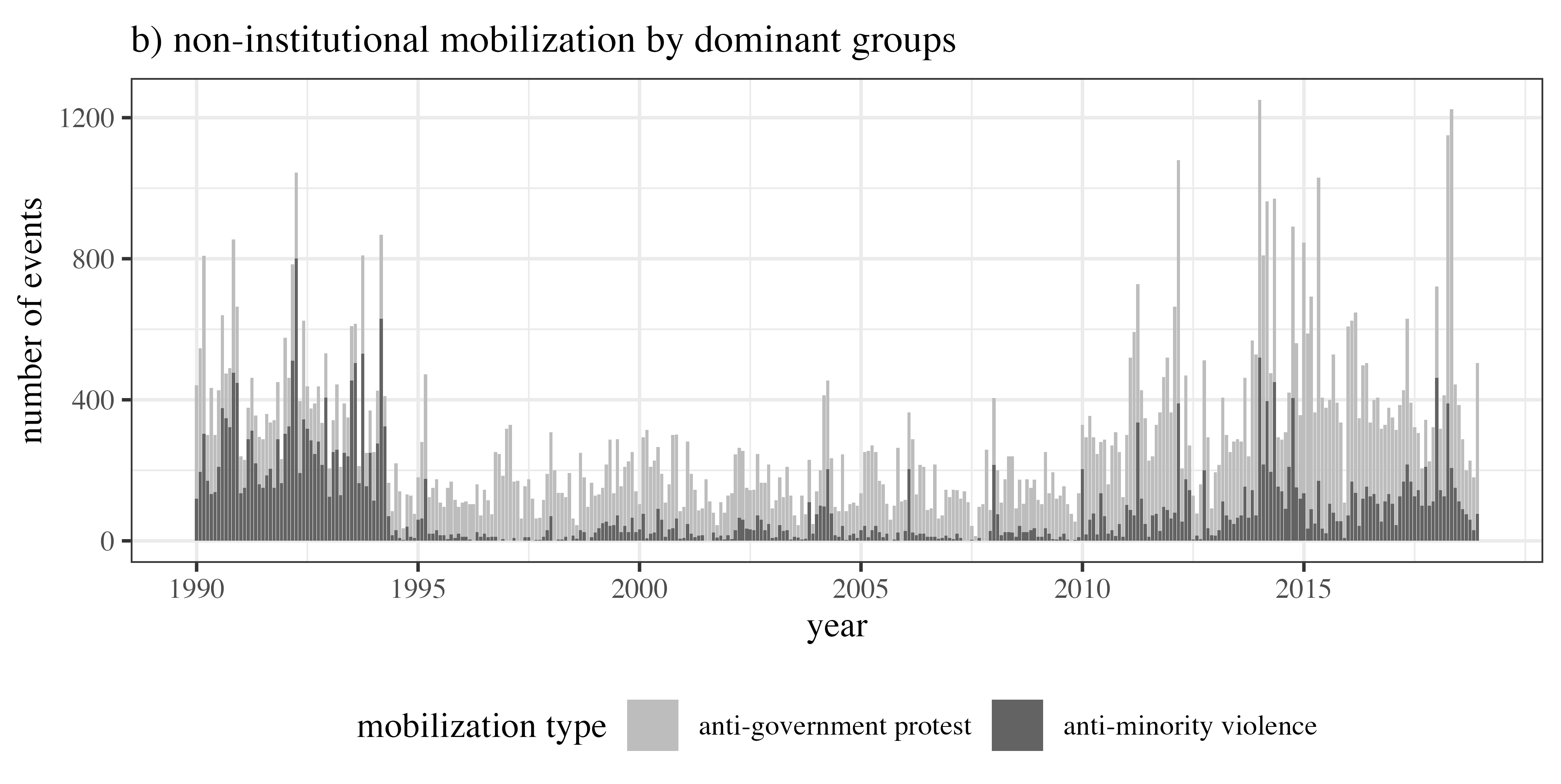
Accommodation and backlash. How do dominant nationalists react to the accommodation of the minorities they target? A published article in the Journal of Conflict Resolution demonstrates that group-based accommodation, including constitutional recognition of minority identities, ethnic quotas, and designated homelands, systematically triggers dominant group backlash in the form of mass protests and communal violence in three-month windows around the adoption of such concessions, across 125 multiethnic electoral regimes from 1990 to 2018 (Juon 2026, Ethnic Accommodation and the Backlash). For instance, in North Macedonia, the 2001 Ohrid Agreement triggered large-scale protests and communal riots mobilized by Macedonian nationalist parties; in India, Hindu nationalist organizations have repeatedly exploited constitutional concessions on Kashmir's autonomy and Muslim cultural rights for electoral gain. These cases reflect a broader cross-national pattern: the backlash effect roughly doubles where a dominant nationalist party is electorally active, and is statistically indistinguishable from zero for group-blind alternatives. It is not the fact of accommodation but its constitutional, group-based form that determines backlash risk.
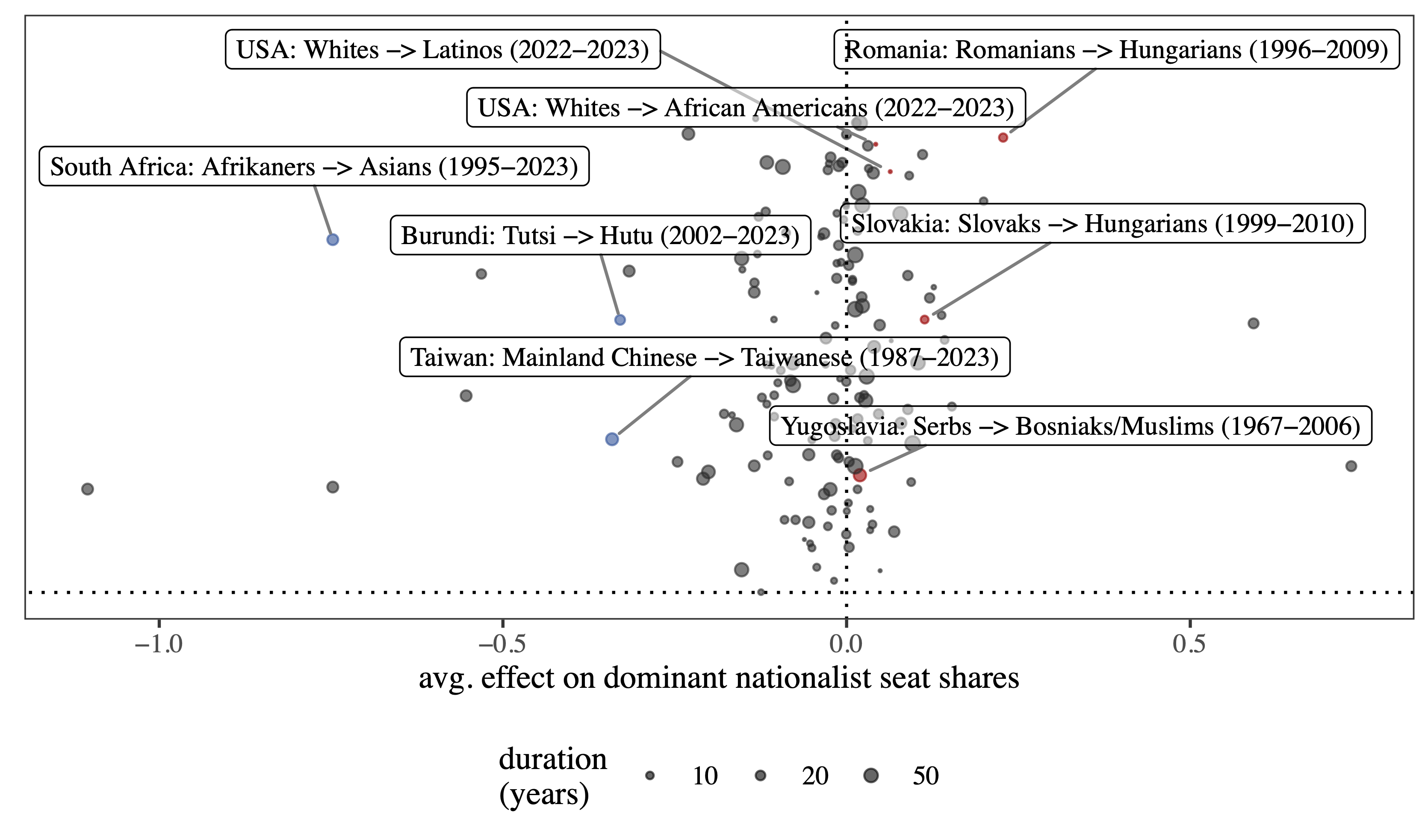
A companion working paper, authored together with Aya Abdelrahman and Lars-Erik Cederman, examines the longer-run picture. Analyzing the DNM dataset across 33,974 dyad-years, we find that inclusive shifts toward previously excluded subordinate groups are on average followed by a reduction of 7 percent in dominant nationalist seat shares, a moderating effect that deepens to approximately 17 percent after nineteen years (Abdelrahman, Cederman & Juon working paper, Backlash or Moderation). Despite the high-profile cases of short-term mobilization highlighted in my prior article, fears that accommodation durably empowers dominant nationalists are not borne out by the systematic evidence.
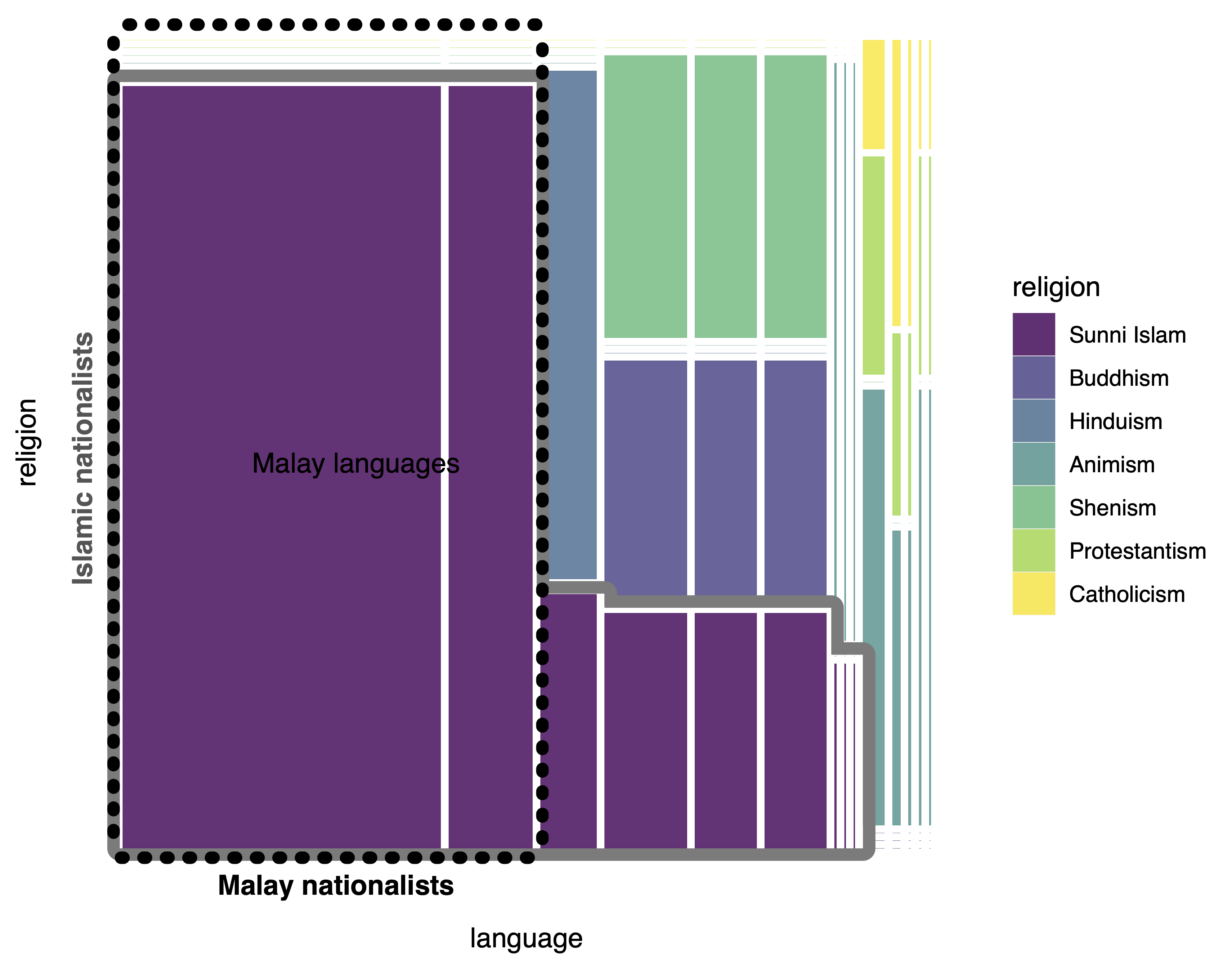
Causes and identity construction. In addition to consequences, this ongoing project also investigates what explains where dominant nationalism emerges and which identities it invokes. A working paper in preparation examines how majority nationalists construct the nation, selecting and justifying specific ethnic, linguistic, and religious identity markers, under ethno-demographic and historical constraints, studying the global diffusion of dominant nationalist ideologies since 1816 (Juon working paper, Deep Roots). The article asks how constrained nationalist entrepreneurs are by historical legacies and ethnic demography, versus how freely they can invent the nation they claim to represent.
Imperialist Nationalism and the Geopolitical Order
Dominant nationalism does not always stop at a state's borders. A final part of this project examines imperialist nationalism, a subtype of dominant nationalism in which hierarchical dominance is projected outward through territorial expansion, civilizational claims, or the assertion of regional spheres of influence. Vladimir Putin's "Russian World," Xi Jinping's civilizational claims over Taiwan and the South China Sea, and Donald Trump's territorial assertions toward Canada and Greenland are examples thereof, which are not deviations from nationalism but expressions of it, as were, in an earlier era, Germany's slide from Völkisch nationalism into Nazi expansionism and Japan's pre-1945 imperial project.
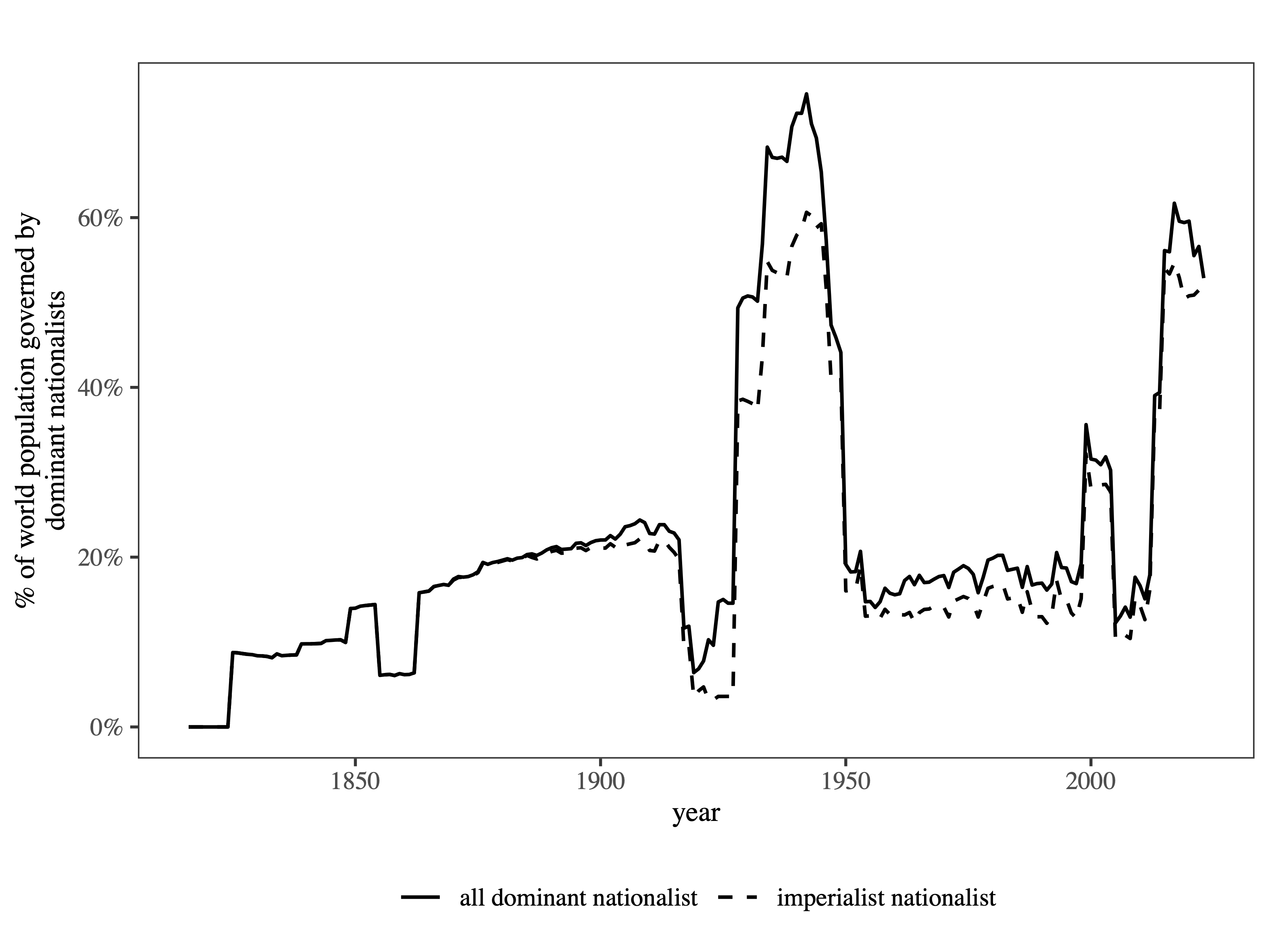
A theoretical and empirical article in the works, together with Lars-Erik Cederman, reconceptualizes nationalism beyond the classical Gellnerian framework, which equates nationalism with the principle of nation-state congruence but struggles to account for cases where nationalism extends outwards into imperial projects seeking to subjugate or control other societies (Cederman & Juon working paper, Beyond Congruence). We argue that nationalism and imperialism are not inherently incompatible: nationalism's core claim, that state power should belong to a nation, can be directed inward toward minorities or outward toward other polities. More generally, we introduce a nested typology of four forms of nationalism: monistic nationalism (one nation, one state), pluralist nationalism (institutionalized power-sharing among national communities), dominant nationalism (one group's political primacy over internal minorities), and imperialist nationalism (hierarchical dominance over other states or territories). Drawing on the DNM dataset extended to 202 states from 1816 to 2023, we show that imperialist nationalism is not a rare exception, but historically recurring and disproportionately concentrated among powerful states. Moreover, in line with their outward ambitions, imperialist nationalists are significantly more likely to conquer neighboring territory. We also find, however, that imperialist nationalism is self-undermining: as these regimes accumulate power, they increasingly pursue external projects that generate military overstretch, geopolitical backlash, and institutional fragmentation. The historical record, from Nazi Germany's catastrophic defeat and occupation to the Soviet Union's collapse, repeatedly confirms this pattern.
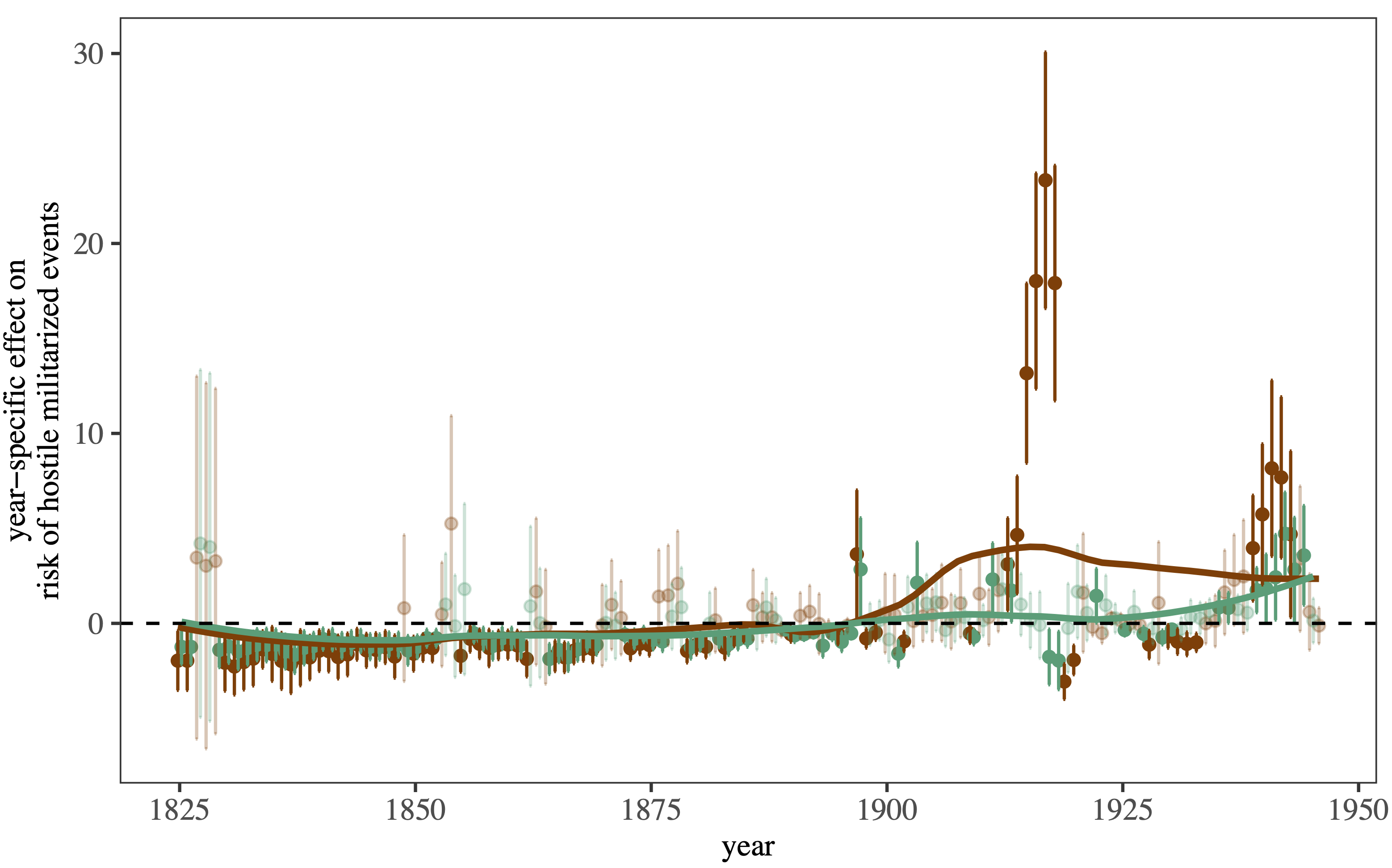
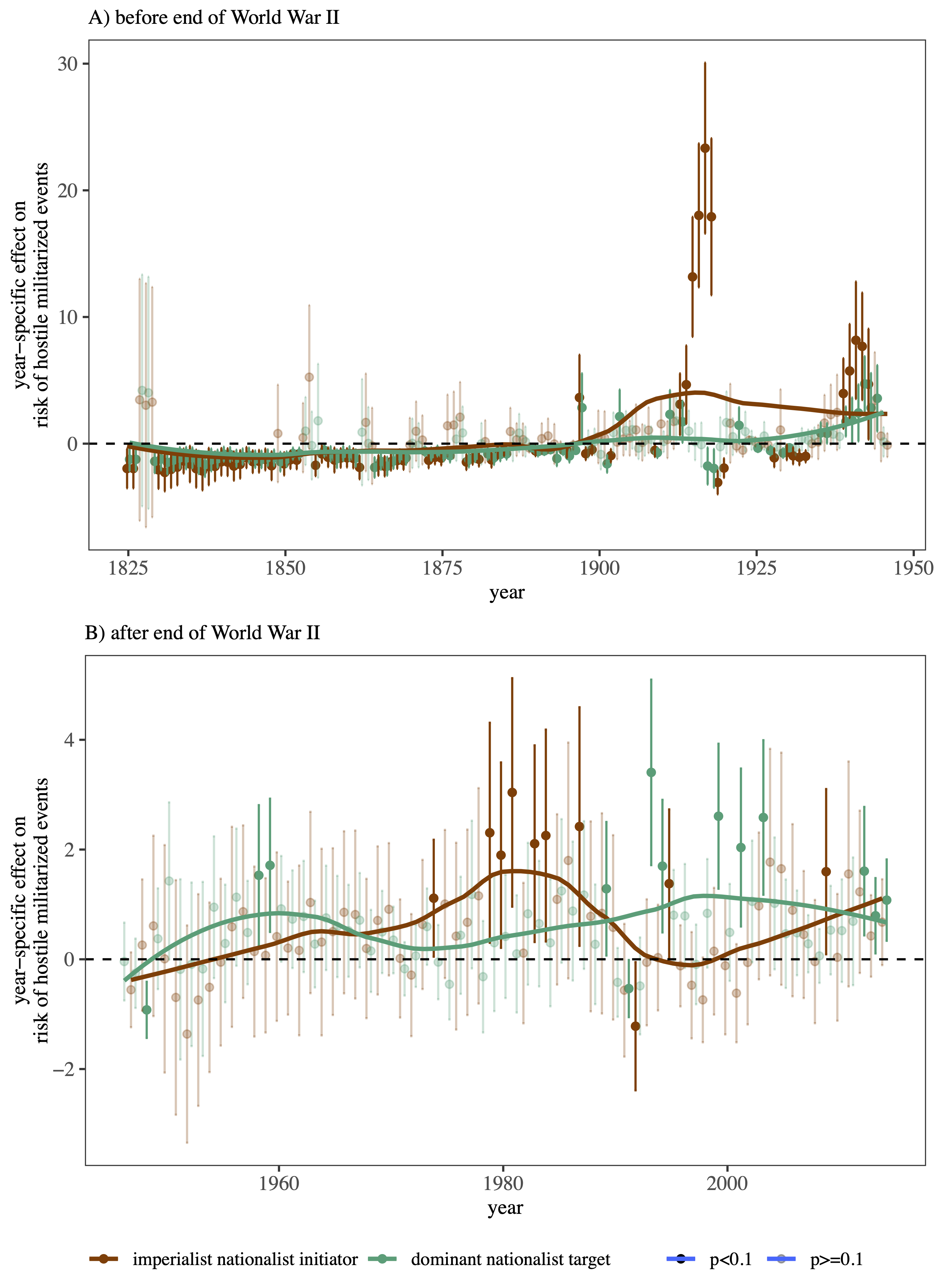
A companion working paper extends and tests these arguments at the level of militarized interstate events, using directed dyad-year data from 1816 to 2023 (Juon, Abdelrahman & Cederman working paper, Place in the Sun). We identify three logics linking dominant and imperialist nationalists to interstate warfare: an expansionist logic by which imperialist nationalists frame territorial conquest as national destiny; a hegemonic logic by which dominant nationalists claim spheres of influence over weaker states without seeking formal annexation; and a reactive logic by which domestic minority exclusion invites external intervention, making dominant nationalist states targets of hostility as well as initiators. Russia's intervention in Ukraine, framed explicitly as the protection of co-ethnics living under alien rule, exemplifies both the expansionist and reactive logics; China's mounting pressure on Taiwan combines the hegemonic and imperialist logics. These prominent cases reflect systematic cross-national patterns: imperialist nationalists are approximately 0.9 percent more likely per directed dyad-year to initiate hostile militarized events, while dominant nationalist states face a 0.5 percent higher risk of being targeted. Both effects persist even in the absence of cross-border ethnic kin, showing that nationalist ideology drives interstate conflict independently of the classical congruence mechanism.
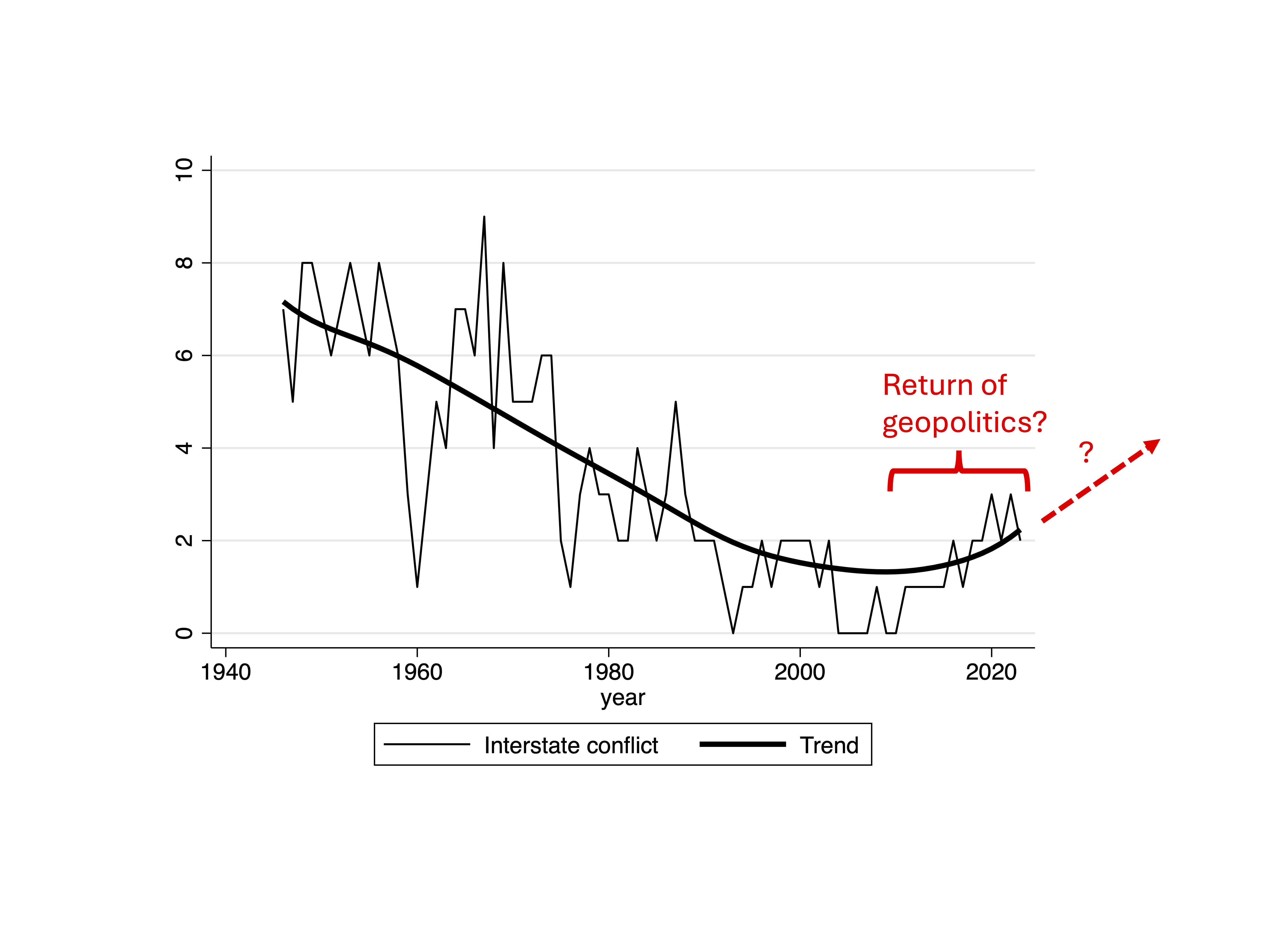
The broader geopolitical consequences of these trends are documented in a more descriptive manner in a forthcoming article in International Security (Cederman et al. forthcoming, Nationalist Geopolitics). Drawing on the updated Ethnic Power Relations dataset, we show that, after decades of post-Cold War inclusion, the percentage of excluded groups has risen since 2010, tracking a parallel rise in nationalist governments worldwide. The downgrading of ethnic Russians in former Soviet republics contributed to Russia's interventions in Crimea and the Donbas; the Taliban's reconcentration of power around Pashtun networks in Afghanistan produced immediate armed resistance. These cases exemplify a broader pattern: counterfactual estimates suggest that, had post-Cold War trends toward inclusion continued, civil conflict rates would remain near 2 percent per group rather than approaching 4 percent as observed in 2023, implying approximately 14 additional ethnic civil conflicts and 5 additional interstate conflicts per year attributable to the exclusionary shift. The post-Cold War peace was not a structural inevitability but a fragile institutional achievement, one now being systematically dismantled by the resurgence of exclusionary nationalism.