Backlash or Moderation? Ethnic Accommodation and the Impact of Dominant Nationalism
New cross-national data and systematic analysis on whether power-sharing in divided societies provokes dominant nationalist backlash or instead moderates exclusionary mobilization, with consistent evidence for moderation.
Under the impression of an accelerating global surge of exclusionary nationalism and right-wing populism, there are widely-voiced concerns that inclusive reforms - which empower previously excluded groups, often minorities - may provoke a backlash, empowering nationalist actors who mobilize in defense of rigid ethnic hierarchies and the dominant group's privileged status. Prominent examples illustrate such concerns. In the United States, President Trump has vowed to fight "anti-white feelings" and "unfair laws" benefiting people of color, representing a wider shift to ethnic and racial appeals among the Republican party more broadly. In India, Hindu nationalists around Prime Minister Modi's BJP have repeatedly attacked their electoral rivals for engaging in "minorityism". Similarly, across multiple Eastern European states, nationalists have repeatedly mobilized against what they call "minorities with privileges" whom they portray as unfair beneficiaries of special political and economic rights. However, beyond these prominent cases, there is a lack of systematic evidence on whether such ethnic accommodation generates a backlash in the societies most likely to adopt it: multi-ethnic states grappling with violent conflict or latent ethnic tensions.
In this article, we provide such evidence, focusing on the reaction to inclusive shifts among the most politically influential majoritarian actors: dominant nationalists who promote a specific group's, typically the majority's, political primacy. Drawing on a new global dataset spanning nearly eight decades, we find no support for the backlash hypothesis, as applied to dominant nationalist influence, claims, and violent mobilization. Instead, we find that extending inclusion to previously excluded groups is far more likely to moderate dominant nationalism over time than to fuel it, with this moderating effect deepening steadily over time.
Few questions in the study of ethnic conflict carry higher practical stakes than the question of whether the accommodation of previously excluded groups generates a backlash and thereby fuels dominant nationalism. Power-sharing arrangements, from consociational constitutions to executive quota systems, have been the standard prescription for managing deep diversity across the post-Cold War period. Yet the recent surge in exclusionary nationalism and populism around the world raises an uncomfortable possibility: that concessions to formerly marginalized groups may be counterproductive, provoking an organized and lasting backlash by dominant nationalist movements which aim to preserve entrenched group hierarchies. If inclusion reliably generates such opposition, especially over long time periods, the case for accommodation weakens considerably.
Existing research, though voicing related concerns, has not addressed this tension. Classic consociationalism research anticipates that initial opposition to accommodation eventually gives way to interethnic trust and a gradual depoliticization of ethnic cleavages. The backlash thesis, by contrast, predicts that inclusion activates dominant-group grievances about status loss, supplying ethnic entrepreneurs with a ready-made mobilizing frame (see also my recent work on majoritarian backlashes in the form of short-term protests and violence against minorities, referenced below). Both mechanisms are theoretically plausible, and the empirical record contains cases that seem to confirm each. What has been missing is a systematic, cross-national test capable of distinguishing the typical developments following inclusive shifts from the exceptions.
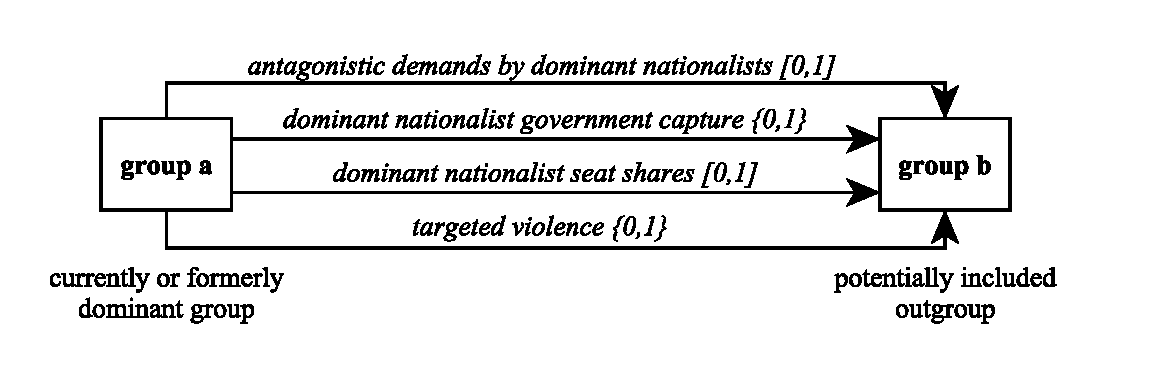
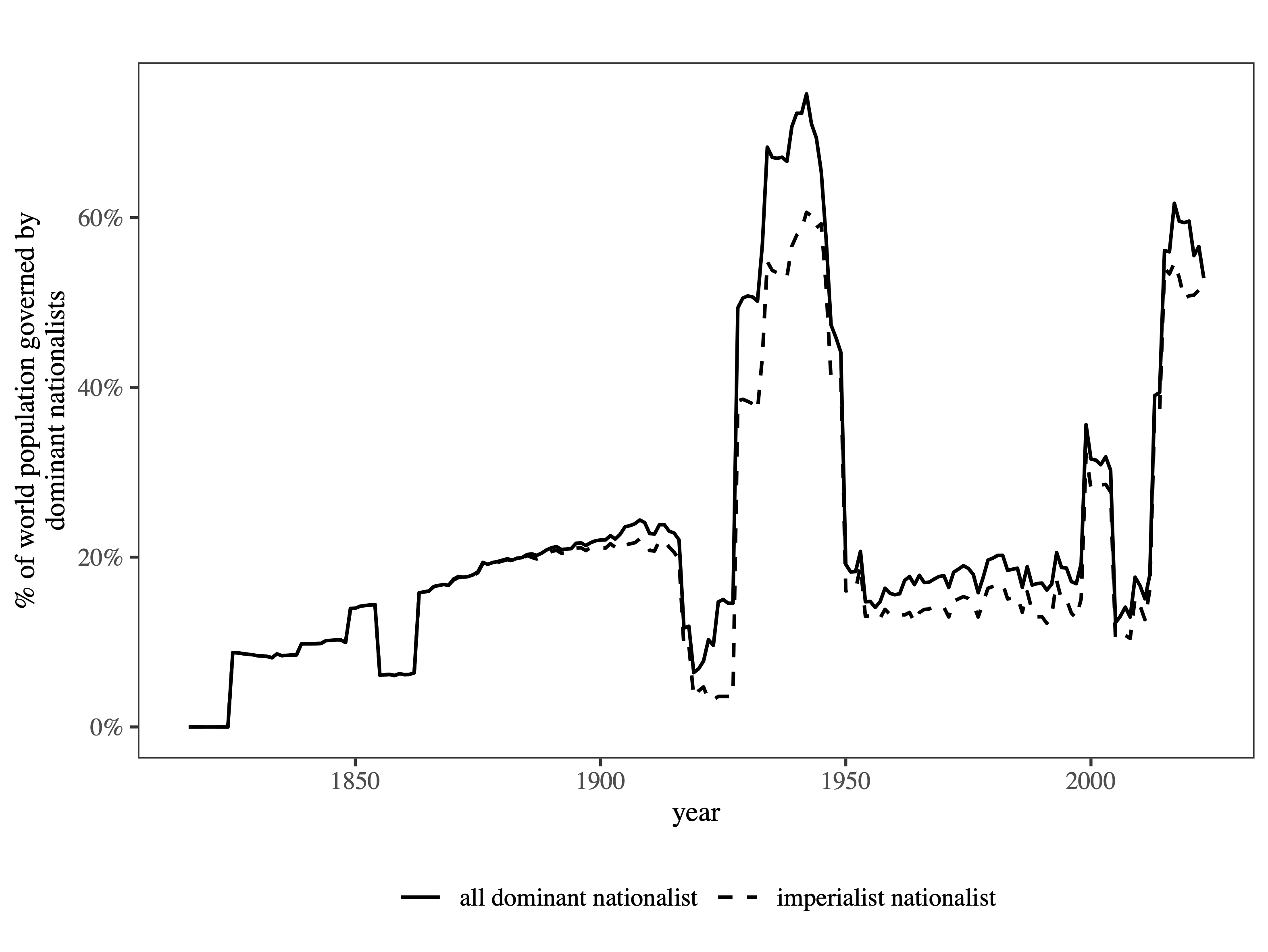
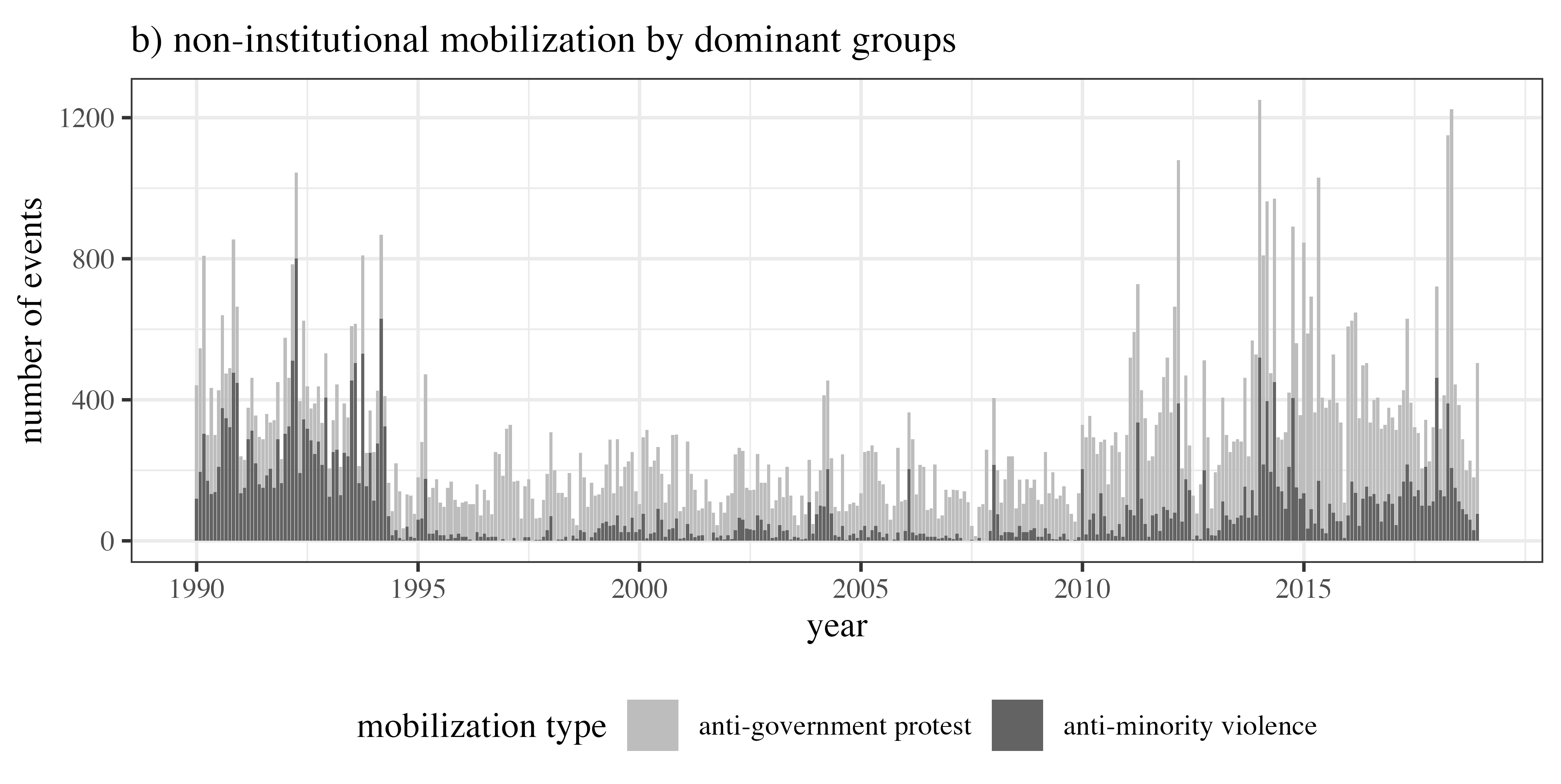
Our main contribution in this article is to supply such a systematic empirical test that goes beyond the analysis of individual prominent cases. For this purpose, we capitalize on the new Dominant Nationalist Movements (DNM) database, whose first version covers 90 multi-ethnic states in North America, Eurasia, and Africa from 1946 to 2023. This database allows us to track, for each dominant-non-dominant ethnic group pair, whether nationalist movements representing the dominant group rally against the subordinate group in a given year, how radical such demands are, whether these movements hold parliamentary and executive influence, and whether organizations representing dominant groups engage in targeted violence against the subordinate group (see figure 1). Though we analyze the risk of a backlash across these dimensions, our main outcome of interest is the combined parliamentary seat shares of dominant nationalist parties representing a dominant group that articulate exclusionary demands against a specific, subordinate outgroup, producing 33,974 dyad-years across the full sample. Our main treatment variable is whether the subordinate group has secured executive representation in a given year, drawn from the Ethnic Power Relations (EPR) dataset.
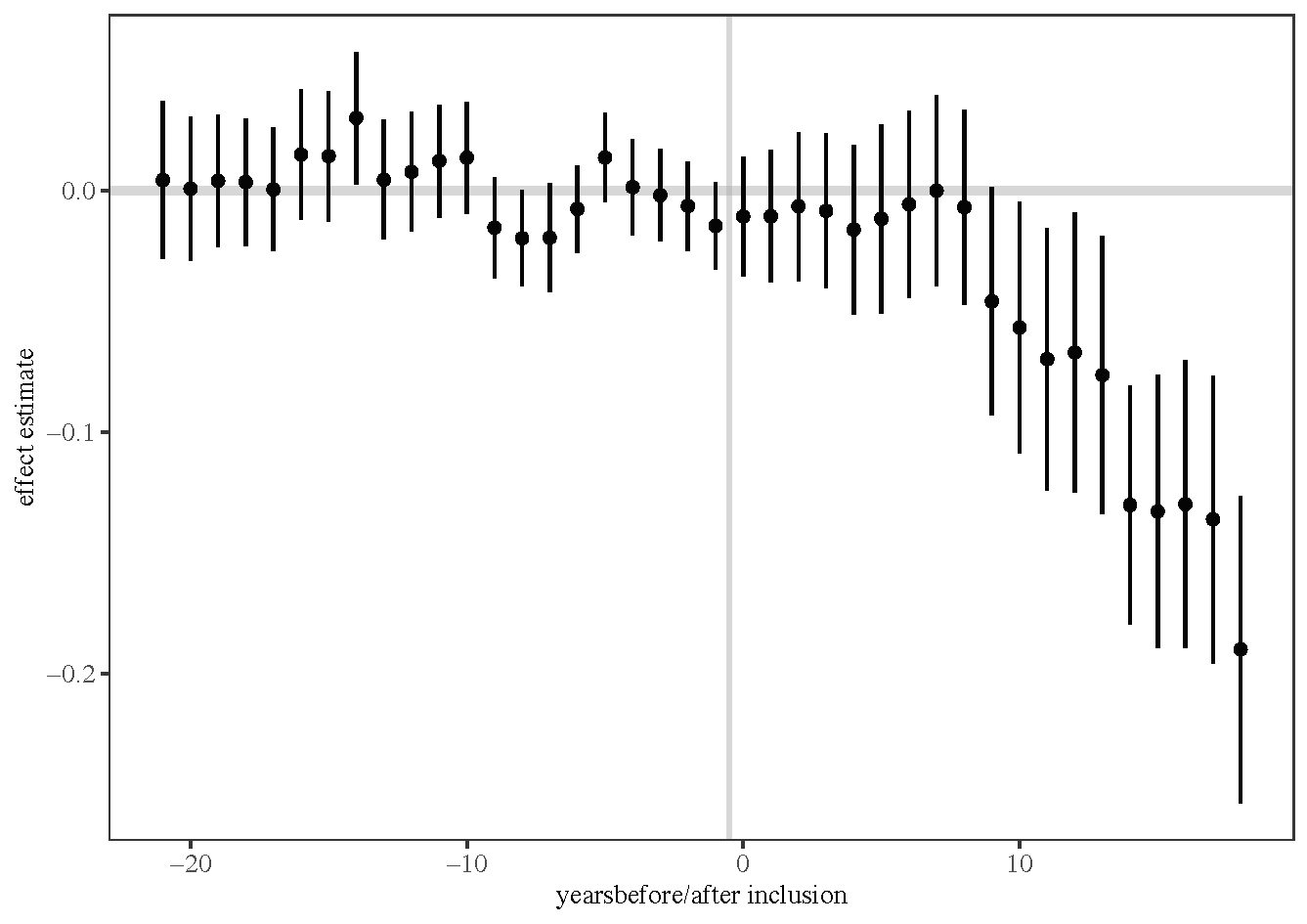
To estimate the causal effect of inclusive shifts, whereby the subordinate group in a dyad attains government inclusion, we apply the Fixed Effects Counterfactual (FECT) estimator, a difference-in-differences approach suited to staggered treatment adoption and capable of handling the varying timing of power-sharing episodes across countries. Intuitively, this procedure focuses on shifts in dominant nationalism directed against a group over time, following a potential inclusive shift, as opposed to comparing highly dissimilar groups with one another. Such a two-stage design also lets us probe heterogeneous effects of inclusion for dominant nationalism in different contexts or directed against specific types of subordinate groups.
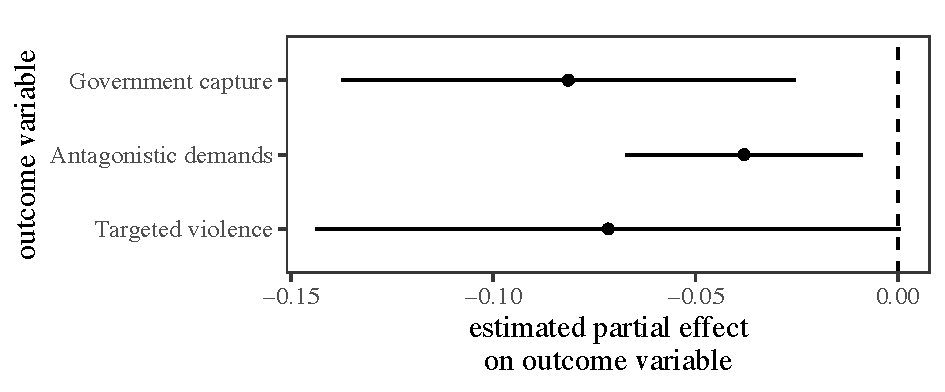
Our main finding is a consistent moderating effect of inclusion, which is, on average, followed by a gradual but sustained reduction in dominant nationalist seat shares (figure 2). On average, inclusion episodes are associated with a 7.03% decline; the effect continues deepening, reaching approximately -17% after nineteen years. The first two legislative periods show a more modest -3.3% effect, consistent with the consociational prediction that inter-ethnic trust takes time to materialize. This moderation pattern holds across all outcomes that we analyze: following a subordinate group's inclusion, dominant nationalists rallying against it are more likely to lose executive representation, tone down their antagonistic demands against newly included groups, and the risk of targeted violence falls (figure 3).
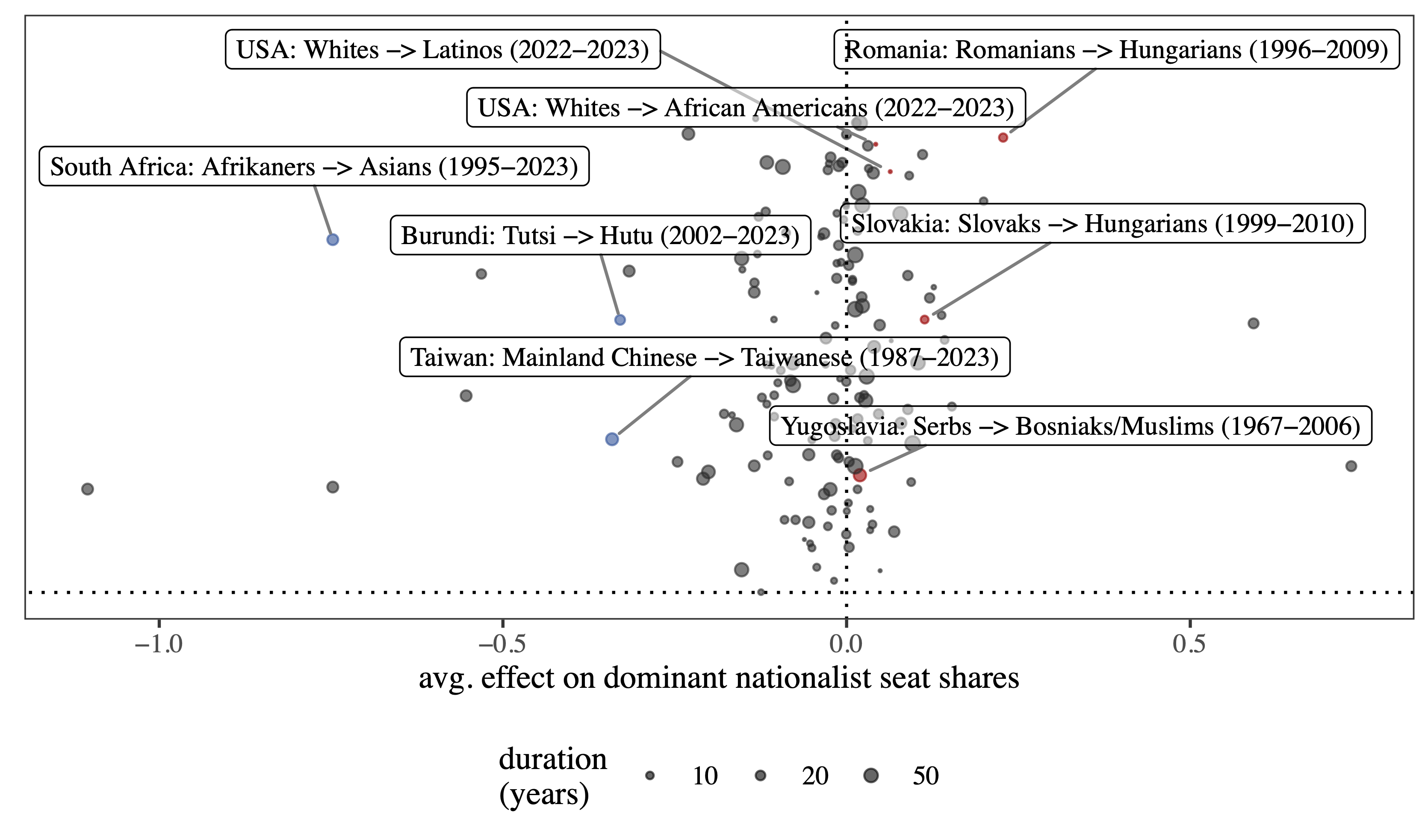
This moderation effect is strongest for groups with a prior civil war history, where ethnic relations tend to be highly polarized to begin with. For the inclusion of former ruling groups, like the Russians in the Baltic states, or of groups with secessionist aspirations, like the Catalans in Spain, the effect of inclusion is statistically non-significant, but crucially, there is no evidence of a backlash even in these more controversial cases either. In a fine-grained analysis of the cases making up our sample, we do identify instances of a genuine backlash (for instance Slovakia, Romania, the United States in the post-Obama period), but they represent a minority of the 146 inclusion episodes in our sample, and their magnitude tends to be lower than the countervailing moderating shifts in other cases.
This finding has reassuring policy implications. Fears that ethnic accommodation will generate a dominant nationalist counterreaction, and durably empower dominant nationalists in turn, appear overstated and are unlikely to materialize in the "average case". Instead of engendering a long-lived backlash, inclusion generally stabilizes rather than destabilizes divided societies.
Of course, our findings do not rule out a backlash against inclusion in specific cases, though empirically such cases appear to be the exception, and not the rule (see also figure 4). Nor do our findings invalidate observations of a short-term backlash against specific forms of inclusion, for instance in short time periods around the introduction of formal institutions that explicitly recognize and privilege specific ethnic groups (see my recent JCR article referenced below, which shows that the introduction of such institutions makes more likely the incidence of protests and communal riots in 3 month windows around such inclusive shifts specifically). However, they indicate that over long periods, inclusive shifts are more likely to engender a gradual moderation process, and are unlikely to lead to an enduring empowerment of dominant nationalist actors.
For detailed findings and methodology, please check out the article linked in the header above.