A Place in the Sun: Nationalism, Imperialism, and Interstate Conflict
New global data and systematic analysis on how dominant and imperialist nationalism jointly drive interstate conflict through expansionist, hegemonic, and reactive pathways.
A Place in the Sun: Nationalism, Imperialism, and Interstate Conflict
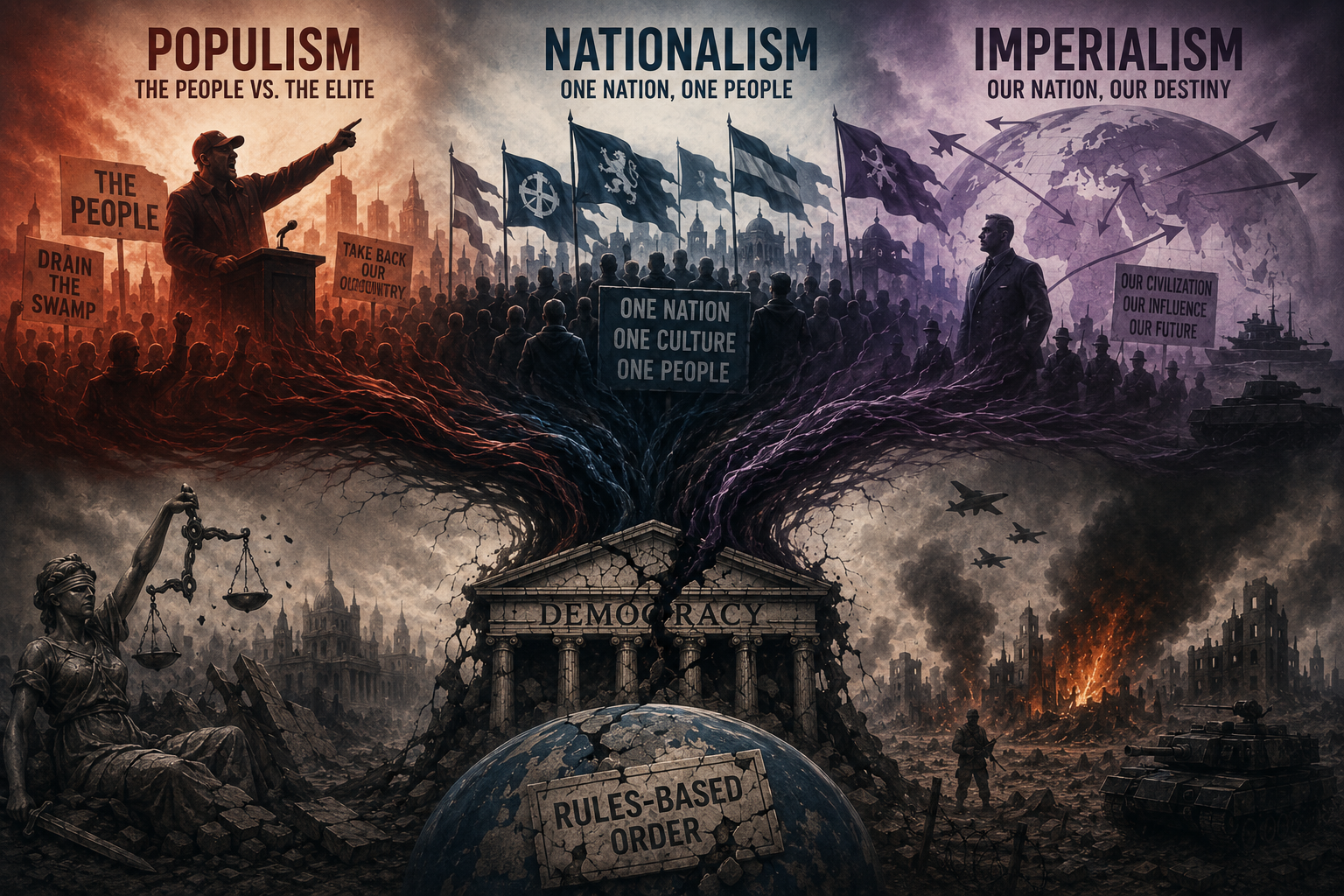
Does nationalist ideology shape when states go to war, and if so, through which mechanisms? In this working paper, we argue that dominant nationalism, a political doctrine asserting one ethnic nation's right to rule at the expense of others, increases the risk of interstate conflict through distinct pathways that extend well beyond the familiar logic of ethnic border mismatches that has anchored prior research.
A large literature connects nationalism to interstate conflict, but most existing accounts focus either on the intensity of nationalist mobilization or on Gellner's congruence principle, which holds that states are prone to aggression when national and state boundaries mismatch, creating irredentist incentives (e.g. Russia's occupation of Crimea). We argue this is a too narrow assessment of nationalism's conflict-inducing role. We argue that dominant nationalism (and especially its outward-projecting variant, imperialist nationalism) generates conflict risk through mechanisms that operate independently of whether ethnic kin happen to live across a border.
We identify three logics that work in parallel:
- First, an expansionist logic: imperialist nationalists frame territorial conquest as national destiny or restoration, generating conflict both from states defending their sovereignty and from rival powers resisting expansion.
- Second, a hegemonic logic: dominant nationalists assert spheres of influence and hierarchical control over other polities without necessarily seeking territorial incorporation. This dynamic is especially pronounced when major powers confront each other or seek dominance over weaker states.
- Third, a reactive logic: the exclusion and repression of domestic minorities by dominant nationalist governments invites external intervention, whether by kin states defending co-ethnics or by other actors responding to severe discrimination, making such states more likely targets of interstate hostilities. Hence dominant nationalists are not only more likely to initiate hostilities, but also to become a target thereof.
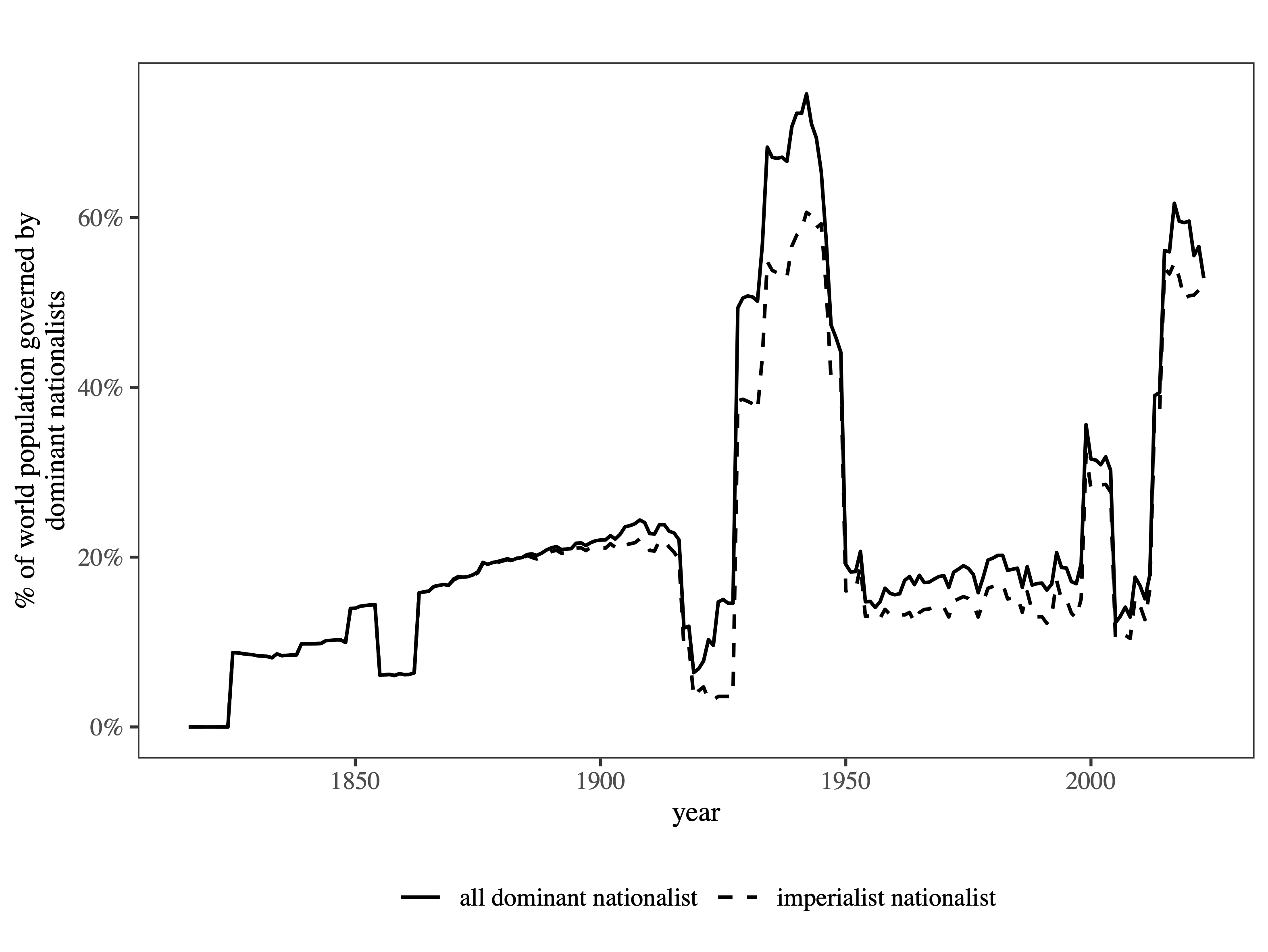
To test these arguments, we use the new Dominant Nationalist Movements (DNM) dataset, which codes the presence of dominant and imperialist nationalist governments across all independent states from 1816 to 2023. We match this to the Militarized Interstate Events (MIE) dataset and estimate effects using the Fixed Effects Counterfactual (FECT) estimator on directed country-dyad-year data restricted to proximate states and major powers.
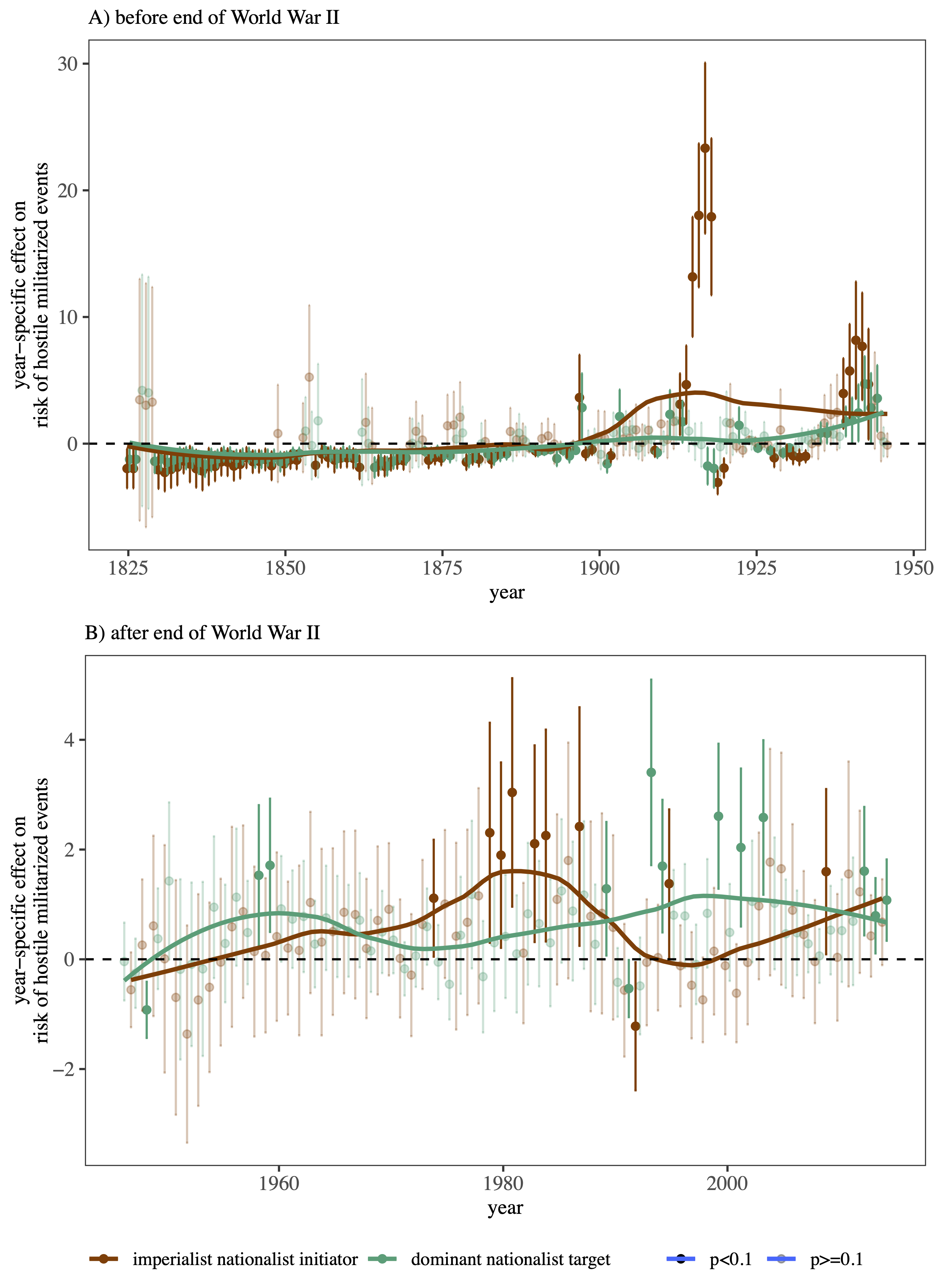
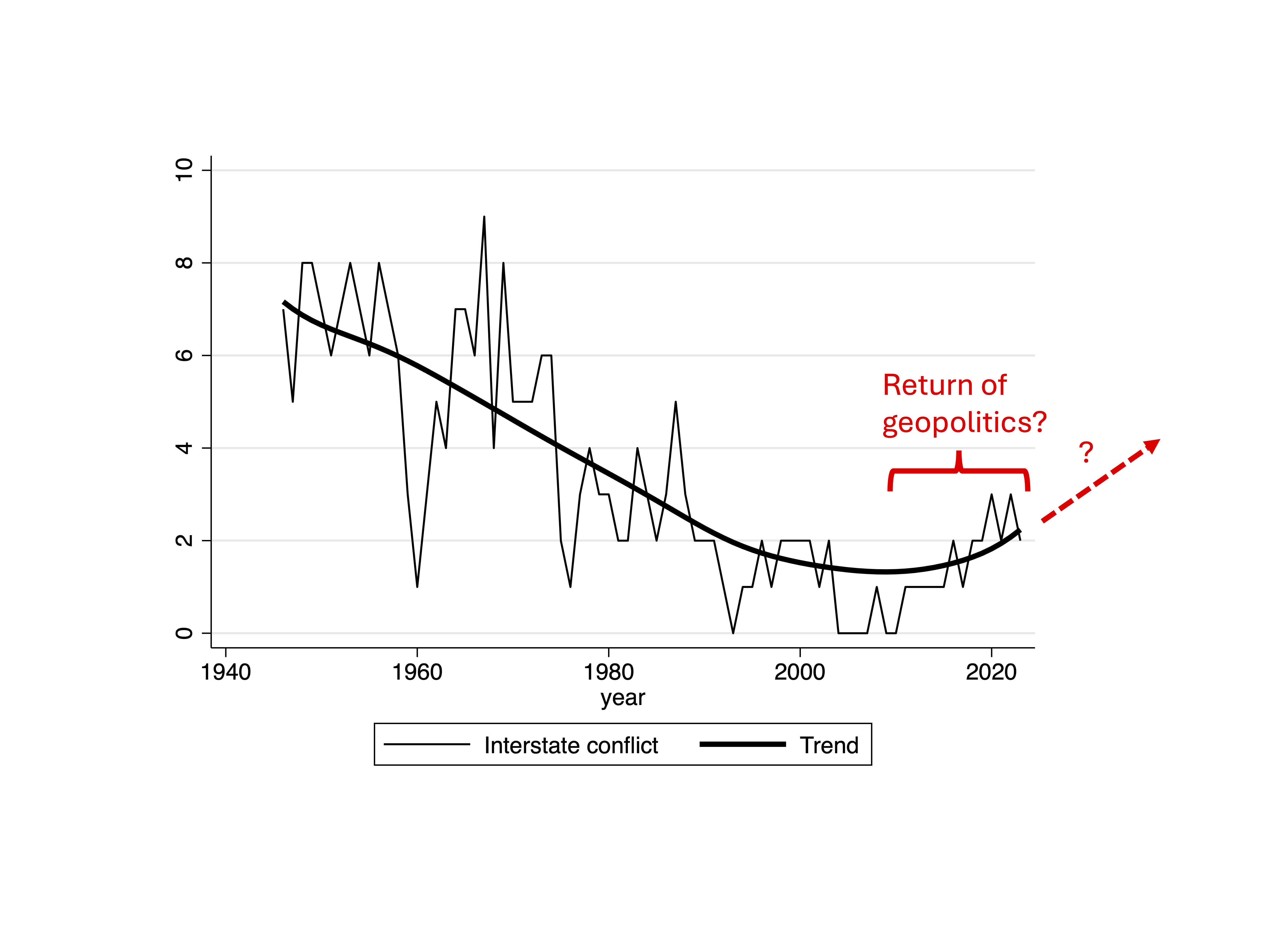
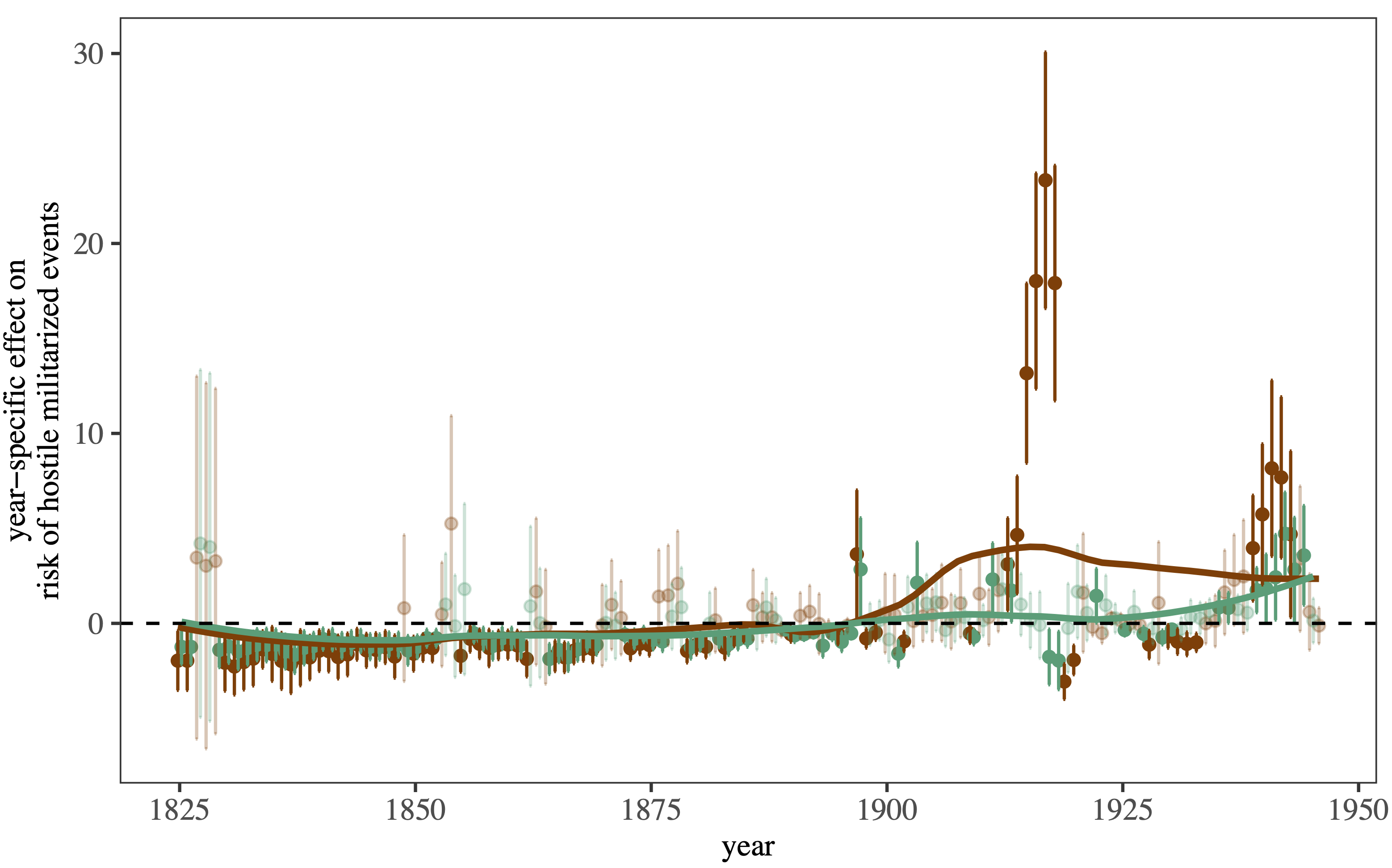
Our results support all three logics (figure 1). States ruled by dominant nationalists are approximately 0.5% more likely per dyad-year to become targets of hostile militarized events. On the initiation side, imperialist nationalists specifically show roughly a 0.9% higher risk of initiating hostilities, while non-imperialist dominant nationalists show no significant initiating effect. The initiating effect is stronger in the pre-WWII period (~1.5% for imperialist nationalists) than the post-WWII period (~0.5%), while the target effect is larger post-WWII. This likely reflects the conflict-dampening role of the rules-based order, erected after World War II (see our related publication on the resurgence of nationalist geopolitics below). Congruence violations amplify the conflict risk substantially: imperialist nationalists with cross-border ethnic claims face a 4.2% higher initiation risk. Yet dominant nationalism increases conflict risk even in the absence of congruence violations (0.8% for imperialist nationalists without congruence violations). In absolute terms, more dyad-years of conflict initiated by imperialist nationalists occur without congruence violations (515) than with them (248). The conditional analyses further confirm the mechanisms: imperialist nationalists are 5.4% more likely to initiate against states they claim territorially; imperialist major powers are especially likely to initiate against other major powers (2.2%) and weaker states (1.8%); and dominant nationalist targets experiencing civil conflict face a 1.6% higher risk of interstate aggression compared to 0.2% without civil conflict.
The results suggest that nationalist ideologies are not mere rhetorical covers for strategic interests but exert an independent causal force on interstate conflict, and that dominant nationalism poses not only a domestic challenge to minority rights but also a systemic threat to international order. The full paper develops the theoretical framework, data construction, and robustness checks in detail.