Dominant nationalism and civil war
New data and systematic analysis on how dominant nationalism (ideologies seeking ethnic political supremacy) drives civil war through exclusion, repression, and reactive separatist mobilization.
Dominant Nationalism and Civil War
Does dominant nationalism (the ideology that a single ethnic group should rule alone) systematically increase the risk of civil war? In our new article in the Journal of Conflict Resolution (with Lars-Erik Cederman), we argue that it does, and we introduce the first global dataset tracking dominant nationalist movements across 90 countries since 1946.
Where it has considered the role of ideology, existing research on ethnic conflict has focused almost exclusively on emancipatory nationalism: minorities seeking government representation, autonomy, or independent statehood. Far less attention has been paid to dominant nationalism (the ideology asserting that a specific ethnic group should maintain or expand political dominance over others). Yet across prominent conflicts in Israel, Myanmar, India, and Rwanda, nationalist movements pressing incompatible claims to supremacy have been closely associated with recurring civil war violence. However, whether these cases reflect a broader, systematic causal chain or constitute extreme exceptions has so far remained unclear.
We address this gap by arguing that dominant nationalism elevates civil war risk through three complementary mechanisms:
- First, it pushes governing elites toward the political exclusion of targeted outgroups, even when strategic incentives favor concessions. For instance, in South Africa, even symbolic attempts to reform apartheid were repeatedly blocked by nationalist hardliners, including from electoral rivals to the ruling National Party commanding over 30% of the white vote. In Sri Lanka, Sinhala nationalist parties similarly derailed language and decentralization agreements with the Tamil minority on numerous occasions, most notably in the 1950s and 1960s.
- Second, dominant nationalists can directly initiate violence. For instance, Rwanda's Hutu Power extremists conducted systematic atrocities to entrench ethnic hierarchies, while Hindu nationalist organizations in India have fueled insurgencies in Kashmir and Punjab through mass communal violence targeting religious minorities.
- Third, among minorities, dominant nationalist agitation can sow fear about their future treatment, pushing these outgroups toward risky secessionist strategies before exclusionary policies are even implemented. For instance, after Milošević's rise in Serbia, Croatian voters, fearful of impending centralization and oppression, moved swiftly toward independence despite warnings of war. Similarly, minority leaders in pre-independence Myanmar refused to agree to a common state despite federalist assurances, owing to deep mistrust which had its roots in Bamar nationalist and Buddhist extremist rhetoric.
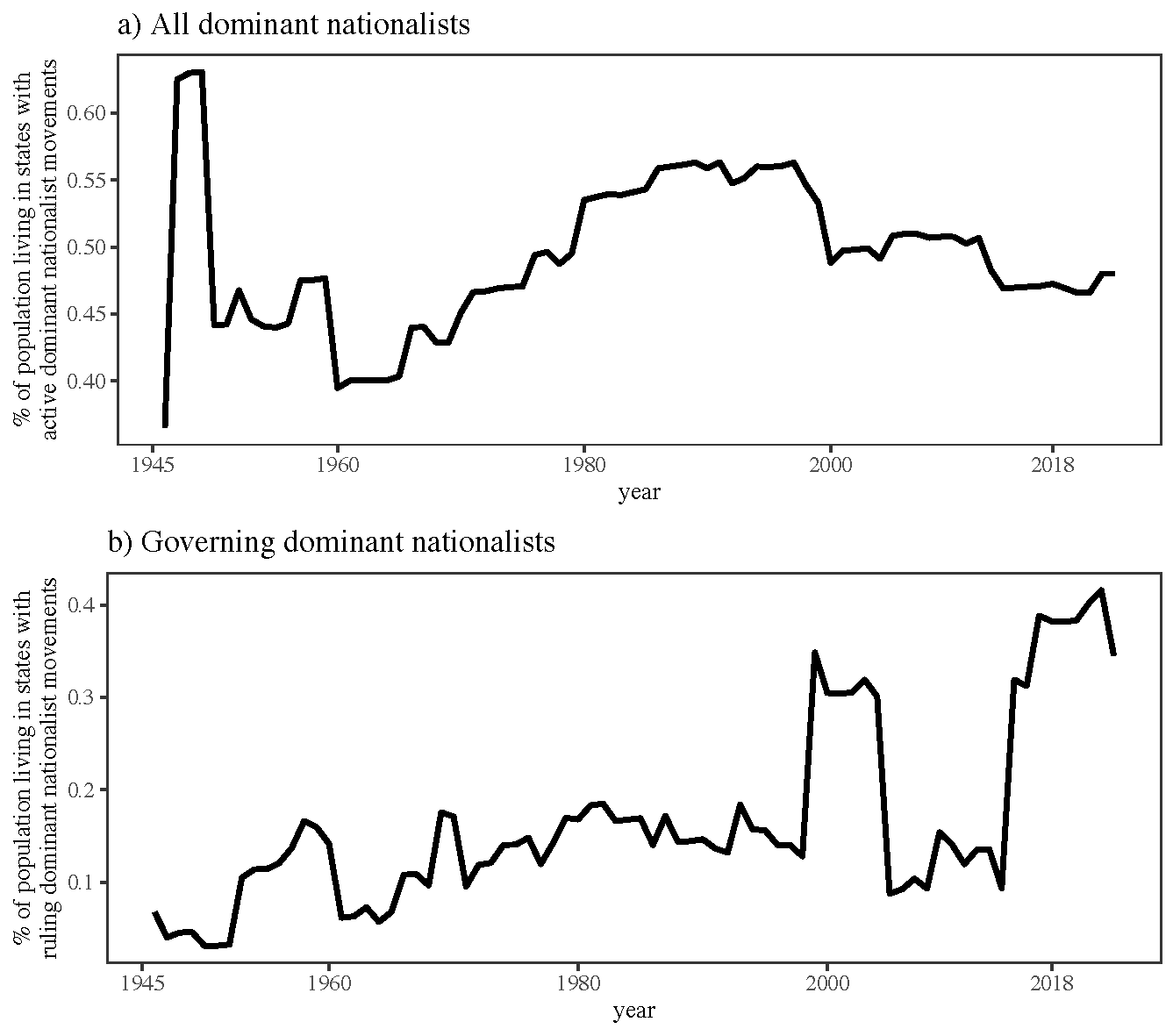
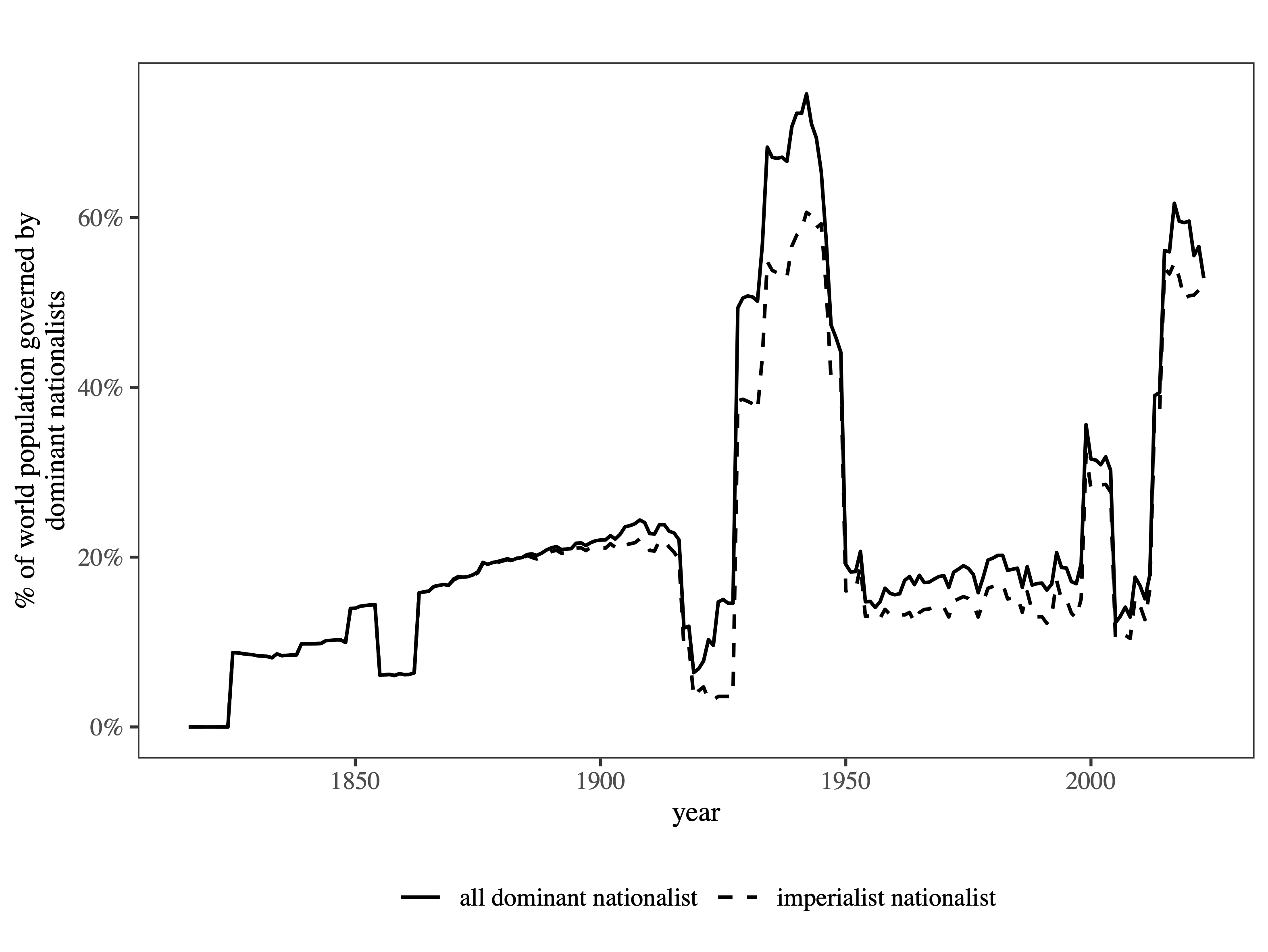
To test these arguments, and the relationship between dominant nationalism and civil war more broadly, we introduce the new Dominant Nationalist Movements (DNM) dataset, whose first version covers 90 multi-ethnic countries in North America, Eurasia, and Africa from 1946 to 2023. This dataset identifies nationalist organizations demanding political dominance for a specific ethnic group, measures their exclusionary demands against specific outgroups (ranging from calls for governmental exclusion and citizenship restrictions to agitation for expulsion or killings), and distinguishes between movements in government and in opposition. A descriptive glance at the dataset shows that the preponderance of dominant nationalists has not only increased around the world, but that the average citizen is also more likely to be ruled by dominant nationalists than at any previous point since World War II (see figure 1).
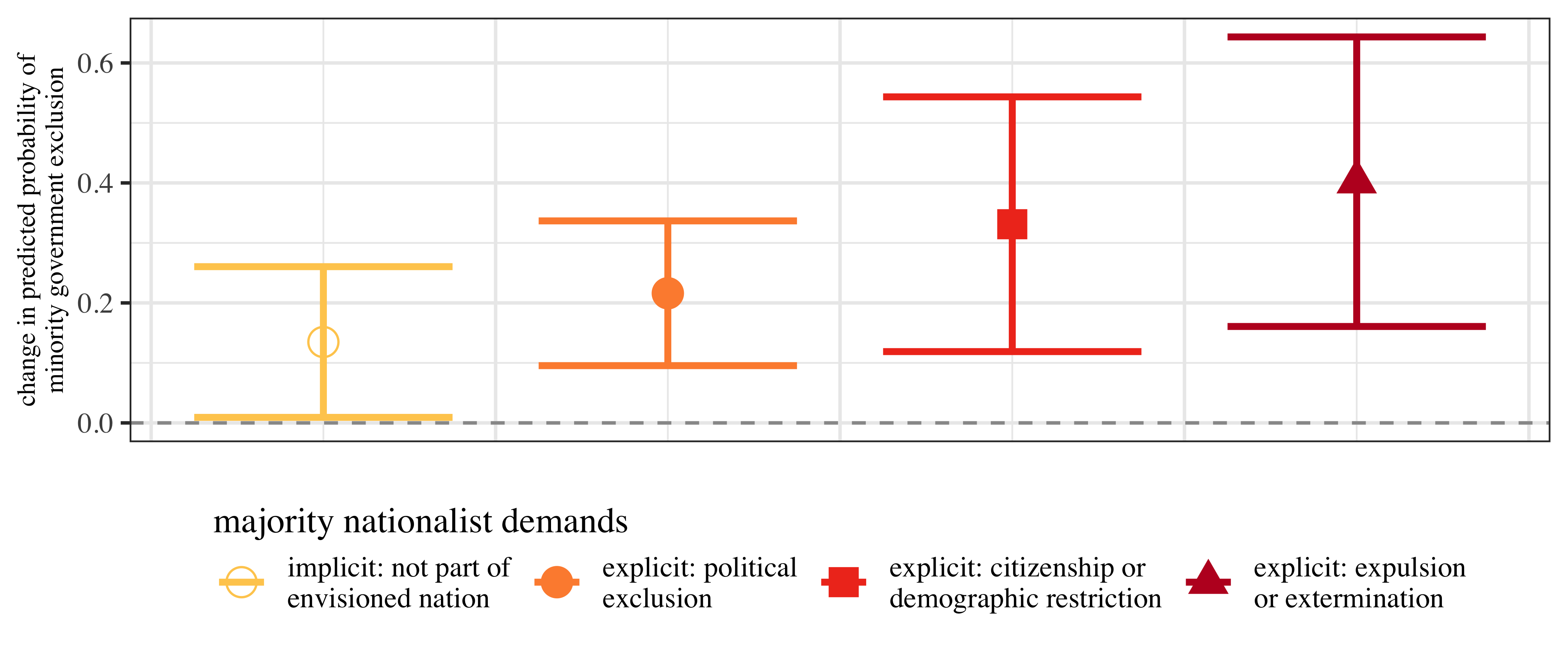
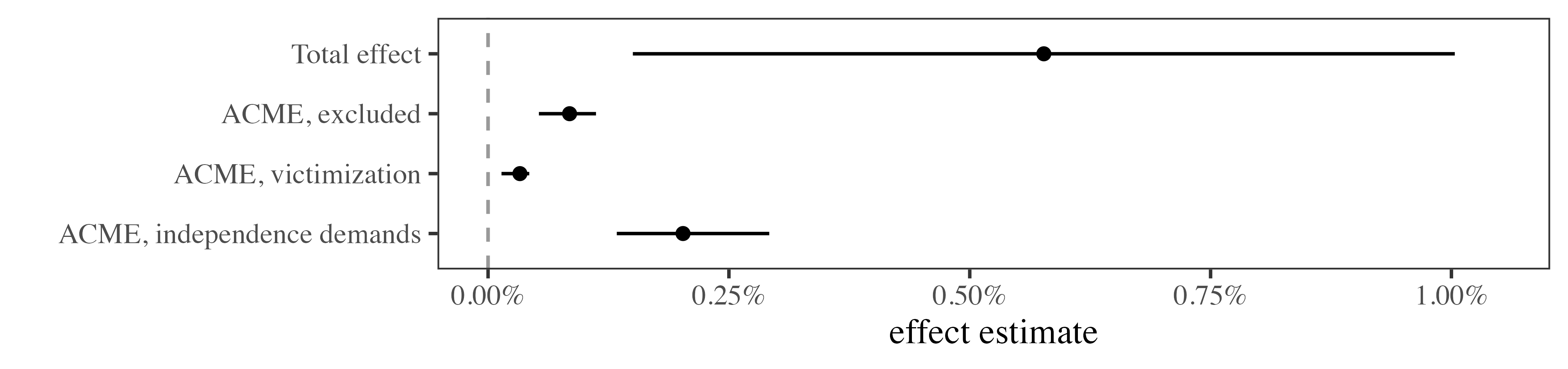
Our analyses offer robust support for our argument. We find that groups subject to dominant nationalist demands face a 0.6 percent higher annual civil war onset risk, a substantial increase relative to the baseline risk of 0.7 percent and comparable to the effect of actual governmental exclusion. This risk premium rises to roughly 2 percentage points when dominant nationalists hold executive power. Furthermore, we find that dominant nationalism also reshapes strategic interactions: most notably, the conflict-reducing effect of mutually reinforcing threat capabilities, which otherwise deters violence, disappears for groups targeted by dominant nationalists. Equally striking, "proto-nations" (groups with the demographic size and geographic position to plausibly secede) show elevated civil war risk only when simultaneously targeted by dominant nationalist demands. Additional mediation analyses identify secessionism as the dominant pathway linking dominant nationalism to civil war (37% of the total effect), followed by political exclusion (15%) and the direct victimization of minorities through massacres and expulsion (6%) (figure 2).
In sum, our results indicate that rising dominant nationalism worldwide is an underappreciated threat to peace in multiethnic states. Our results point to the need for cross-national conflict research to widen its lens beyond emancipatory nationalism, and for policymakers to recognize dominant nationalist ideology as a significant and systematic driver of civil war.
For detailed findings and methodology, see the article linked in the header above.