Power-Sharing Institutions
New data and analysis of the trade-offs of different types of power-sharing institutions for peace and democracy.
Sharing power with ethnic minorities can prevent civil war, but constitutionally entrenching that commitment is among the most contentious instruments in the peacebuilding toolkit. Rigid, ethnically-based power-sharing rules can spark new grievances among excluded minorities, provoke backlashes from formerly dominant communities, and harden the very divisions they aim to bridge. Does constitutional power-sharing terminate ethnic civil wars at the cost of losing the peace?
I address this question with new theory, new data, and a comprehensive cross-national evaluation. Departing from prior research, which predominantly examines broad behavioral patterns and elite-level outcomes, I focus on the specific constitutional rules through which power-sharing is institutionalized and trace their consequences for peace, democracy, and the political attitudes of ordinary citizens. Throughout, I draw on a consequential institutional distinction between corporate power-sharing, which divides authority according to rigid, ethnically-based formulae, reserving government posts and veto rights for constitutionally named communities, as in Bosnia, Lebanon, Burundi, and Nepal, and liberal power-sharing, which encourages inclusion indirectly through electoral incentives such as low thresholds for government participation, proportional electoral systems, and supermajority requirements, without pre-assigning seats or rights to specific groups, as in post-apartheid South Africa, Fiji, and post-Hussein Iraq.
New Data
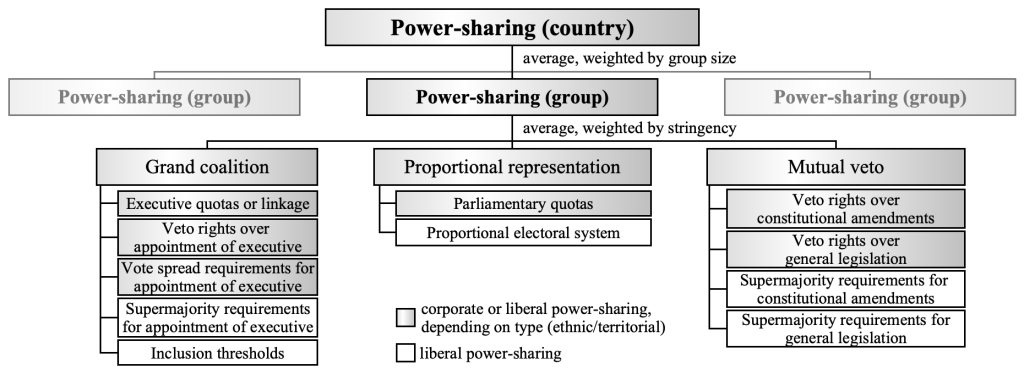
The project's empirical foundation rests on two global datasets assembled specifically for this research. The Constitutional Power-Sharing Dataset (CPSD), first introduced in (Juon 2020, Minorities Overlooked) and substantially extended for the forthcoming book (Juon forthcoming, Terminating the War), is currently the most comprehensive cross-national database of constitutionally entrenched power-sharing available. It covers 181 countries from the end of World War II to 2018, distinguishes systematically between corporate and liberal subtypes, and tracks the political status of individual ethnic groups over time, enabling both macro-level country analyses and disaggregated group-level analyses (Juon & Bochsler 2022, Two Faces; Bochsler & Juon 2021, Power-Sharing and Quality).
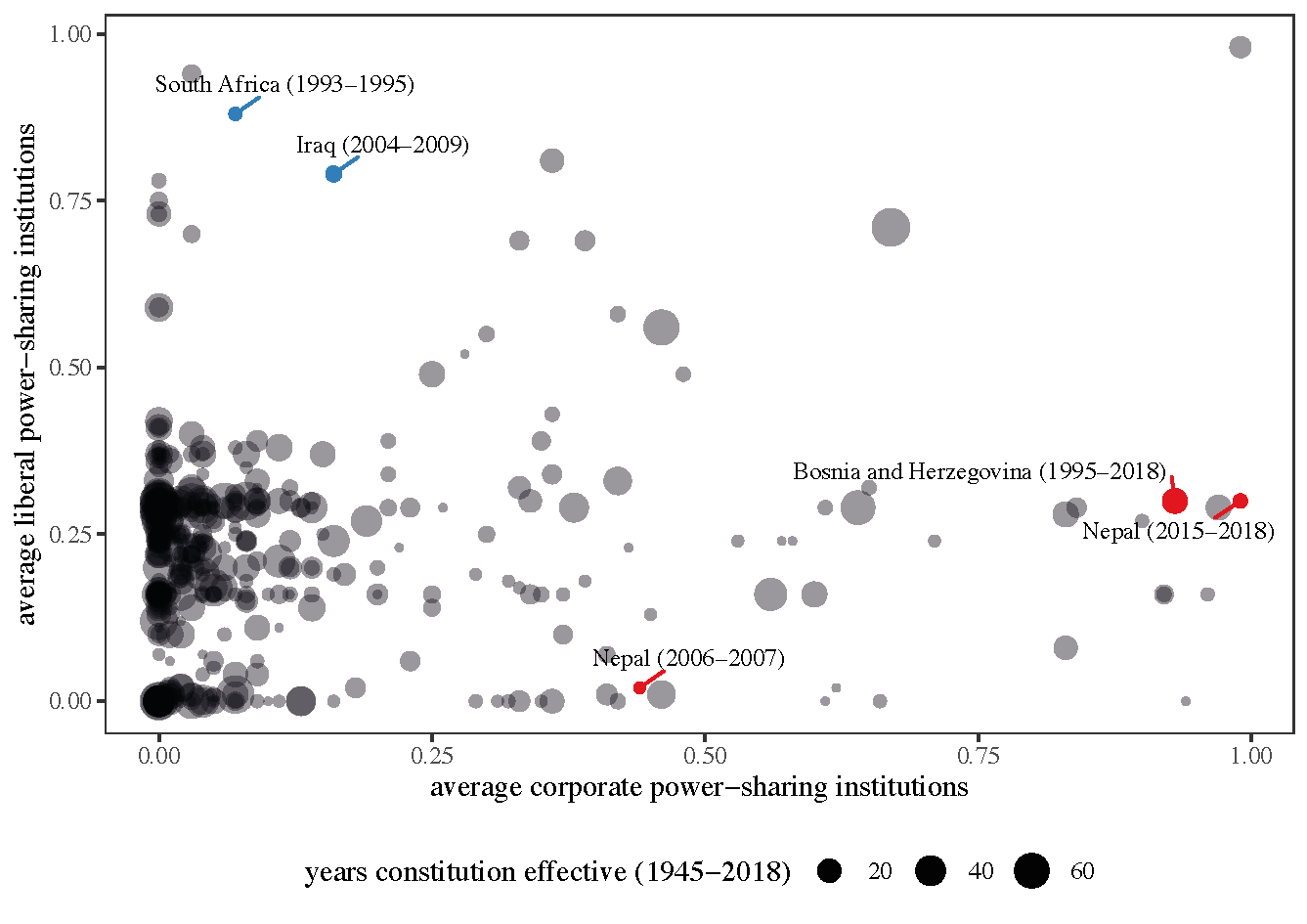
To examine how ordinary citizens perceive these institutions, I assembled SEAMS (Standardized Ethnically Attributed Mass Surveys), a harmonized global database covering more than two million respondents in 148 countries. SEAMS integrates large-scale surveys including the World Values Survey and regional barometers such as the Afrobarometer, providing comparable measures of political satisfaction, discrimination perceptions, ethnic identification, and ethnic party vote intentions across diverse societal contexts. It is currently the most extensive global collection of standardized, ethnically attributed mass survey data used to study inclusive institutions.
Effects on Peace and Democracy
Using the CPSD, I provide cross-national evidence on how different constitutional designs shape the two macro-level outcomes most central to the peacebuilding agenda: the risk of ethnic civil war and the quality of democracy.
On civil war, a quantitative analysis covering 39,127 ethnic group-years between 1946 and 2017 shows that both types of constitutional power-sharing substantially increase the de facto governmental representation of targeted groups and reduce the risk of political discrimination against them, in turn lowering the risk of armed rebellion. Bosnia's Dayton constitution, which ended a devastating civil war by offering Serb and Croat leaders enforceable guarantees of continued political influence, and Nepal's 2007 transitional constitution, which brought a decade-long Maoist insurgency to a close, exemplify a pacifying effect that my cross-national analysis confirms is systematic and robust. Liberal power-sharing also produces a surprisingly pronounced pacifying impact across the sample, a finding echoed in cases like post-apartheid South Africa, whose 1993–1995 interim constitution achieved broad elite inclusion through electoral incentives rather than fixed ethnic categories, challenging widespread fears that group-blind provisions cannot reassure minority elites or withstand post-conflict pressures (Juon forthcoming, Terminating the War; Juon 2020, Minorities Overlooked).
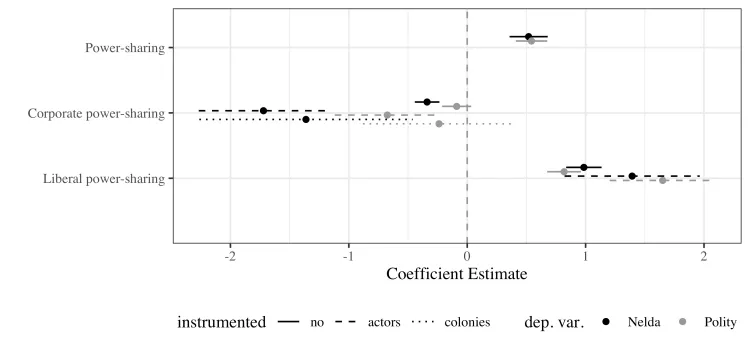
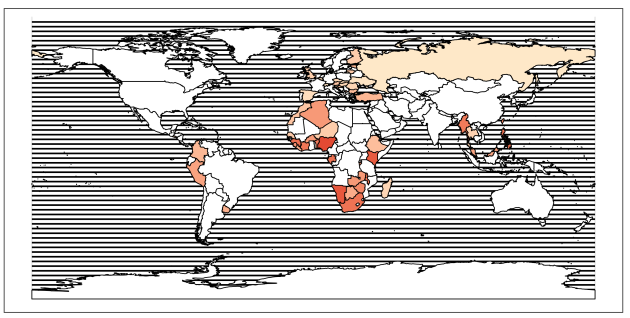
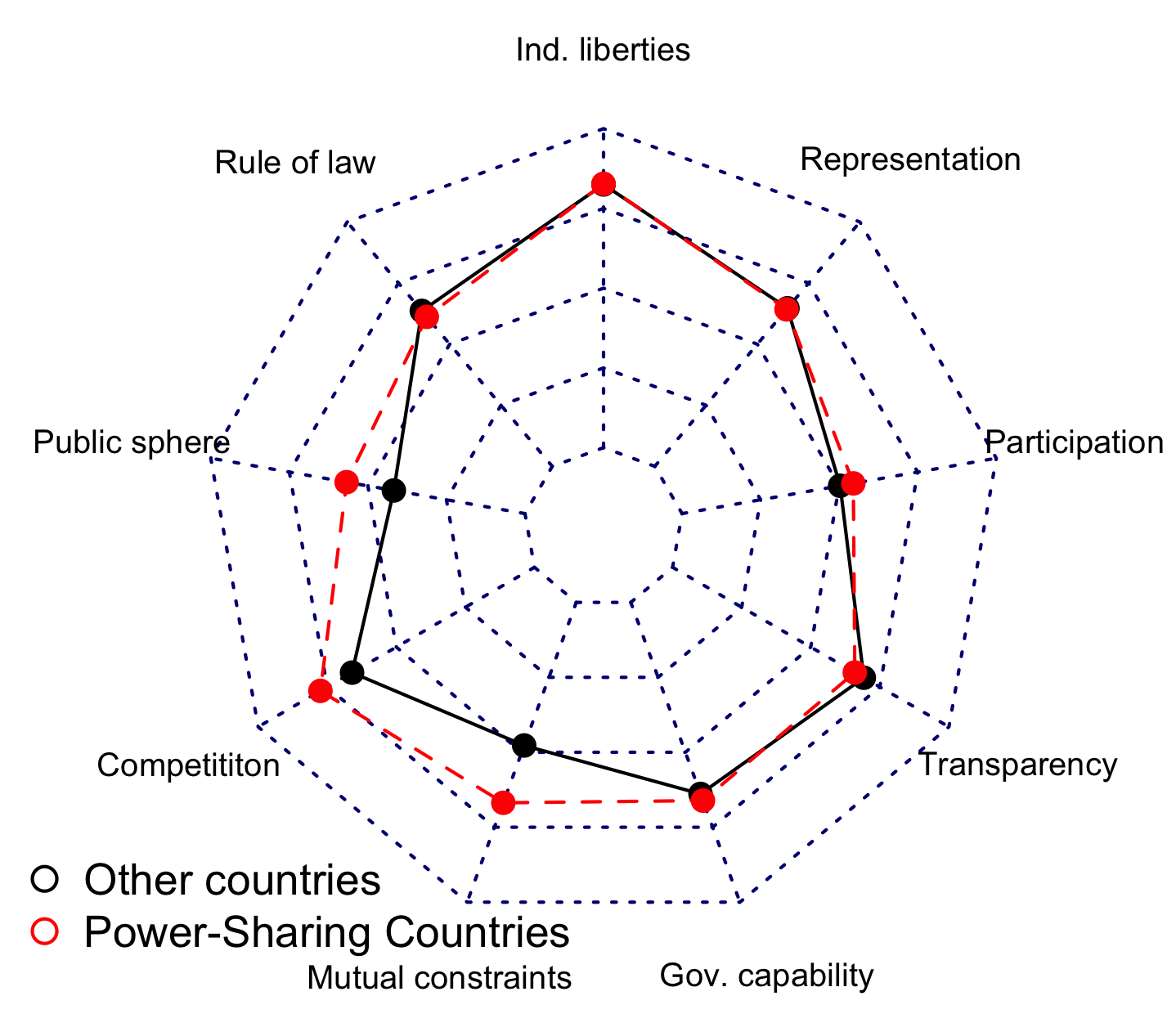
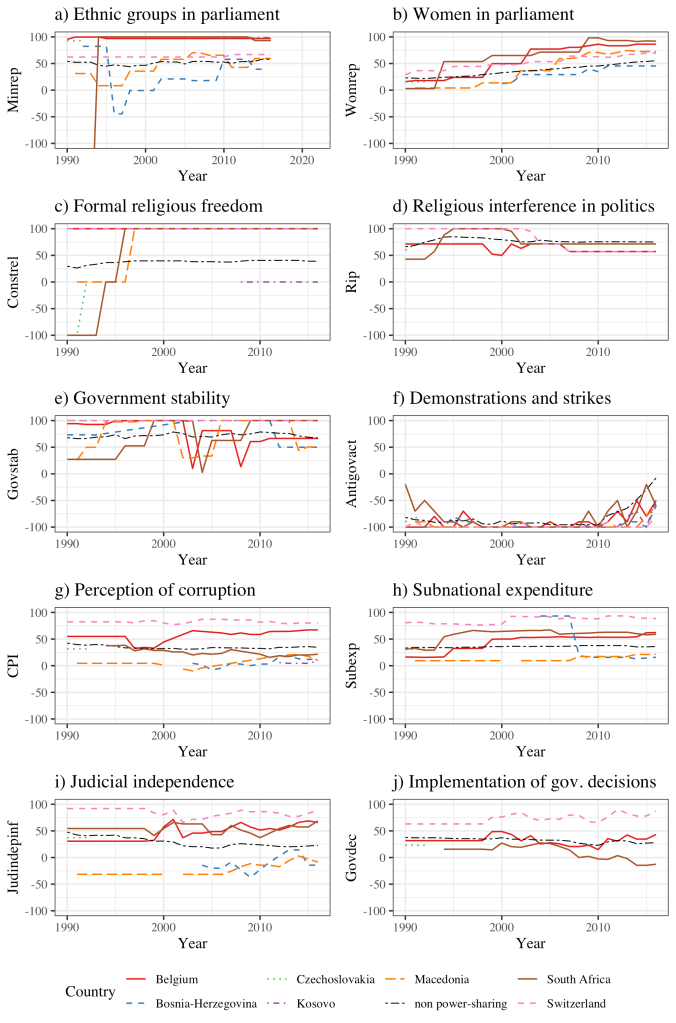
On democracy, a country-level analysis across 181 states since World War II shows that the democratizing potential of constitutional power-sharing depends sharply on institutional type. Liberal power-sharing is consistently associated with improvements in democratic quality, including liberal rights, citizen participation, deliberation, and egalitarianism. Nigeria's territorial power-sharing system, which enabled gradual progress toward regularized power alternation, illustrates the democratic potential of flexible liberal arrangements. Corporate power-sharing, by contrast, is neither consistently democratizing nor systematically harmful: compatible with high democratic quality, it does not reliably advance it. Cases like Lebanon, in which power-sharing has been associated with neopatrimonialism and sectarian immobilism, reflect a pattern detectable in the cross-national data. The variation across country trajectories is substantial and itself informative, as illustrated below (Juon & Bochsler 2022, Two Faces; Bochsler & Juon 2021, Power-Sharing and Quality).
These findings are considerably more positive than assessments drawn from prominent post-conflict cases alone, which points to the importance of comparing power-sharing systems with comparable alternatives. International mediators also shape which model countries adopt: my quantitative analysis shows that host states exposed to mediators with corporate power-sharing experience at home are substantially more likely to adopt corporate arrangements, while those receiving liberal-experience mediators move toward liberal designs. This pattern is illustrated by South African mediators exporting a liberal framework to Burundi, and by EU and NATO member states shaping the corporate frameworks that emerged in Bosnia and Kosovo (Bochsler & Juon 2023, Democracy Promotion).
Micro-Level Reception: Included and Excluded Minorities
A distinctive contribution of this project is its examination of how constitutional power-sharing is received by ordinary citizens, not just reflected in aggregate outcomes. Drawing on SEAMS, I provide some of the first systematic, cross-national evidence on the inclusion-to-grievance mechanism hypothesized to mediate power-sharing's positive macro-level effects.
Hierarchical multi-level models covering over 7 million survey respondents across 93 multi-ethnic countries show that corporate power-sharing substantially reduces grievances among newly included minorities, increasing their satisfaction with the government and their sense that the political system treats them fairly. The Madhesi minority's protests in Nepal, demanding not just representation but explicit constitutional recognition the day after the 2007 constitution was promulgated, illustrate why this recognition effect matters: minorities also evaluate their status relative to other groups, and shortfalls in that relative standing generate discontent even where some guarantees exist. Consistent with this mechanism, my cross-national analysis finds that minorities are more likely to form grievances when they receive comparatively lower guarantees than their domestic peers or transnational kin. Liberal power-sharing does not produce comparable grievance-reducing effects, suggesting that minorities require explicit, ethnically targeted recognition to perceive the system as legitimate (Juon 2023, Grievances).
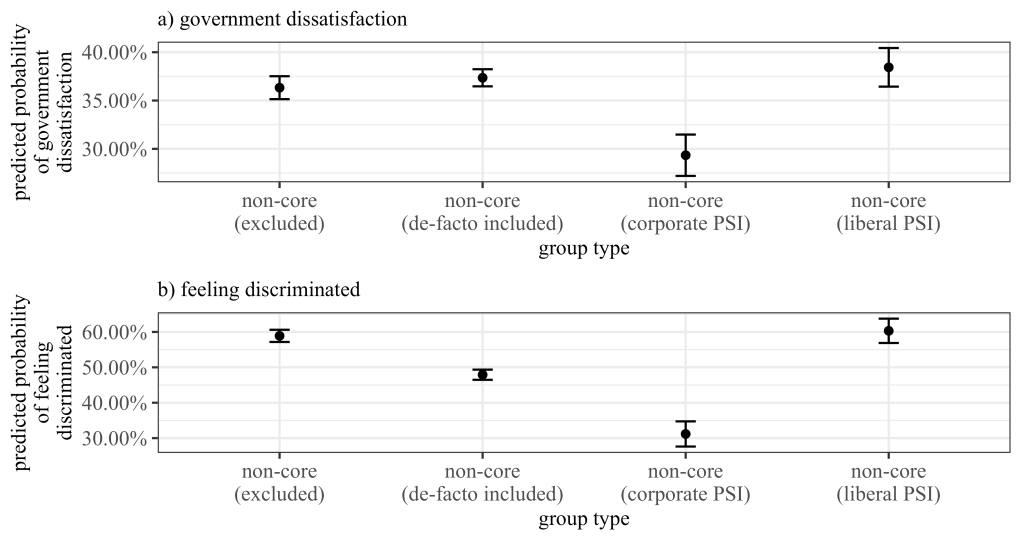
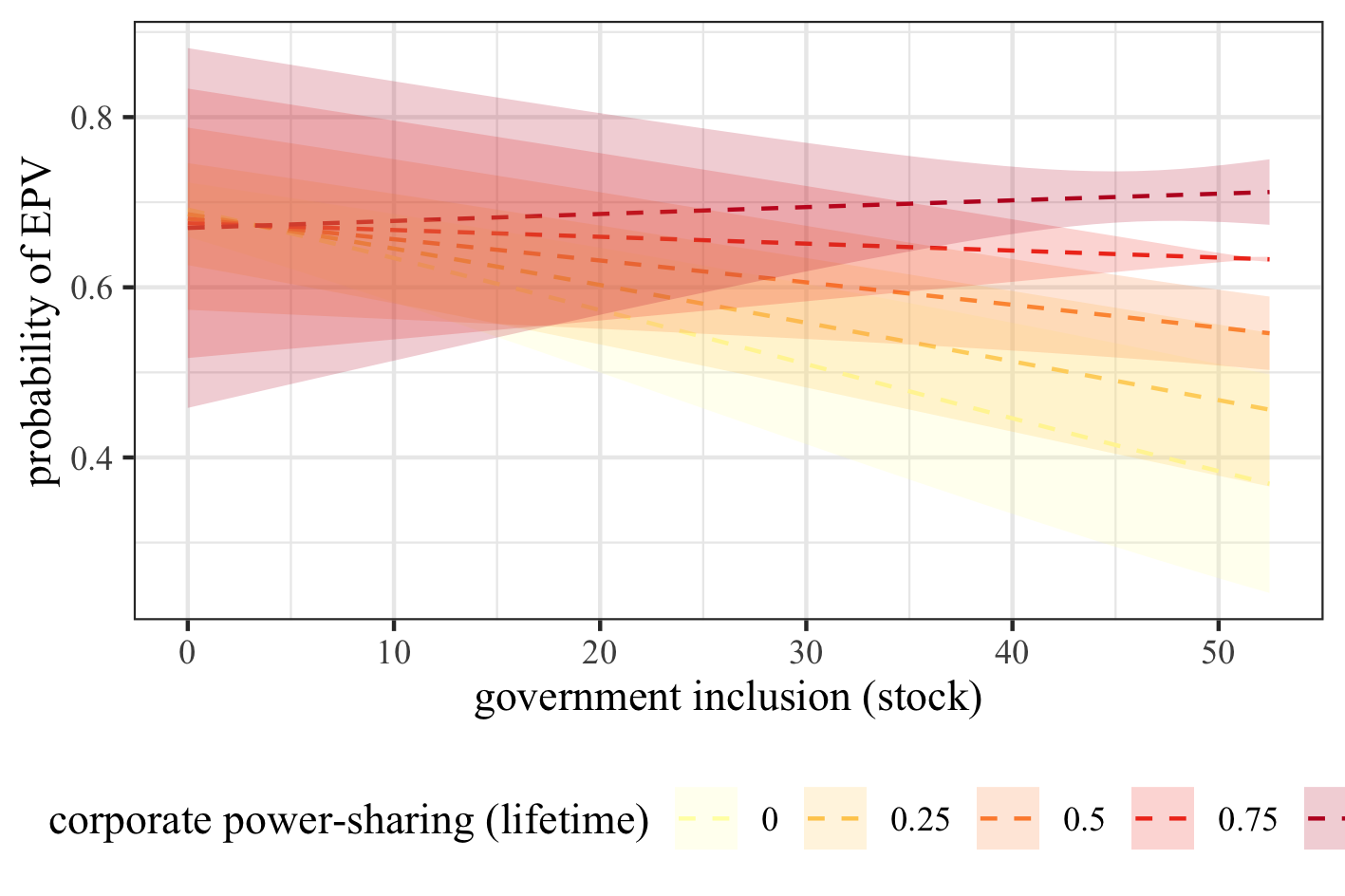
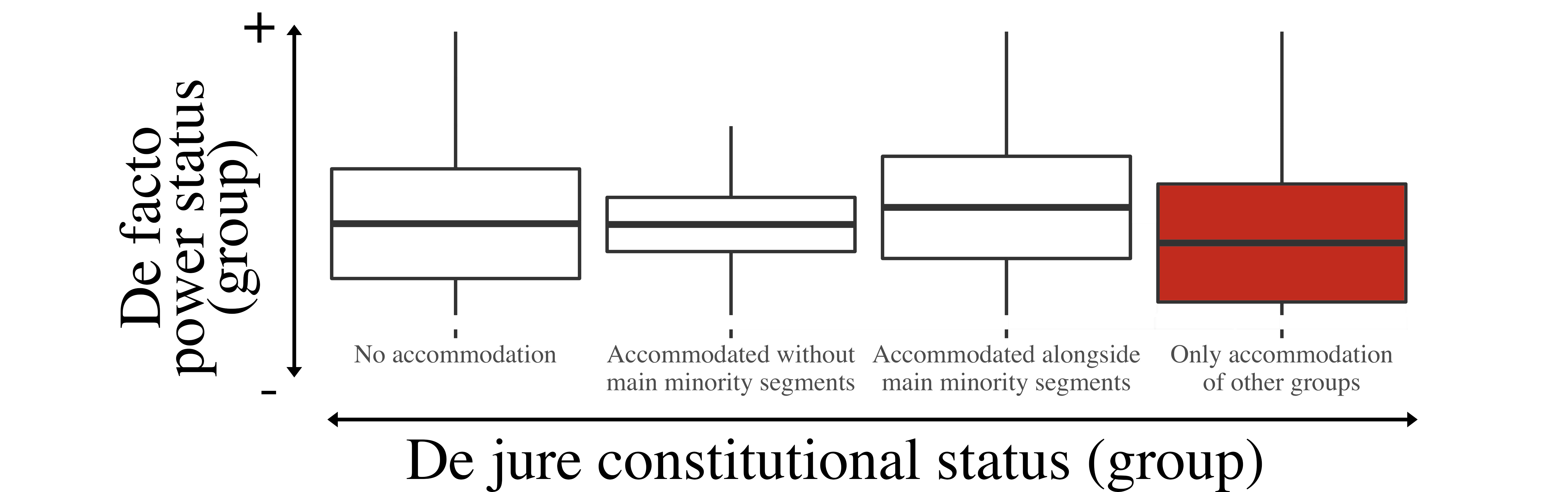
However, cross-national evidence also shows that corporate power-sharing's benefits for included groups come at a steep cost: its rigid formulae systematically disadvantage groups outside the circle of recognized minorities. Bosnia's constitution illustrates the dilemma most visibly, as Jewish and Roma citizens are a priori excluded from the Presidency and upper house, a discrimination condemned by the European Court of Human Rights in Sejdić and Finci v. Bosnia and Herzegovina, but the pattern is not exceptional. My analysis shows that constitutionally disadvantaged groups, such as the Twa and Ganwa in Burundi or Nepal's Madhesi before their formal recognition, face systematically higher rates of political exclusion and discrimination, and their members are substantially more likely to perceive the system as illegitimate and to participate in anti-government protest. Corporate power-sharing thus risks solving inter-ethnic inequality for some minorities while generating new grievances among others, the "exclusion-amid-inclusion dilemma" (Juon 2020, Minorities Overlooked; Juon 2023, Grievances).
Micro-Level Reception: Majority Backlashes
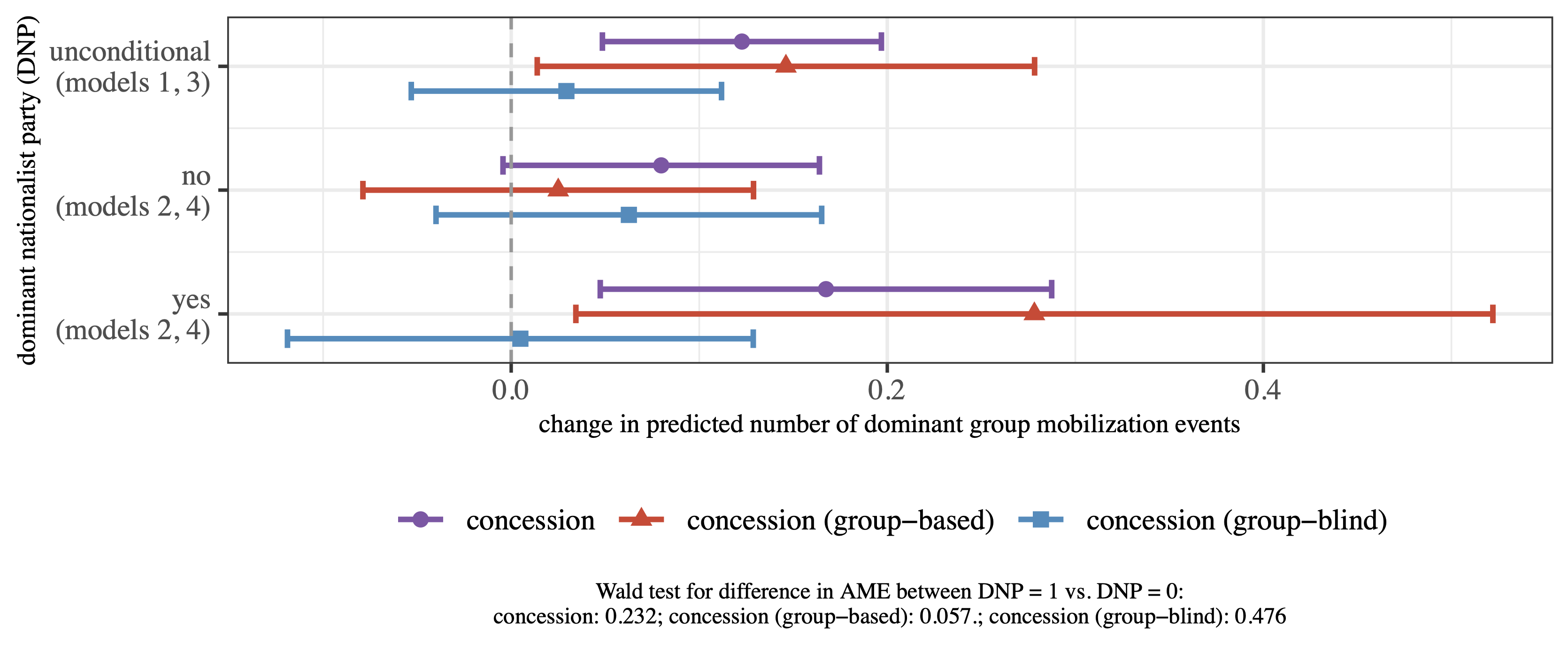
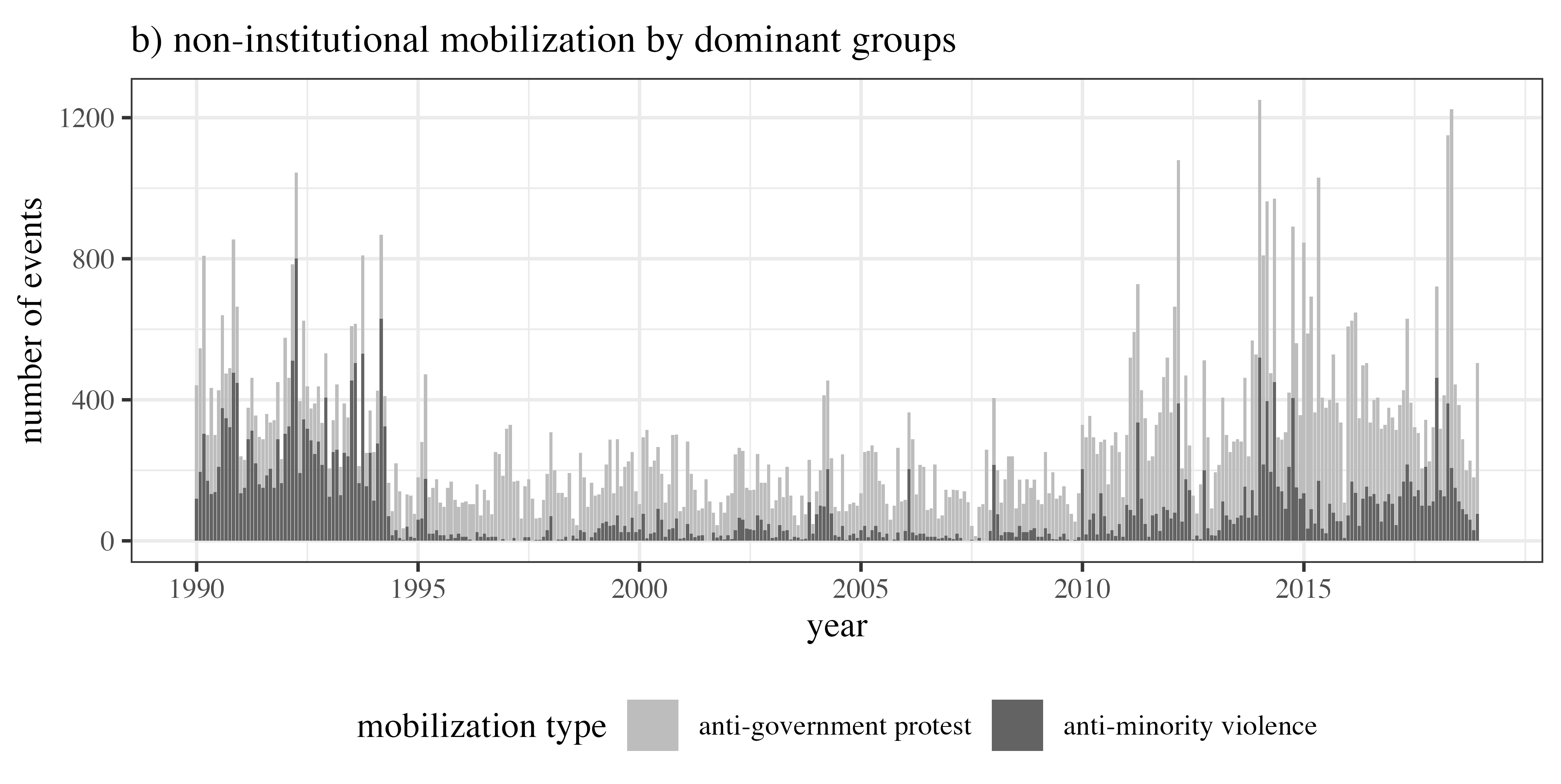
In addition to minority grievances, I examine how constitutional power-sharing is received by formerly dominant majority communities, a group whose reactions have received surprisingly little systematic attention in comparative research. My cross-national analysis of 125 multi-ethnic electoral regimes between 1990 and 2018 shows that informal and liberal power-sharing practices are not systematically associated with increased majority discontent, suggesting fears of an automatic majoritarian backlash are overstated. But constitutional entrenchment, particularly of the corporate type, changes this picture markedly. Corporate rules circumscribe majority influence in a highly visible manner, lending themselves to nationalist framing as violations of equal citizenship, a dynamic illustrated by North Macedonia's 2001 Ohrid Agreement, in which nationalist parties mobilized protests and anti-Albanian riots against Albanian language recognition, or by Hindu nationalist parties in India repeatedly exploiting group-based concessions on Kashmir's autonomy to mobilize their bases. The Greek Cypriot rejection of the Annan reunification plan, which would have restored power-sharing, shows how such discontent can block settlements even when internationally sponsored. Across the full cross-national sample, dominant group members living under corporate power-sharing are more likely to develop grievances and threat perceptions, engage in anti-government protest, and participate in communal violence targeting minority groups. Crucially, this backlash is driven almost entirely by formally group-based concessions: group-blind liberal alternatives provoke significantly less majority mobilization (Juon 2026, Backlash).
Long-Term Ethnic Salience
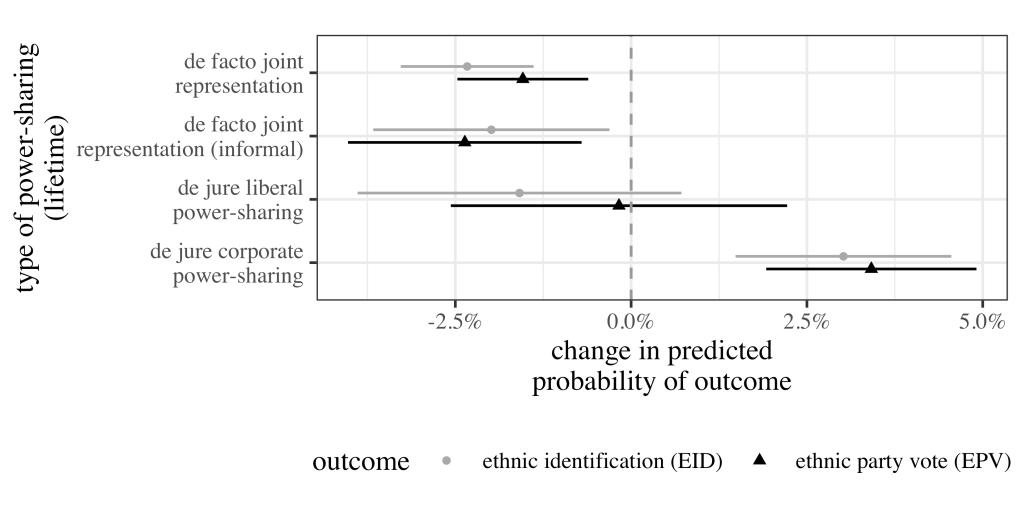
A final set of analyses turns to the long-run question of whether constitutional power-sharing transcends ethnic divisions or entrenches them. Drawing on SEAMS data on ethnic self-identification and ethnic party vote intentions across 132 countries, I find two countervailing mechanisms. Prolonged exposure to power-sharing practices, the informal inclusion of multiple groups in government, is associated with gradually declining ethnic salience, as inter-group inequalities attenuate and ethnic identities lose practical utility as guides to political life. But prolonged exposure to ethnically-based corporate institutions keeps ethnic salience high or even increases it, by consistently politicizing citizens as ethnic group members and increasing the cognitive accessibility of ethnic identities. Bosnia, described by scholars as an "Ethnopolis" that crowds out non-ethnic civil society actors, and Lebanon, in which consociational arrangements have preserved deep sectarian polarization, sit at the extreme of this cross-nationally documented pattern. Liberal power-sharing, relying on group-blind provisions, avoids this dynamic across the sample and is better placed to allow ethnic salience to gradually recede (Juon 2025, Ethnic Salience).
Synthesis: Terminating the War, Losing the Peace?
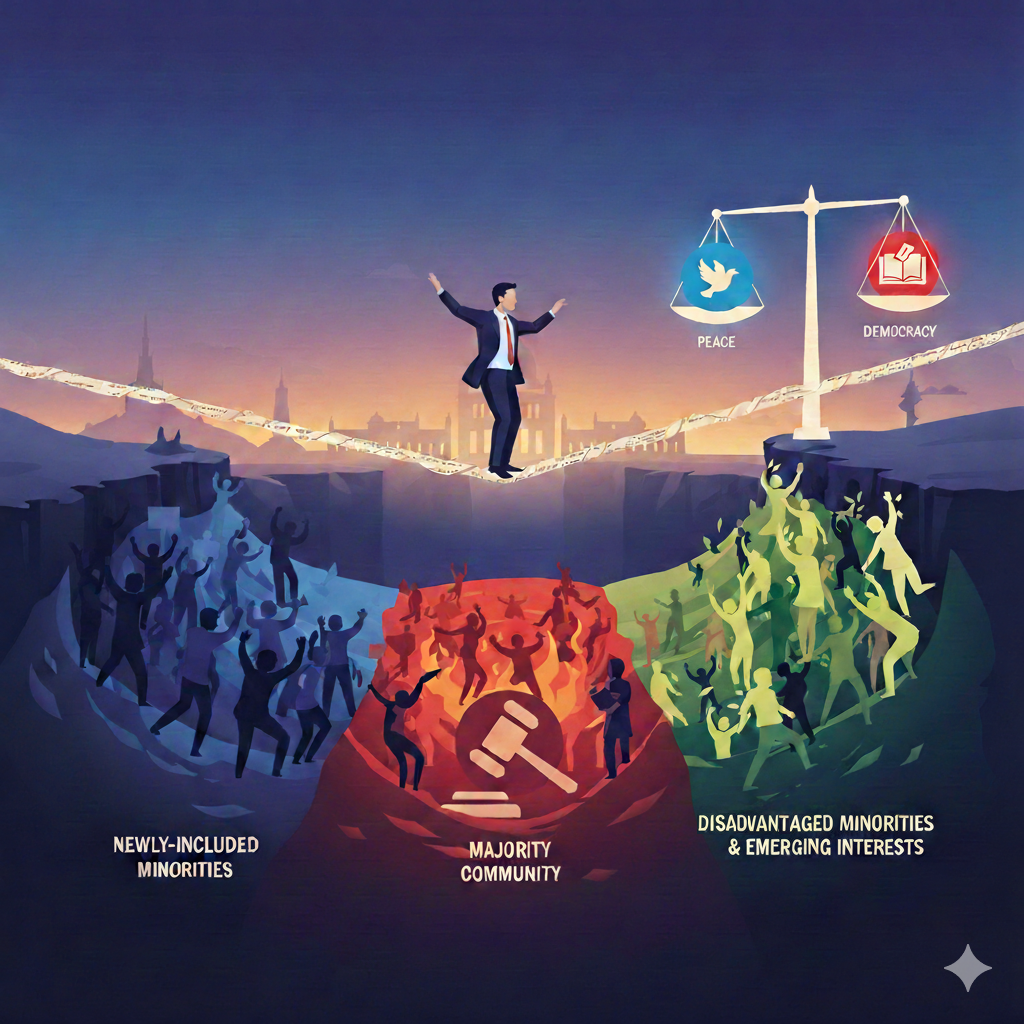
These contributions come together in the forthcoming book Terminating the War, Losing the Peace? Constitutional Power-Sharing and Its Discontents (Cambridge University Press). Drawing on the CPSD and SEAMS alongside qualitative case analyses of Bosnia, Nepal, South Africa, and Iraq, the book provides one of the most comprehensive cross-national evaluations to date of when, and for whom, constitutional power-sharing delivers on its twin promises of peace and democracy. The overall assessment is more positive than pessimistic case-based accounts suggest: constitutional power-sharing consistently reduces the risk of civil war and, in its liberal form, promotes democratic quality. But three difficult trade-offs, between depth and scope of inclusion, between minority rights and majority rule, and between short-term stabilization and long-term depolarization, mean that institutional form matters enormously for who benefits, who dissents, and whether the resulting peace endures (Juon forthcoming, Terminating the War).